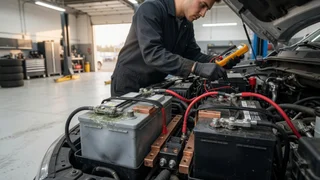
Double battery circuit problems
A double battery circuit can mean two batteries wired in parallel for extra reserve capacity, a series-connected pair producing higher system voltage, or an isolated auxiliary battery feeding added loads. Problems in these circuits often appear as slow cranking, one battery that drains while the other stays charged, charging output that favors a single unit, or voltage drop across connections that looks fine until current flows. Understanding how the arrangement is connected changes which tests matter, because a parallel bank and a series setup fail in different ways even when the symptoms seem similar.
Essential answer
Double battery circuit problems are typically electrical faults that emerge from unbalanced batteries, high-resistance connections, or interaction between the charging system and a second battery. In a parallel arrangement, both batteries should share the charging load and rest at roughly the same voltage. When one battery is older, has a different capacity, or has a poor ground path, the pair can develop unequal states of charge. The stronger battery then carries most of the work while the weaker unit degrades further, creating a cycle that eventually leaves the entire bank unable to support reliable starts or long accessory run times.
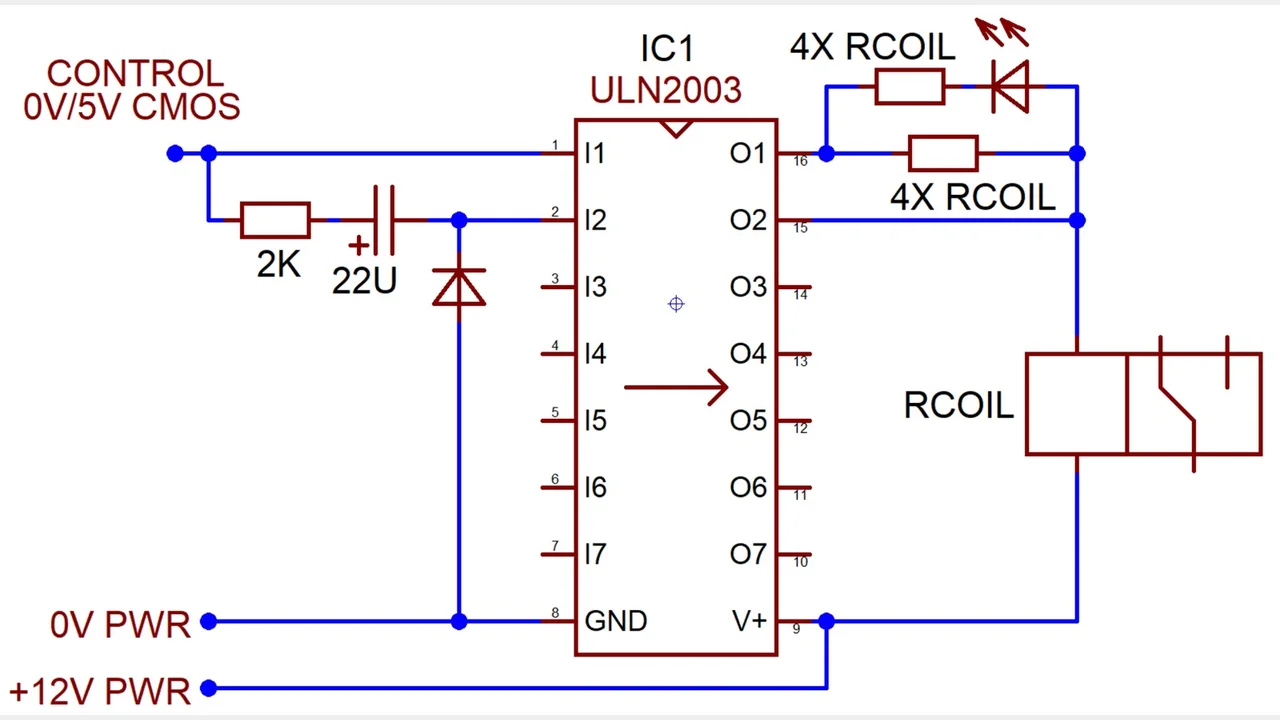
The circuit design also determines how a failure behaves. A series-connected pair used for higher system voltage depends on both batteries passing the same current through clean terminals and robust cabling. A loose terminal, corroded lug, or undersized jumper creates local heating and voltage drop that may not be visible until high draw occurs. An auxiliary battery with an isolator or relay adds another layer, because the control device can stick open or closed and hide the true charging behavior. Accurate wiring diagram review helps identify whether the problem belongs to the battery bank, the control path, or the loads connected downstream.
Diagnosing a problem
When a double battery circuit malfunctions, begin with static voltage checks at each battery terminal before the engine is started. Similar resting voltages suggest the batteries are reasonably balanced, while a large gap often points to an internal weakness in one unit or a high-resistance connection limiting recharge. During charging, compare voltages again. A battery that remains significantly lower while the other rises indicates a wiring fault, a fuse with a higher-than-needed rating masking a problem, or an isolator that is not allowing current through to the auxiliary side. Voltage drop testing across cables and joints while a moderate load is applied can expose resistance that a simple terminal inspection misses.
A parasitic draw test is useful when one battery discharges overnight but the other holds charge. If the two batteries are permanently paralleled, the drain may originate in a shared circuit and simply become obvious on the weakest battery first. If they are isolated, the drain may be confined to one side of the circuit. A stored fault code in a control module should be treated as a clue rather than proof of a failed component, especially when manufacturer-dependent behavior varies by platform. Any visible heat damage, swollen battery case, acrid smell, or sparking connection justifies stopping use and seeking professional diagnosis before further testing.