What Is Double Clutching?
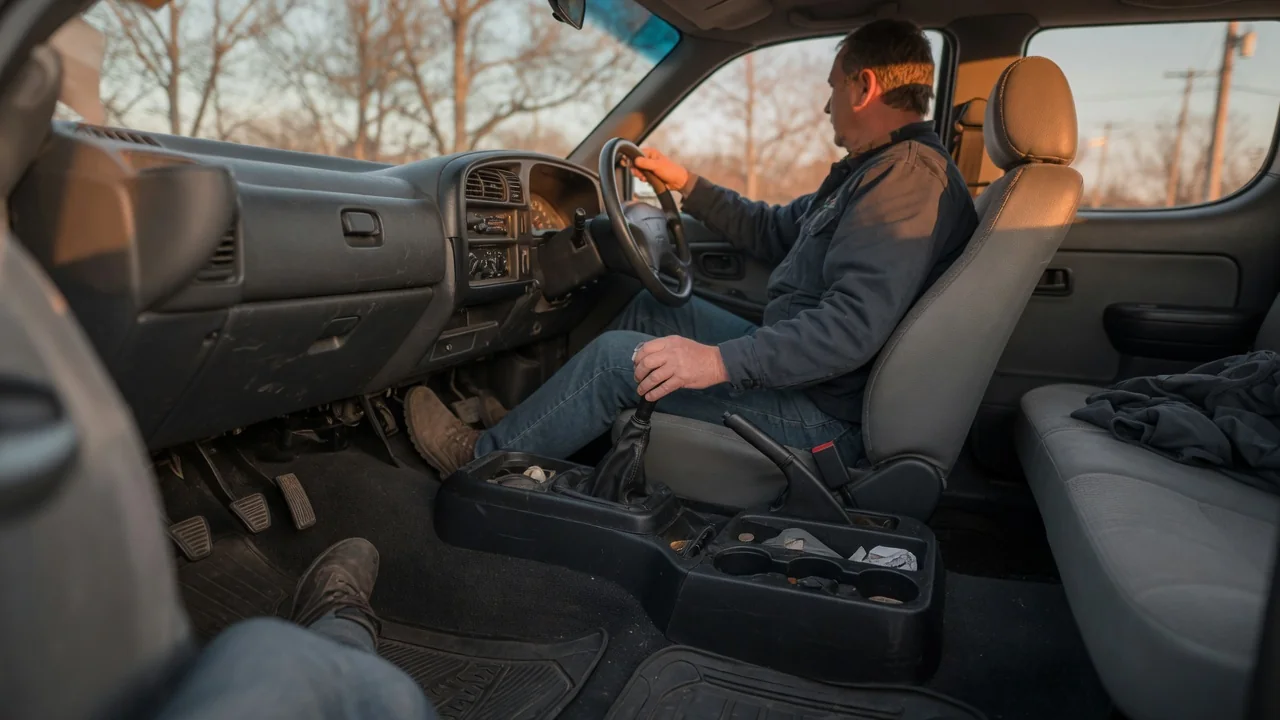
Drivers who ask what is double clutching are usually picturing an old truck or a vintage sports car, and that instinct is close. It is a manual-transmission shifting technique in which the clutch pedal is pressed twice during a single gear change, with a pause in neutral between, so the driver can match the speeds of the parts inside the gearbox before they mesh.
Gear-speed matching
Inside a manual gearbox, the input shaft is tied to the engine through the clutch, while the output shaft is tied to the road wheels. Each gear ratio requires a different relationship between those two speeds. When you pull out of one gear and reach for another, the input side is suddenly spinning at the wrong rate for the ratio you want. Double clutching exists to correct that mismatch by hand, bringing the gears to a compatible speed before the engagement teeth are asked to slide together.
A downshift is the clearest example. Dropping from fourth to third at a steady road speed means the input shaft must turn faster than it was a moment ago. With the lever in neutral and the clutch released, a quick press of the throttle spins the engine and the input shaft up together. On an upshift the opposite applies, and the shaft needs to slow, which usually happens on its own during the pause. How much correction is needed depends on the ratio spacing of the particular transmission.
Driver sequence
The sequence for a downshift has a recognizable rhythm. The driver presses the clutch and moves the lever to neutral, then lets the clutch pedal back up. With the clutch engaged and no gear selected, a blip of the accelerator raises engine speed and carries the gearbox internals with it. The clutch goes down a second time, the lever moves into the lower gear, and the pedal is released again. Done well, the lever slides in with little resistance and the car does not lurch.
Upshifts follow the same two pedal strokes but without the throttle blip, since the aim is to let revs fall rather than rise. The pause in neutral is simply long enough for engine speed to drop toward what the higher gear needs. Timing varies with the vehicle: a heavy flywheel sheds revs slowly, a light one quickly, and pedal travel and lever throw change the tempo. This differs from rev-matching alone, where the throttle is blipped with the clutch held down and the lever passing through neutral in one motion.
Modern use
Most passenger cars built in recent decades have synchronizers, small friction devices that speed up or slow down a gear until it matches the shaft before the engagement collar locks it. They do automatically what double clutching does manually, which is why a single press of the pedal is all a modern manual normally needs. In these cars the technique is optional, though some enthusiasts still use it on downshifts, reasoning that it eases the work asked of the synchronizers.
The technique remains relevant where synchronizers are absent or limited. Many heavy trucks have used non-synchronized transmissions, and drivers of those vehicles are often taught double clutching as a core skill. Vintage cars may lack synchromesh on first gear or on every gear, and some racing gearboxes use dog engagement that behaves differently again. Because designs vary so widely, the owner's manual or the manufacturer's training material for a specific vehicle is the right place to confirm what its gearbox expects.
Everyday Use and Observations
In ordinary driving, the most noticeable sign of a well-matched shift is what does not happen. There is no grinding from the gearbox, no notchy resistance at the lever, and no jolt through the driveline as the clutch comes up. The tachometer needle rises briefly in neutral and then settles close to where it will sit in the new gear. Passengers may hear the short flare of revs, which is the familiar sound associated with older trucks slowing for a turn or descending a grade.
Some drivers of synchronized cars find the technique useful in narrow situations, such as selecting a low gear while rolling when the lever is reluctant, or shifting on a cold morning when thick gear oil makes the synchronizers feel slow. Results depend on the car. A gearbox with strong synchromesh and a light clutch may feel no different either way, while an older or high-mileage unit may accept gears more willingly. For most daily commuting, the extra footwork adds effort without a clear payoff.
Limits and Next Steps
Double clutching is a driving technique, not a repair. If a transmission grinds on every shift, pops out of gear, or refuses a particular ratio, careful footwork may mask the symptom for a while, but the cause remains. Possibilities range from a clutch that is not fully releasing to worn synchronizers, low or incorrect fluid, or linkage problems, and telling them apart takes inspection rather than guesswork. A qualified technician can check the vehicle against its manufacturer's service information.
Anyone who wants to learn the technique should practice where mistakes carry little risk, such as an empty lot or a quiet, straight road at modest speed. Start with a single downshift between two higher gears, where the rev difference is small, and focus on smoothness rather than speed. A mistimed blip can make the car surge or slow abruptly, so attention to traffic comes first. Those training for commercial driving should follow the methods taught in their program, since expectations for non-synchronized trucks can differ from car habits.