Does Car Insurance Cover Scratches? Claims and Out-of-Pocket Costs
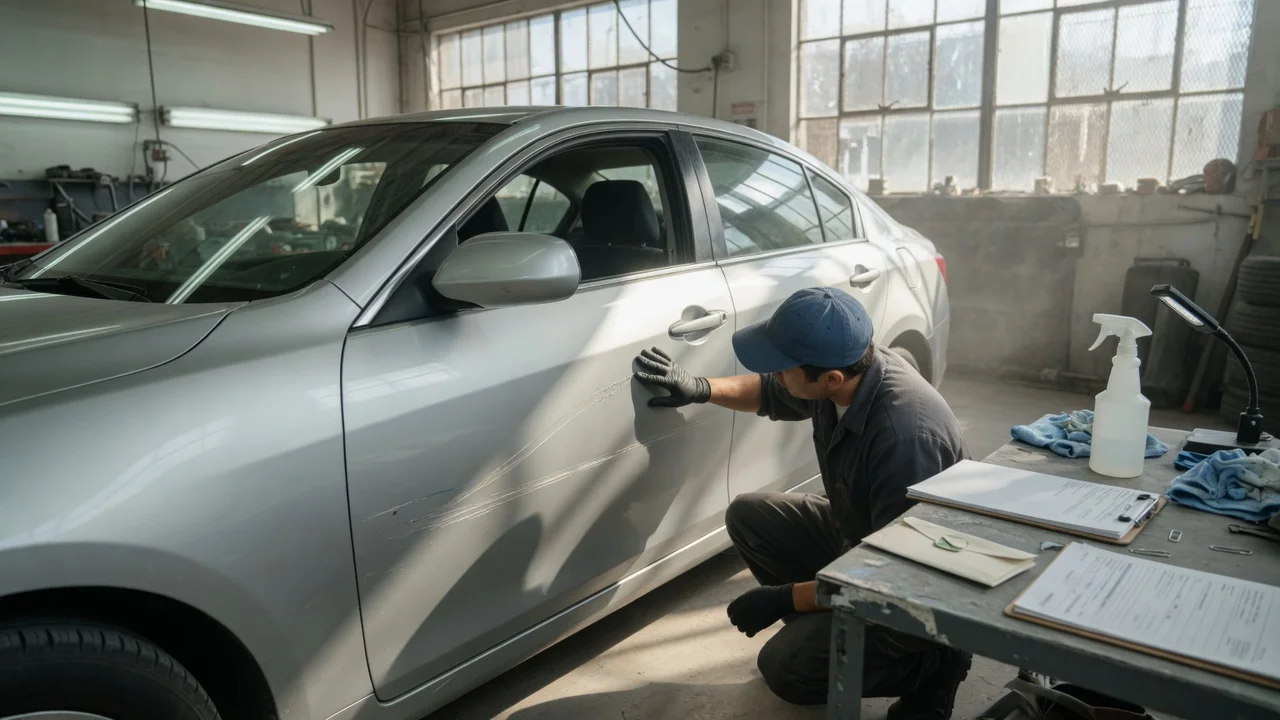
Does car insurance cover scratches?
Car insurance can cover scratches, but only when the damage is a covered loss under a policy you actually carry, and only after you pay any applicable deductible. Liability coverage on its own does not pay to repair scratches on your own vehicle. Collision and comprehensive coverage are the parts of a typical auto policy that may pay for paint, clear-coat, and body work on your car. Whether a claim is practical depends on how the scratch happened, how deep it is, what it costs to repair, and how large your deductible is.
Policy wording, deductibles, and state rules vary by insurer and market. The answer for a parking-lot scrape is often different from vandalism, a hit-and-run, hail, or a shopping-cart ding. If the repair bill is smaller than the deductible, insurance will not write a check, and you pay the full cost yourself.
Which coverage can apply
Collision coverage typically applies when your vehicle is damaged by impact with another vehicle or object while it is being driven or is otherwise involved in an accident. That can include door dings from another car, bumper scrapes in a collision, and paint damage from hitting a post, curb, or garage wall, if those events meet the policy’s collision definition.
Comprehensive coverage typically applies to non-collision events. Scratches caused by vandalism, falling or flying objects, hail, storm debris, animals, or similar named perils are more often treated as comprehensive claims than collision claims. Keying, keyed-paint vandalism, and similar malicious damage are commonly framed as comprehensive losses when the policy includes that coverage.
Liability coverage pays others for injury or property damage you legally cause. It does not repair your own paint. If you scratch someone else’s car, their repair may be paid under your property-damage liability, subject to your limits and the other party’s claim. Your own scratches still need collision, comprehensive, or another first-party coverage, or they stay an out-of-pocket repair.
Some policies also include uninsured or underinsured motorist property-damage coverage, rental reimbursement, or similar add-ons. Availability and names differ by state and insurer. Those coverages can matter when another driver causes the scratch and has little or no insurance, but they are not automatic on every policy.
Cause of the scratch matters
Accident or impact with another vehicle or object: often a collision claim if you carry collision coverage. Vandalism, keyed paint, or malicious damage: often a comprehensive claim if you carry comprehensive coverage. Hail, falling branches, road debris, or similar non-collision events: often comprehensive, subject to the policy’s listed perils. You caused damage only to another person’s vehicle: their repair may fall under your liability; yours does not. Wear, neglected clear coat, swirl marks from washing, or gradual cosmetic aging: typically not a covered sudden loss. Unknown cause with no police report, photos, or other support: the insurer may deny or delay the claim until the loss is documented.
Insurers generally treat a covered scratch as a sudden, accidental, or malicious event, not as ordinary wear. Light swirl marks from automatic car washes, fading, and oxidation are usually maintenance, not a claim. A single deep gouge through the clear coat and color coat from a known incident is more likely to be evaluated as repairable damage from a specific loss.
Deductibles and out-of-pocket costs
A deductible is the amount you pay toward a covered repair before the insurer pays the rest. Collision and comprehensive each have their own deductible on many policies, and those amounts are not always the same. If a body shop estimates $400 to blend a fender and your comprehensive deductible is $500, you pay the full $400 and insurance pays nothing on that loss.
Exact deductibles, labor rates, and paint-repair prices are not uniform. They depend on the vehicle, the panel, whether the shop must blend into adjacent panels, whether plastic bumpers or aluminum panels are involved, and local labor and materials costs. Public sources and shop estimates vary widely from a low-cost touch-up of a surface mark to a multi-panel respray. Treat any single dollar figure you see online as an illustration until a shop inspects the car.
Out-of-pocket cost is not only the deductible. You may also pay for betterment if the insurer argues that the repair improves the vehicle beyond its pre-loss condition, for OEM versus aftermarket parts differences if the policy allows them, for paint protection film or ceramic coating that was not part of the original repair, and for any damage the adjuster finds unrelated to the claimed event. If the car is a total loss on a larger claim, scratches are folded into the actual-cash-value settlement rather than paid as a standalone paint job.
When filing a claim is worth considering
A claim is most likely to make financial sense when the documented repair cost is well above the deductible, the cause fits collision or comprehensive, and you can show when and how the damage occurred. Deep scratches into primer or metal, multiple panels, bumper cover replacement, or damage that will rust if left open are the kinds of losses where insurance is more often used.
A small surface scratch that a detailer can polish out, or a single nick that a touch-up pen can disguise, is often cheaper to handle without a claim. Filing can still be the right choice if you need a documented repair for a lease-end inspection, if rust risk is real, or if another identified party is at fault and their insurer is handling the loss so you are not using your own collision or comprehensive coverage.
Premium effects after a claim are not fixed. Some insurers surcharge after at-fault collision claims; comprehensive claims such as vandalism or hail are treated more leniently in some rating plans and not in others. Accident forgiveness, claim-free discounts, and state rating rules all change the outcome. Ask your insurer how this specific loss would be classified and whether it would affect your rate before you file, because that classification is a policy and underwriting decision, not a universal rule.
How a typical scratch claim proceeds
Document the damage with clear photos of the scratch, the surrounding panels, and any related debris or the other vehicle if one was involved. Note the date, location, and cause. For vandalism or hit-and-run, a police report can support a comprehensive or uninsured-motorist claim where those coverages exist. Report the loss to your insurer or to the at-fault party’s insurer if another driver is identified and admits or is found responsible. Get a written estimate from a shop the insurer accepts, or from your preferred shop if you have that right under the policy or state law. The adjuster inspects in person or from photos and issues an estimate. You pay the deductible to the shop on a covered first-party claim. Keep records of prior damage. Insurers routinely exclude old scratches that predate the claimed event.
You generally may choose the repair facility unless a direct-repair program or endorsement limits that choice. State consumer rules on shop selection differ. The insurer owes a repair that returns the vehicle to its pre-loss condition as defined in the policy, which may allow aftermarket or recycled parts in some markets. If you want dealer-only paint procedures, specific brand-name materials, or extra clear coat beyond the estimate, the difference is usually yours to pay.
If another driver caused the scratch
When another identified, insured driver is at fault, their property-damage liability may pay to repair your vehicle, often without using your collision deductible. You still may need to open a claim with your own insurer if the other party is slow, uninsured, or disputed, then seek reimbursement later. Hit-and-run scratches with no identified driver usually fall back on your collision or comprehensive coverage, or on uninsured-motorist property-damage coverage where it is sold, each with its own deductible and proof requirements.
Do not assume the other driver’s insurer will pay for related cosmetic work you already wanted, such as polishing the whole car or replacing undamaged trim. They owe the damage from the incident. Disputes over blend panels, used versus new bumper covers, and whether a scratch is new are common; photos taken the day of the loss are the practical evidence.
Paying without insurance
Out-of-pocket repair is the usual path when you have liability-only coverage, when the estimate is below the deductible, or when you prefer not to report a small loss. Options range from a color-matched touch-up for a nick, to machine polishing of a clear-coat-only mark, to a body-shop respray of one or more panels. Paintless methods do not fix true scratches through the clear coat; they address dents. A shop should say whether the mark is in the clear coat only or through color and primer, because that determines whether polish, a spot repair, or a full panel refinish is required.
Leased vehicles and some financed vehicles can create extra pressure to repair visible paint damage before turn-in or sale. Excess-wear charges at lease end are a contract issue with the lessor, separate from whether insurance would have paid at the time of the loss. If you wait months to claim a scratch, the insurer may question whether the damage is from a single covered event.
Limits and gaps
This guide describes how personal auto policies commonly treat scratch damage in the United States. It does not replace your declarations page, endorsements, or state insurance code. Commercial policies, antique or agreed-value policies, usage-based policies, and policies sold outside the U.S. can use different coverage names and deductibles. No single deductible amount, repair price, or surcharge percentage applies to every car or every insurer; those figures have to come from your policy and a current shop estimate.
If you need a next step, read the collision and comprehensive deductibles on your declarations page, photograph the scratch, and ask a body shop for a written estimate that states whether the damage is clear-coat only or through the color coat. With those two numbers, you can tell whether insurance would pay anything and whether filing is worth the possible rating effect. For vandalism or an unidentified driver, ask the insurer which coverage applies and what documentation it requires before you authorize work.