Windshield Repair With Insurance: Coverage, Claims and Out-of-Pocket Costs
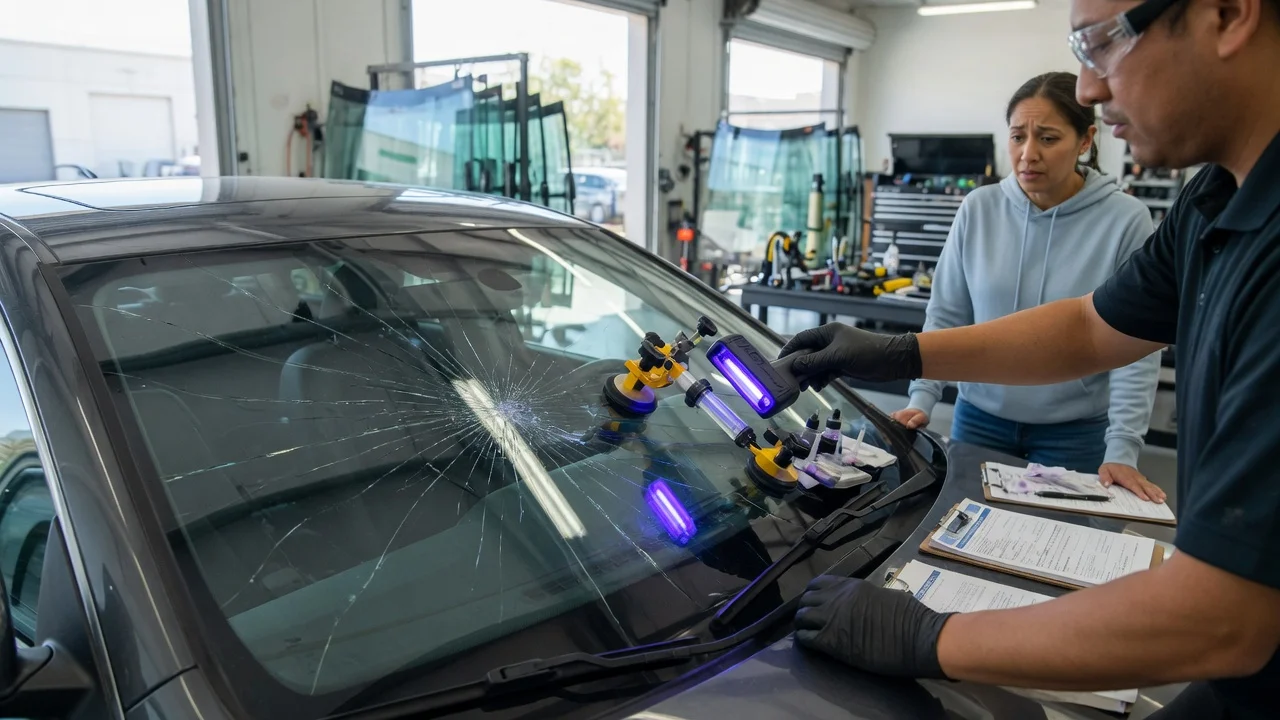
The short answer
Windshield chips, cracks, and full glass replacement are usually paid under comprehensive coverage, sometimes called other-than-collision, when that coverage is on the policy. A glass endorsement or full-glass option on some policies reduces or removes the comprehensive deductible for glass work. Collision coverage applies when crash impact broke the glass. A liability-only policy leaves the windshield as an owner expense. Deductibles, repair-versus-replace rules, shop choice, and whether a claim changes premium all depend on the declarations page, the insurer’s glass program, and the rules of the state or province where the vehicle is registered.
Which coverage actually pays
Comprehensive is the part of a physical-damage policy that responds to stone chips, cracks from road debris, vandalism, hail, and similar non-crash events. If the windshield failed because another vehicle, a guardrail, or similar impact in a collision struck the car, the claim is a collision claim and the collision deductible applies. Medical-payments, personal-injury-protection, and uninsured-motorist coverages do not pay to restore the glass.
Some insurers sell a glass or full-glass endorsement. That rider typically applies the comprehensive coverage to windshield work with a lower deductible, or with no deductible, for repair and sometimes for replacement. The endorsement language, not a shop’s verbal summary, controls whether a chip repair is free to the owner and whether a full windshield still carries a deductible.
Coverage also varies by market. In some U.S. states, insurers that write comprehensive must waive the deductible for windshield repair, and a smaller set of jurisdictions treat replacement the same way. Provincial auto plans in Canada and insurer programs elsewhere use their own glass rules. Confirm the rule that applies to the registered vehicle rather than assuming a national standard.
Repair versus replacement
Insurers generally prefer resin repair when the damage can be restored to a safe, optical standard. Repair is faster, costs less than a new windshield, and is the path most likely to proceed with no deductible when a glass waiver or endorsement exists. Replacement is the usual path when the break is too large, too deep, in the driver’s primary viewing area, at the edge of the glass where structural bonding matters, or when the laminate is delaminated or the inner layer is cracked.
Shops and insurers use internal size and location limits rather than one universal measurement. A small bull’s-eye or star break away from the driver’s sight line is often a repair candidate. A long crack, damage that reaches the frit (the black painted border), multiple impact points, or a break that sits in front of a camera or rain sensor more often requires a new windshield. The insurer or its glass network makes the covered determination after photos or an inspection; a shop estimate is evidence for that review, not a substitute for the policy decision.
What a glass claim usually involves
Photograph the damage in place, including a wide shot of the windshield and a close shot with an object for scale, before anyone starts work. Read the declarations page for comprehensive, the comprehensive deductible, and any glass endorsement. Report the loss to the insurer or the glass program the policy names. Many carriers assign a network shop or a mobile technician and treat that assignment as the approved repair path. Ask whether the job is classified as repair or replacement, what deductible will be billed, and whether original-equipment glass, dealer glass, or aftermarket glass is authorized. Keep the work order, the glass part number or DOT mark if a windshield is replaced, and any calibration report. Those records support the claim and later resale or warranty questions.
You may use a shop outside the network if the policy allows it. The insurer can still limit payment to its prevailing rate, so any price above that figure can become an owner charge. Get the allowed amount in writing before the glass is cut out.
Out-of-pocket costs
The common owner cost on a covered replacement is the comprehensive deductible, unless a glass waiver or endorsement removes it. Covered chip repair is frequently billed at zero to the owner when the policy or state rule waives the glass deductible for repair. If comprehensive is absent, the full shop invoice is an owner expense.
Replacement cost itself varies with the vehicle. A simple laminated windshield on an older model is a different invoice from acoustic, solar, heads-up-display, or camera-bracket glass on a late-model car. Published national averages exist in industry surveys, but they are not a quote for a given VIN. Ask the assigned shop for a line-item estimate that separates glass, urethane and labor, moldings, and any recalibration.
Aftermarket versus original-equipment glass can change the bill. Many policies pay for glass that meets the same safety standard as the part that was removed. If you require a dealer or original-equipment windshield and the policy authorizes a competitive equivalent, the difference can be billed to you. Heated wiper-park areas, rain sensors, acoustic interlayers, and camera brackets must match the vehicle’s build; a cheaper pane that omits those features is the wrong part, even if the outer outline fits.
Cameras, sensors, and recalibration
Vehicles with forward collision warning, automatic emergency braking, lane-keeping, or a camera-based speed-sign reader usually mount that camera on the windshield. Replacing the glass disturbs the camera’s aim. A complete repair on those vehicles includes static or dynamic recalibration, or both, to the maker’s procedure, plus a check that the rain sensor and any heads-up display still function.
When comprehensive or collision pays for the windshield, necessary recalibration is typically part of restoring the vehicle, provided the estimate documents it as required for that model. Confirm that the shop has the target board, scan tool, or road-drive procedure the manufacturer specifies, and that the claim file includes a passed calibration report. Driving with an uncalibrated forward camera can leave driver-assistance features unreliable; treat unfinished calibration as incomplete glass work.
Premium and claims history
Whether a glass claim changes the next premium is a policy- and insurer-specific question. Some carriers treat an isolated comprehensive glass loss more lightly than a collision claim; others still count it in their rating. A no-deductible repair processed through the glass program may still appear as a claim. If the damage is a single small chip and you are close to a renewal or a shopping period, ask the insurer how that report would be coded before you open the claim. The answer belongs on the call or in the app chat, because public rules of thumb do not bind the underwriter.
What to do next
Stop using tools, super glue, or nail polish on the break; those products interfere with a proper resin repair. Cover a spreading crack with a clear windshield patch only as a short-term measure to keep dirt out of the laminate, then get an inspection. Check comprehensive and any glass endorsement on the declarations page, then photograph the damage and call the insurer or its glass line. If the vehicle has a forward camera, ask explicitly whether replacement includes manufacturer-procedure recalibration. If you carry liability only, obtain an independent repair quote and decide whether to pay privately or add comprehensive at renewal; a new policy will not cover damage that already exists.
Limits of this guidance
This article describes how typical personal auto policies treat windshield work. It does not quote a deductible, a replacement price, or a premium effect for a specific vehicle, because those figures are set by the policy, the VIN, the shop, and the regulator. Fleet, commercial, and some manufacturer-branded insurance products use different glass rules. If the declarations page, the glass endorsement, and the assigned shop disagree, the written policy and the insurer’s claim decision control.