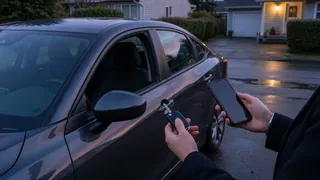
Digital Car Key Sharing
Digital car key sharing replaces a physical fob handoff with controlled access through a smartphone or other connected device. Instead of passing a mechanical key or remote transmitter in person, an owner can invite another driver temporarily. The vehicle still requires proper authentication and typically keeps its immobilizer protections, but the approval travels digitally. This article explains what the term means, how the shared key differs from a conventional spare, and why ownership verification remains important before granting access through an app or connected service.
Essential answer
Digital car key sharing is a method of granting temporary vehicle access without handing over a physical key. The owner typically uses a vehicle app, digital wallet, or manufacturer-connected service to send an invitation to another user's phone. The recipient can then lock, unlock, and in supported systems start the vehicle for a set period or under defined conditions. This is distinct from copying a mechanical key or programming an extra remote transmitter, because the access is managed through digital credentials and can often be revoked remotely.
The practical scope depends on the vehicle platform. Some systems use near-field communication at the door handle, while others rely on cloud commands and a data connection. The shared key may coexist with a conventional key fob, and the car's immobilizer still requires a valid electronic handshake before the engine will run. Because manufacturer implementations vary, the exact enrollment steps and available controls are vehicle-specific. An owner should confirm whether the shared credential can start the car or only unlock it, since that distinction changes how the feature should be used.