Diesel Glow Plug Replacement Cost: What Drives the Price and How to Compare Quotes
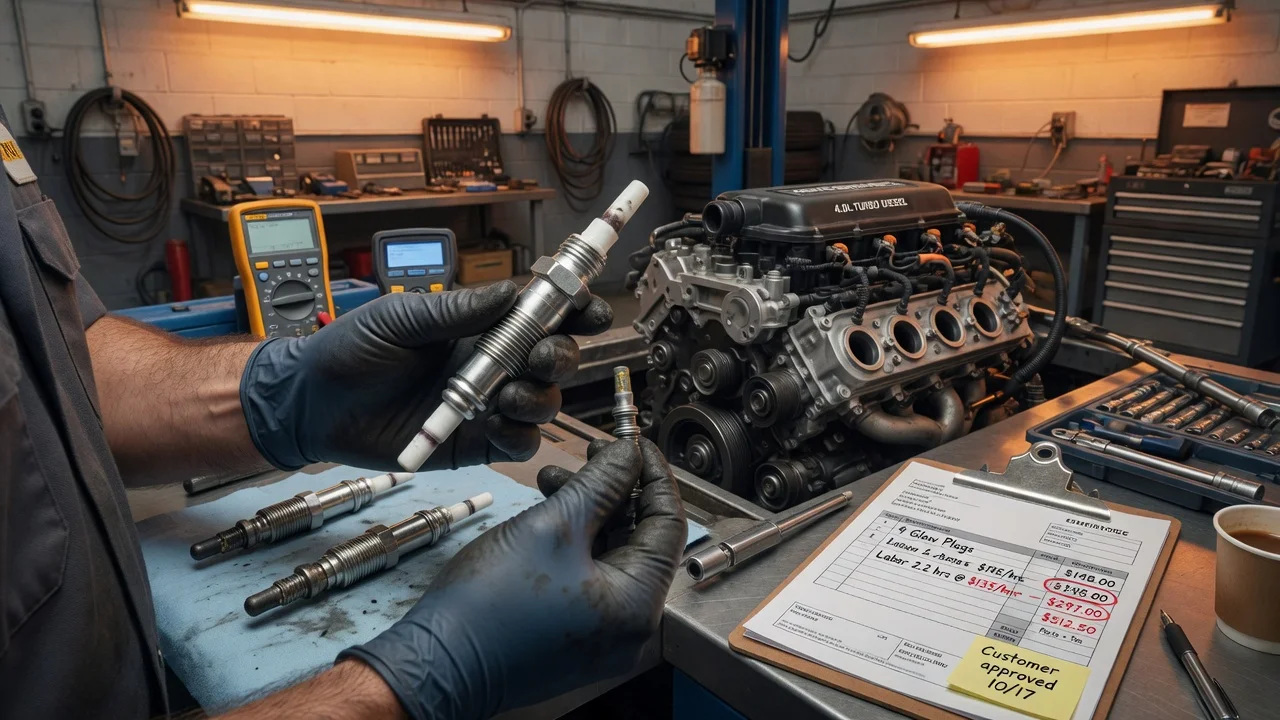
Replacing diesel glow plugs can be a short job or a long one, depending on the engine. On some engines the plugs sit in plain view on top of the cylinder head. On others, the intake, turbocharger plumbing or injector lines have to come off first. This guide explains what a complete estimate should cover, what moves the price, and how to compare quotes so you pay only for the work your engine needs.
What the estimate includes
A complete glow plug estimate usually covers four things. The first is diagnosis of the hard-start, rough cold-idle or warning-light complaint. The others are the plugs themselves, the labor to remove and install them, and a final check that the glow system works and no related fault codes remain. Some quotes also include the glow plug control module or relay, connectors, and any gaskets or seals disturbed to reach the plugs. A very low figure may cover parts only, or it may list a labor price per plug that leaves out the time needed to remove surrounding components.
Check what quantity a quote refers to. "Glow plugs replaced" can mean one failed plug or a full set. Many technicians recommend replacing the whole set at once, because plugs of the same age wear at a similar rate and the access labor is paid only once. That is a judgment call, not a universal requirement. Ask which approach the quote assumes, and ask how the shop handles a plug that will not come out cleanly. That situation is often excluded from the initial number.
What changes the cost
Engine configuration is the largest variable. A four-cylinder engine needs fewer plugs than a six or an eight. An inline engine with plugs on top of the head is generally quicker to service than a V engine with plugs under the intake manifold, near the turbo or beside the injectors. On some engines, fuel system parts must be moved out of the way. Modern common-rail diesels run extremely high fuel pressure while the engine is operating. A technician should only disturb high-pressure lines with the engine off and following the manufacturer's procedure. Some manufacturers specify new high-pressure lines once the originals are removed. A leak check with the engine running is then required after reassembly. These steps add parts and time, and they are not corners to cut.
Parts choice matters too. Glow plugs come in different designs, including conventional metal-sheath plugs and ceramic plugs. Some engines use pressure-sensing glow plugs that report cylinder pressure to the engine computer, and these typically cost more than standard plugs. Original-equipment parts and reputable aftermarket equivalents can differ in price and warranty. If the control module, relay or wiring harness has failed, that becomes a separate line item.
Seized plugs are the main source of surprise charges. Carbon buildup and corrosion can lock a plug in the head, and excessive force can snap it. Removing a broken plug may require special extraction tools. In severe cases the cylinder head has to come off, which turns a routine job into a major repair. Shop labor rates also vary by region and by shop type. Ask how the shop reduces seizure risk and what it charges if extraction becomes necessary.
Confirm the cause before paying
Glow plugs are not the only cause of cold-start trouble, white smoke or rough running when cold. Several fuel delivery problems produce similar symptoms: • a clogged fuel filter; • a weak lift pump or high-pressure fuel pump; • low fuel pressure; • a worn or leaking injector; • air in the fuel system; • fuel that has gelled in cold weather; A proper diagnosis includes testing each plug's resistance or current draw, checking the control module and its circuit, and reading stored codes. If the glow system tests good, it should also include measuring fuel pressure with appropriate equipment. New glow plugs will not fix a fuel supply fault, so a quote that skips testing deserves questions.
Fuel additives are not a substitute for this work. Anti-gel products can help prevent winter fuel gelling, and cleaners are marketed for injectors. Neither repairs a burned-out glow plug or a failed control circuit. Also confirm the quote matches your exact engine. Many models are sold with gasoline and diesel engines, or with more than one diesel option, and the parts and labor differ between them.
Compare like-for-like options
Dealers, independent diesel specialists and general repair shops can all do this job, but their quotes are only comparable when the scope matches. Line up the number of plugs, the brand and part type, whether the module or relay is included, and any access parts such as gaskets or high-pressure lines. Then compare the parts and labor warranties and each shop's policy on seized or broken plugs. A low quote for one plug is not cheaper than a higher quote for a full set if you return in a few months for the rest. A shop that regularly services your engine family may also know its access steps and seizure tendencies, which can lower risk even if its hourly rate is higher.
Doing the job yourself can make sense on engines with easy access, if you have the correct socket and a torque wrench and follow the specified procedure. The risks are real, though. Glow plugs have low torque specifications and break easily if forced or over-tightened. If reaching them means disturbing injector or high-pressure fuel lines, leave the work to a shop that can follow the manufacturer's procedure and perform the leak check afterward.
Read an itemized quote
A useful quote lists the following: • the diagnostic fee, and whether it is credited toward the repair; • the brand, part numbers and quantity of glow plugs; • labor hours and the hourly rate; • access components and one-time-use parts; • the control module or relay, if replaced; • shop supplies, disposal fees and taxes; If labor appears as a flat price, ask what it assumes about access and plug condition.
Look just as carefully at what the quote leaves out. Common exclusions are broken-plug extraction, cylinder head work, additional repairs found during the job, and any module programming or fault-code clearing. Ask for the warranty terms in writing. Request a phone call before any extra work that would push the bill past the estimate.
Decide the next step
To get an estimate you can rely on: • Collect the year, make, model, engine code and VIN. • Note when the symptoms happen and which warning lights appear. • Have stored codes read and the glow system tested before committing to parts. • Ask for a written, itemized estimate that states whether it covers a full set or specific plugs, plus the shop's seized-plug policy and warranty terms. • Compare only quotes with equivalent scope. Avoid shortcuts such as relying on additives, ignoring a glow system warning light, or using aerosol starting aids, which many manufacturers warn against on engines with glow plugs.