Engine Oil Overfill Symptoms in a Diesel
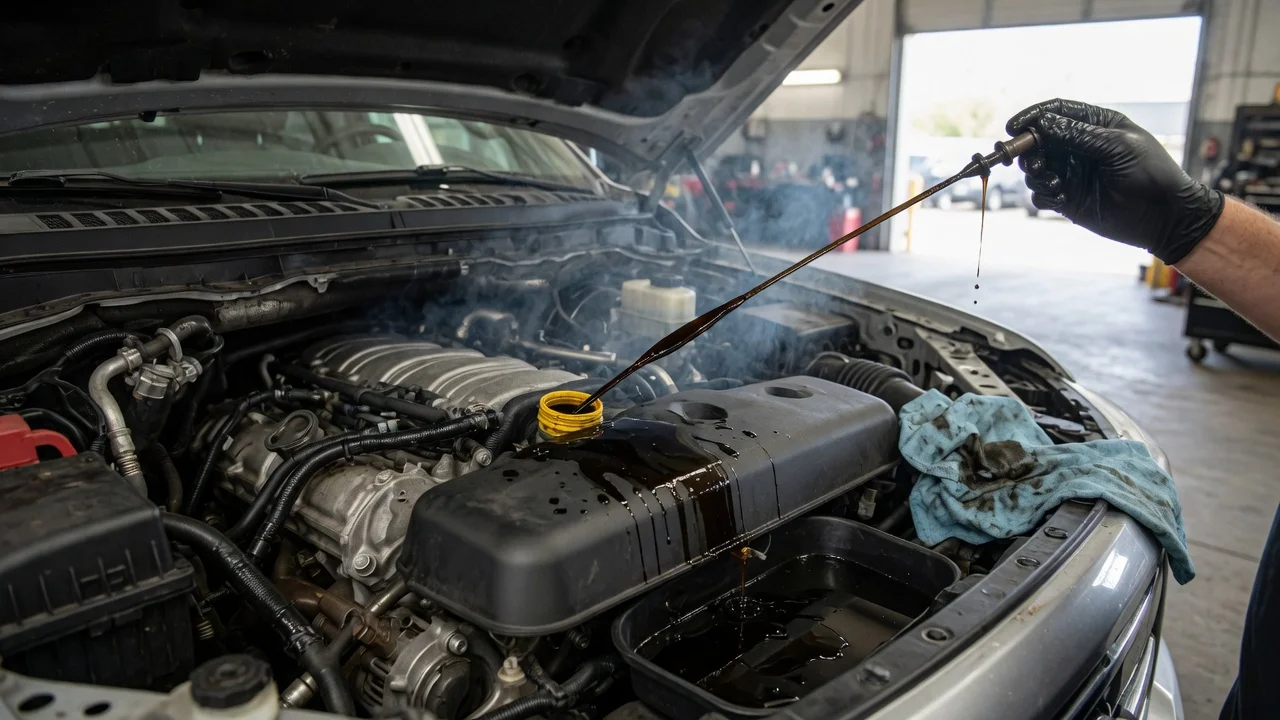
A diesel engine can have too much oil without showing an immediate symptom. If the level is genuinely above the dipstick’s full mark, possible signs include oil leaks, oil entering the intake through the crankcase ventilation system, exhaust smoke or rough running. A severe overfill can cause the rotating crankshaft to churn the oil, which may interfere with lubrication. These signs have other possible causes, so the oil level is the first thing to verify.
Confirm the reading
Park on level ground and check the oil using the procedure in the vehicle’s owner’s manual. Engine temperature, the wait after shutdown and the dipstick reading method can affect the result. Wipe and reinsert the dipstick as directed, then read it again. An apparent reading over the full line does not establish an overfill until it is checked under the specified conditions. There is no universal safe amount above that line; the acceptable range depends on the vehicle and engine.
What the result may mean
If the level was high immediately after an oil change or top-up and stays stable, too much oil may have been added. If it continues to rise without oil being added, the cause may be something entering the sump. In a diesel, fuel dilution is one possibility; coolant contamination is another. A fuel smell or an unusual change in the oil’s appearance can guide further checks, but neither identifies the cause on its own.
Smoke, leaks and rough running do not prove that excess oil is responsible. If these occur while the level is high, have the intake and crankcase ventilation system checked for oil and investigate other relevant faults. If a warning or fault code is present, use the code definition and its test conditions for that vehicle; the code alone does not establish that a particular component needs replacement.
What to do next
If a correctly taken reading is above the permitted range, have the excess oil removed and the level set to the vehicle’s specification before continuing normal use. If the level is substantially high, the engine smokes or runs abnormally, or an oil pressure warning appears, stop the engine and arrange an inspection. If the oil level rises again after correction, investigate the source of the added fluid rather than repeatedly draining it.