Diagnose GM 1.4L Turbo Engine Problems
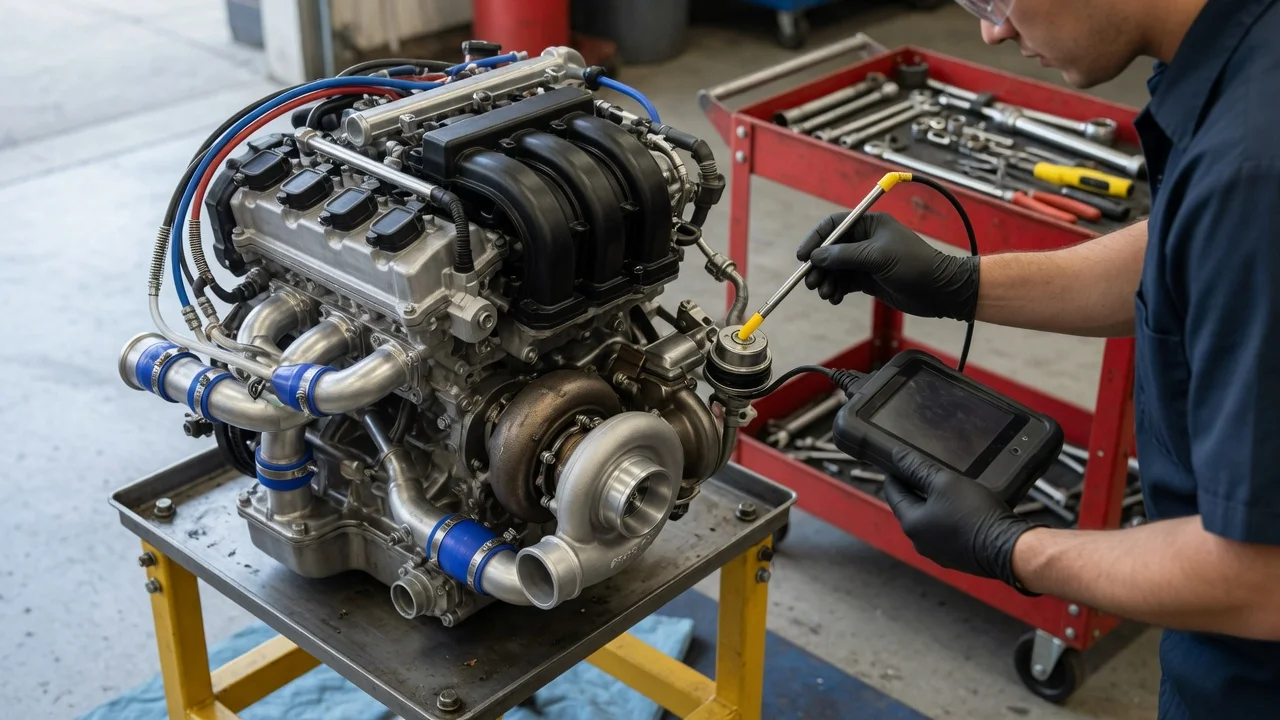
The Short Answer
Most problems reported on GM's 1.4-liter turbocharged four-cylinder fall into a few groups: crankcase ventilation (PCV) faults built into the valve cover, coolant leaks, oil leaks around the turbocharger and engine seals, ignition misfires, and turbocharger or boost-control faults. These groups often overlap. A failed PCV system, for example, can cause oil leaks, a lean-running engine and a rough idle at the same time. To diagnose the problem, match the symptom to the system involved, make a few simple checks, and treat any stored fault code as a clue rather than proof that a specific part has failed.
Scope matters. GM fitted 1.4L turbo engines to vehicles such as the Chevrolet Cruze, Sonic and Trax and the Buick Encore over several model years. The earlier port-injected versions are commonly identified by the engine codes LUJ and LUV. A later redesigned direct-injection version is commonly identified as LE2. Some failure patterns apply more to one generation than the other, so confirm your engine before relying on any model-specific advice. The engine code usually appears on the service parts identification label, often found in the glovebox or trunk, and a dealer can confirm it from the VIN.
This guide summarizes commonly reported failure patterns and general diagnostic logic. It is not based on supplied test data, failure-rate statistics or a confirmed list of recalls and technical service bulletins. Check open recalls and any bulletins that apply to your exact vehicle by VIN with a dealer or the manufacturer.
Stop Driving or Seek Professional Diagnosis If You See These
A flashing check engine light, which usually indicates an active misfire that can overheat and damage the catalytic converter; An oil pressure warning, or a low oil level combined with knocking or ticking that gets worse with load; A temperature gauge climbing toward hot, a coolant warning, or steam from the engine bay; Thick white exhaust smoke with a sweet smell, or coolant loss with no visible external leak; Heavy blue or gray smoke, especially under boost, which can point to turbocharger seal failure or oil being drawn into the intake; A sudden loss of power together with loud metallic noise or an engine that will not idle; A strong fuel smell or visible fuel leak
Any of these can lead to engine, turbocharger or catalytic converter damage if you keep driving. Have the vehicle towed or inspected before further use.
Match the Symptom to the Likely System
Symptom | Systems worth checking first | What to look for; Whistling or hissing at idle, rough idle, lean codes | PCV system and valve cover, intake leaks | Sound near the valve cover, strong suction or resistance when removing the oil filler cap with the engine running; Oil on the engine, oil smell, oil consumption | Valve cover gasket, PCV system, turbo oil feed and return lines, oil cooler or housing seals | Wet residue on the valve cover edges, the turbo lines or the area under the intake side; Falling coolant level, sweet smell, overheating | Water pump, thermostat housing, coolant reservoir, turbo coolant lines, hoses | Crusty dried coolant deposits, drips under the front of the engine, a cracked reservoir; Shaking, hesitation, misfire codes | Ignition coil pack, spark plugs, injectors, vacuum leaks | Which cylinder is misfiring and whether the misfire moves when parts are swapped; Low power, boost-related codes, rattling on startup or deceleration | Turbocharger wastegate, boost hoses and intercooler pipes, sensors | Split or loose boost hoses, wastegate movement or rattle, oil inside the intake piping; Warning lights with no obvious drivability change | Sensors, wiring, evaporative emissions system | The exact fault code and its freeze-frame data
PCV System and Valve Cover Faults
The positive crankcase ventilation (PCV) system routes gases that leak past the piston rings back into the intake, so they are burned rather than vented. On the 1.4L turbo, parts of this system are commonly integrated into the valve cover. That means a failed diaphragm or check valve often requires replacing the whole cover assembly rather than a single small part.
Typical signs include a whistle or hiss at idle, a rough or unstable idle, oil leaks around the valve cover or rear main seal area from excess crankcase pressure, and lean-condition or air-flow related fault codes. A common owner check is to remove the oil filler cap with the engine idling. Unusually strong suction or difficulty removing the cap suggests a ventilation fault. Treat this as a screening check, not a definitive test, and confirm with a smoke test or a technician's pressure check.
Why it matters: a PCV fault can create or worsen oil leaks elsewhere and can make other diagnoses misleading. If you see lean codes and oil seepage together, check the PCV system before replacing sensors or seals.
Coolant Leaks
Coolant loss is one of the most frequently reported complaints on this engine family. Common leak points include the water pump, the thermostat housing, the plastic coolant reservoir, hoses, and the small coolant lines that cool the turbocharger. A sweet smell after driving, a reservoir level that keeps dropping, or a low-coolant warning are the usual first signs.
Check with the engine cold. Look for dried white, pink or orange crust around the thermostat housing, water pump area, reservoir seams and turbo coolant lines. A cooling system pressure test can reveal leaks that only appear under pressure. If coolant disappears with no external trace, or you see white exhaust smoke or milky residue under the oil filler cap, stop driving and have the engine checked for internal leakage.
Oil Leaks and Oil Consumption
Beyond the valve cover, oil commonly leaks from the turbocharger oil feed and return lines and from seals around the oil cooler or oil filter housing. Oil dripping onto hot exhaust parts can produce a burning smell or light smoke from the engine bay. Check the oil level regularly between changes, and note where fresh oil appears after the engine has been cleaned.
Oil found inside the intake piping or intercooler can come from normal crankcase ventilation, a PCV fault, or worn turbocharger seals. A small film is not automatically a failure. Pooled oil, rising oil consumption, or blue smoke under boost warrants professional inspection of the turbocharger.
Misfires and Rough Running
A misfire code identifies a cylinder that is not firing properly, not the cause. On this engine, frequent contributors include worn spark plugs, a failing ignition coil pack, vacuum leaks such as those from PCV faults, and fuel injector problems. A random or multiple-cylinder misfire code points more toward a shared cause, such as a vacuum leak or a fuel-supply issue. A single-cylinder code points more toward a plug, coil or injector on that cylinder.
A useful next step is to note the cylinder number, then see whether the misfire follows a component when it is moved to another cylinder. On direct-injection engines, carbon deposits on the intake valves are a recognized general concern and can contribute to rough running. Whether this significantly affects your particular 1.4L version is not established here, so treat it as a possibility for a technician to evaluate, not a default conclusion.
Turbocharged direct-injection engines can also be prone to low-speed pre-ignition, an abnormal combustion event at low engine speed and high load that can damage pistons in severe cases. Some owners and manufacturers recommend oils that meet newer specifications designed to reduce this risk. Use the oil specification listed in your owner's manual and check with a dealer whether any updated recommendation applies to your engine.
Turbocharger and Boost Problems
Loss of power, boost-related fault codes, or a rattling sound from the turbo area can come from the wastegate, the valve that limits boost pressure. Other causes include split or loose boost hoses and intercooler connections, or sensor faults. Before suspecting the turbocharger itself, inspect the boost piping and clamps for cracks, oil-wetted joints or disconnections, because these are cheaper and commonly overlooked.
Signs that point toward the turbocharger itself include excessive shaft play, whining or siren-like noise that rises with boost, and oil consumption with blue smoke. Shaft play and wastegate function should be assessed by a technician.
How to Use Fault Codes Correctly
Read the codes with a scan tool and record them, along with freeze-frame data if available, before clearing anything. A code tells you which reading or condition the engine computer flagged, not which part failed. For example, a lean code can result from a vacuum leak, a PCV fault, a sensor problem or low fuel delivery. Fix the most likely and least invasive cause first, clear the codes, and confirm whether the fault returns under the same driving conditions.
Suggested Diagnostic Order
Confirm your engine code and model year so you can apply the right guidance; Check for open recalls and applicable service bulletins by VIN; Read and record all fault codes and freeze-frame data; Check oil and coolant levels and condition with the engine cold; Inspect visually for coolant crust, oil residue and loose or split hoses; Screen the PCV system using the oil filler cap check, then confirm with a smoke or pressure test; For misfires, identify the cylinder and test plugs, coils and injectors in turn; Refer turbocharger, internal coolant leak and pre-ignition concerns to a qualified technician
What This Guide Cannot Tell You
No failure rates, repair costs, mileage thresholds or confirmed recall and bulletin details were available for this guide, so it does not say how likely each fault is or what a repair should cost. Specific parts, revised components and repair procedures can differ by model year, engine code and market. A dealer or independent technician with access to GM service information is the best source for your exact vehicle.