Common turbo intercooler problems
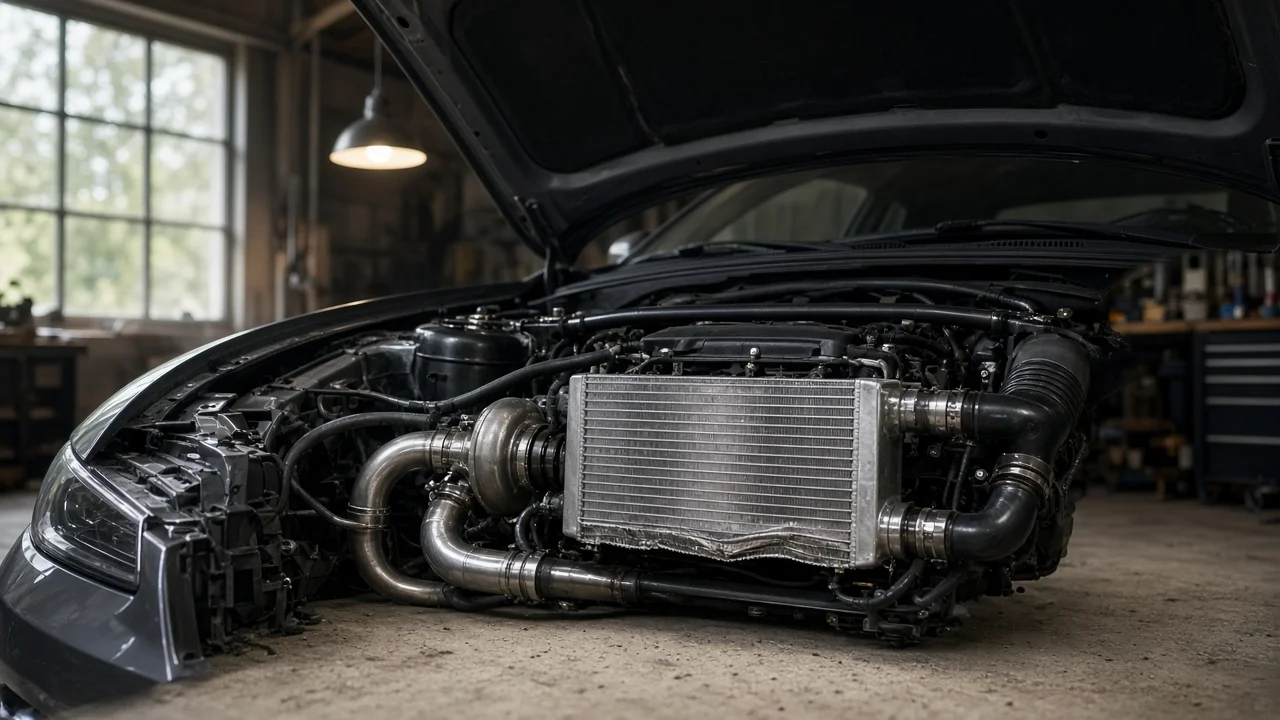
Turbocharged engines depend on the intercooler to remove heat created when the turbocharger compresses intake air. When this heat exchanger develops turbo intercooler problems, charge-air temperature rises, detonation margin shrinks, and power delivery often becomes inconsistent. The issue may appear suddenly after impact or gradually through oil contamination, boost leaks, or airflow blockage. Model year, powertrain variant, service history, and symptom conditions all shape how a fault develops. Recognizing the early clues helps an owner distinguish a cracked end tank, a leaking coupling, or an externally clogged core before minor boost loss becomes repeat repair records trouble.
Essential answer
The essential answer is that common turbo intercooler problems usually involve physical damage, leaks, or reduced heat transfer rather than an electronic control failure. A front-mounted air-to-air intercooler can suffer stone impact, bent fins, cracked aluminum tanks, or split hose connections. Those defects allow pressurized intake air to escape, so the engine receives less oxygen than the airflow meter expects. The result may be soft acceleration, fuel trim shifts, or a check-engine condition. On some vehicles the intercooler sits low and also collects oil residue, making a small external leak look worse than the actual boost path failure.
The scope changes by powertrain variant and service history. Older or higher-mileage engines often push more crankcase vapor through the intake, leaving an oil film inside the intercooler even when the core is sound. A recall applicability check can identify known end-tank or hose clamp concerns for a particular model year, while repair records may show whether a previous collision repair left a bracket misaligned. Because intercoolers operate under positive pressure only during load, a leak may be silent at idle and obvious only when boost builds, so an owner should evaluate symptoms under realistic driving conditions.
Diagnosing a problem
Diagnosis starts with observable symptom conditions. If power falls only under sustained load or on hot days, heat soak or restricted airflow across the core is more likely. If the vehicle surges or whistles as boost rises, a split hose, loose clamp, or cracked end tank may be opening under pressure. Oil spray near a joint can point to a leaking charge-pipe connection, but oil residue alone is not proof of structural failure because some accumulation is normal. A fault code related to boost pressure or airflow is evidence to investigate, not confirmation that the intercooler itself has failed.
A practical check is visual: look for crushed fins, debris blocking the front face, bowed tanks, or chafed hoses. Pressurized smoke testing can help locate a leak, but any compressed-air test must be performed carefully within safe pressure limits and with the engine off. If the core is heavily oil-soaked internally, consider whether crankcase ventilation or turbocharger seal concerns are feeding it. When boost loss is severe enough to trigger limp-mode behavior, repeated misfire, or audible popping under load, stopped use and professional diagnosis is the appropriate next step rather than continued driving.













