Diagnose Ford F-150 engine problems
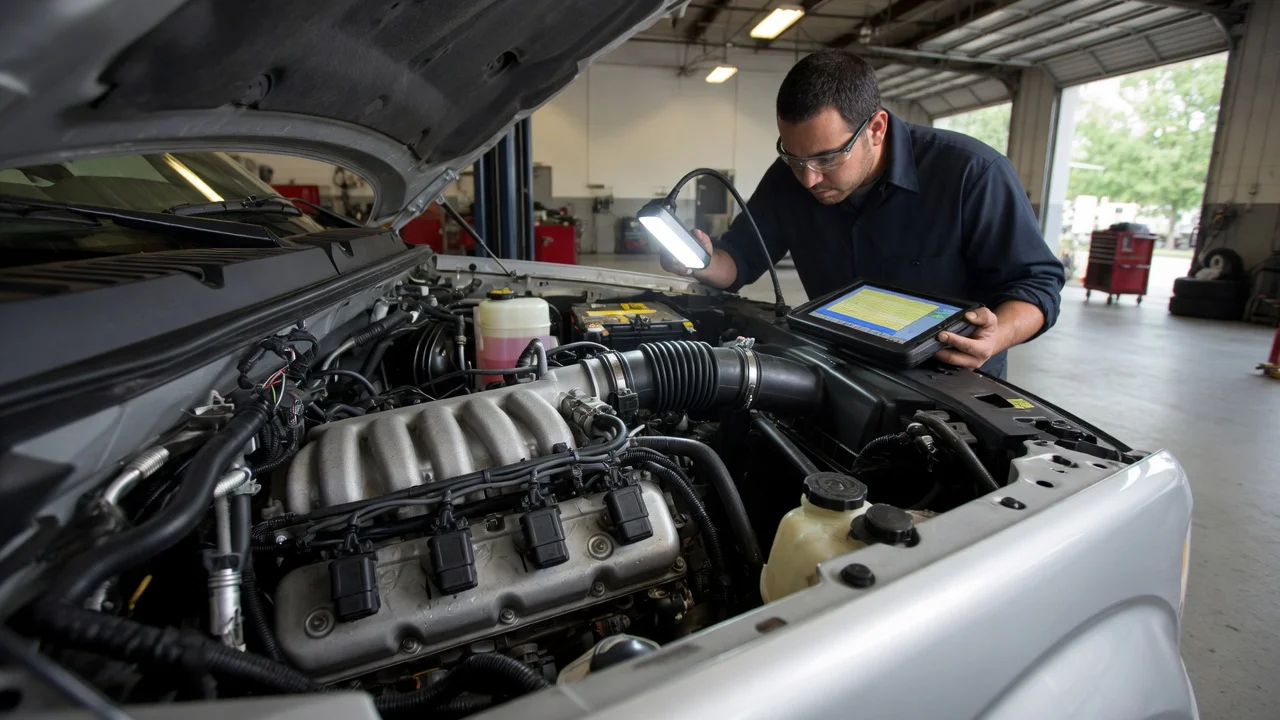
The short answer
There is no single "F-150 engine problem." The F-150 has used several very different engines across generations, including V8s, turbocharged V6s and naturally aspirated V6s. The engine in your truck, its model year and the specific symptom matter more than the nameplate. Start by confirming which engine you have. Then match the symptom to what can be observed or measured, and treat any fault code as a lead to investigate, not a verdict on which part has failed.
Two points apply to every F-150. First, check open recalls and technical service bulletins (manufacturer repair guidance for known issues) for your exact vehicle identification number (VIN), because coverage varies by build date and engine. Second, some symptoms mean you should stop driving right away. Those are listed near the end of this guide.
Evidence note: no test data, failure-rate figures, repair-cost figures or recall documents were supplied for this article. The engine-specific concerns described below are commonly reported owner and technician concerns, not measured findings. Confirm them against official recall and service bulletin information for your VIN.
Step 1: Identify your engine and generation
Recurring issues depend on the engine, so this step comes first. The engine size is usually shown on the emissions label under the hood, in the owner documentation and in the VIN. In the VIN, the eighth character identifies the engine. A dealer or VIN decoder can confirm what that character means for your truck.
Engine (applicable years) | Concerns commonly reported for this engine; 5.4L Triton three-valve V8 (roughly 2004–2010) | Rattle or ticking from the variable cam timing system (cam phasers), timing chain wear, and spark plugs that seize or break on removal in earlier years of this engine; 3.5L EcoBoost twin-turbo V6 (2011 onward) | Timing chain stretch on earlier versions; misfire or stumble under hard acceleration in humid weather on early trucks, linked to condensation in the intercooler; cold-start rattle from the cam phasers on later versions; 2.7L EcoBoost twin-turbo V6 (2015 onward) | Oil leaks, including from the oil pan on some versions; 5.0L Coyote V8 (2011 onward) | Owner reports of oil consumption and ticking noises on some model years; Other F-150 engines | Not covered here because supporting detail was not available
These are tendencies, not predictions. Many trucks with these engines never develop the listed issue, and a listed issue does not rule out an unrelated cause. Year ranges vary with the exact build date and with any updates Ford made during production.
Step 2: Read the codes, but don't stop there
An OBD-II scanner, plugged into the diagnostic port under the dashboard, reads stored and pending trouble codes. Write down every code before clearing anything. Clearing codes also erases freeze-frame data, which is a snapshot of operating conditions such as engine speed, load and temperature at the moment the fault was recorded.
A code tells you which circuit or condition the engine computer flagged. It does not tell you which part failed. Common examples:
Misfire codes (P0300 for random misfire, P0301–P0308 for a specific cylinder): possible causes include a worn or failed spark plug, a faulty ignition coil, a fuel injector, a vacuum leak, low compression or, on EcoBoost engines, moisture from the intercooler. A cylinder-specific code narrows the search but does not identify the part. Cam timing codes (P0011, P0012, P0021, P0022 and related): can point to the cam phasers or timing chain. They can also come from low or degraded oil, a sticking oil control solenoid or a wiring fault. Check oil level and condition before suspecting internal parts. Crank/cam correlation codes (P0016 to P0019): often raised when timing chain stretch is suspected. Sensor or wiring faults can set them too, so confirm with mechanical checks. Lean codes (P0171 and P0174, one for each bank of cylinders): commonly caused by vacuum or intake leaks, a dirty or failing mass airflow sensor, or fuel delivery problems.
Step 3: Match the symptom to observable checks
Rattle or ticking, especially at cold start
Check: Is the oil at the correct level, of the correct type, and changed on schedule? Does the noise last a second or two after a cold start, or does it continue once the engine is warm? Does it change with engine speed?
What it indicates: A brief rattle at cold start on a 5.4L three-valve or a later 3.5L EcoBoost fits the cam phaser concerns reported for those engines. A rattle that persists, or that comes with cam timing or correlation codes, points more strongly toward timing chain or phaser wear. Lifters, injectors, exhaust leaks and accessory drive parts can all tick as well. Low or neglected oil can cause or worsen several of these noises. A professional can use scan-tool cam timing data and a physical inspection to tell them apart.
Misfire, stumbling or hesitation
Check: Note when it happens. It could be at idle, under light load, or under hard acceleration. Note whether weather or humidity seems to play a part, and whether a cylinder-specific code is stored. On a coil-on-plug engine, swapping the suspect cylinder's coil with a neighboring cylinder shows whether the misfire follows the coil.
What it indicates: If the misfire moves with the coil, the coil is the likely fault. If it stays with the cylinder, the spark plug, injector, a vacuum leak or low compression become more likely. A stumble under hard acceleration in humid conditions on an early 3.5L EcoBoost fits the reported intercooler condensation issue, and Ford addressed it on affected trucks. Ask a dealer whether your truck was covered. On a 5.4L three-valve, have spark plugs replaced by someone familiar with the seizing and breakage risk on that engine.
Oil loss or oil consumption
Check: Look for wet spots or drips under the engine, around the oil pan, and at the front and rear of the engine. Check the oil level at regular intervals and record how much you add. Look for blue-gray smoke from the exhaust, especially at startup or after coasting downhill.
What it indicates: Visible wetness points to an external leak. On a 2.7L EcoBoost, the oil pan area is a commonly reported source. Oil that disappears with no visible leak suggests internal consumption, through the piston rings, the valve guides or, on turbocharged engines, the turbocharger seals. Consumption reports on some 5.0L Coyote years make level tracking worthwhile on those trucks. A shop can run a leak-down or compression test to find where the oil is going.
Loss of power
Check: Look for stored codes, a reduced-power warning on the dash, hissing or whistling under boost on EcoBoost engines, and a sudden drop in fuel economy.
What it indicates: On turbocharged engines, a boost leak from a loose or split intake hose or intercooler connection is a common, inexpensive possibility worth ruling out early. Clogged air filters, fuel delivery faults, exhaust restrictions and sensor faults can also reduce power. The engine computer may limit power on purpose to protect the engine, so a reduced-power warning calls for scanning the codes promptly.
Overheating or coolant loss
Check: With the engine fully cool, check the coolant level. Look for drips, white residue around hoses and the water pump, and a sweet smell. Check the oil for a milky appearance.
What it indicates: External leaks usually come from hoses, the radiator or the water pump. Coolant loss with no visible leak, white exhaust smoke with a sweet smell, or milky oil suggests coolant is entering the engine internally. That needs professional diagnosis before the truck is driven further.
When to stop driving
Pull over safely and shut the engine off, or do not start it, if you notice any of the following:
A flashing check engine light. This usually means a severe misfire that can quickly overheat and damage the catalytic converter. An oil pressure warning, or a deep knocking sound that gets louder with engine speed. A temperature gauge in or near the red, steam from under the hood, or a coolant warning. A strong smell of fuel, or visible fuel leaking. Smoke from the engine bay, or heavy smoke from the exhaust. Milky oil or coolant in the oil. A sudden, severe loss of power together with new noises.
When to hand it to a professional
Basic checks are within reach of most owners: fluid levels, visible leaks, reading codes and noting when a symptom occurs. Some diagnosis needs equipment, experience or both. This includes cam timing analysis, compression and leak-down testing, smoke testing for vacuum and boost leaks, and timing chain inspection. Repairs to timing components and work on 5.4L three-valve spark plugs also carry real risk of costly damage if done incorrectly. Bring your recorded codes, freeze-frame data and notes on when the symptom happens. That shortens diagnosis and helps you judge any repair recommendation.
Before paying for a repair, ask a Ford dealer to check your VIN for open recalls, service bulletins and any applicable extended warranty coverage. Some known issues have been addressed under these programs, but whether your truck qualifies depends on its engine, build date and mileage. Those details could not be confirmed here.