Diagnose engine code P2099
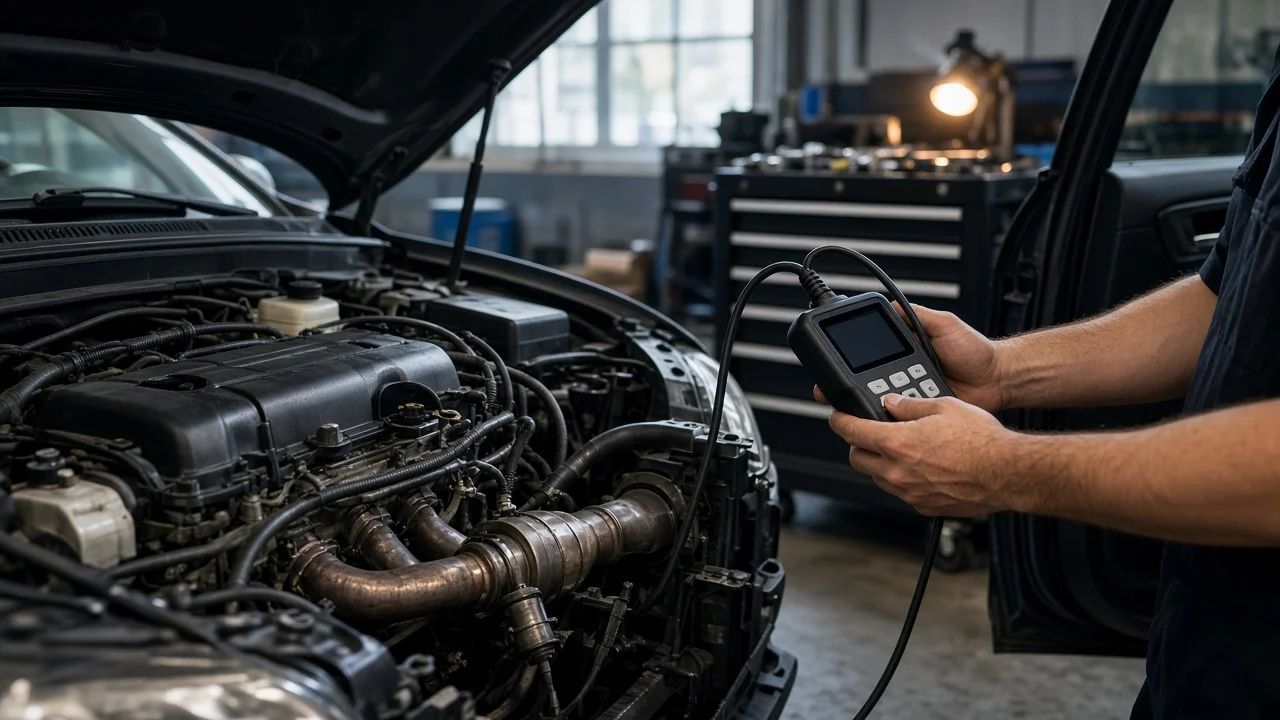
A P2099 diagnostic trouble code means the powertrain control module sees a post-catalyst fuel trim condition that is richer than the target it expects, often described as a downstream fuel system limit bias. Because the code is labeled “manufacturer controlled,” its exact definition and enable criteria can vary by vehicle platform. The code is a clue that the air-fuel correction strategy has reached an unexpected operating range, not proof that an oxygen sensor or catalytic converter has failed.
Essential answer
The essential answer is that engine code P2099 is a post-catalyst fuel system diagnostic related to a rich correction limit rather than a universally defined component failure. It generally appears when the powertrain control module observes the downstream oxygen sensor signal and associated fuel trim behavior outside the expected closed-loop range. Because the description is manufacturer controlled, the same code may point to different strategies on different engines. Use freeze-frame data to see the engine speed, load, coolant temperature, and fuel trim values present when the code set.
Accurate interpretation starts with understanding that a trouble code records operating conditions, not a failed part. The downstream sensor is used to monitor catalyst efficiency and post-catalyst air-fuel balance, and its signal can be influenced by an upstream mixture problem, an exhaust leak, a sensor circuit concern, or a converter issue. Confirm the vehicle-specific definition in service information before replacing anything. The stored freeze-frame and symptom conditions help narrow whether the condition appeared during light cruise, heavy throttle, or deceleration.
Diagnosing a problem
A practical first check when diagnosing a problem tied to P2099 is to inspect the live data from both front and rear oxygen sensors. If the upstream sensor shows a credible switching pattern but the downstream signal is biased, the fault may involve the post-catalyst reading rather than the entire fuel control system. Look for an exhaust leak near the rear sensor, because outside air entering the stream before or around the sensor can distort its reading and make the control module calculate a rich correction.
If the code resets under similar engine load and temperature after the code has been cleared and a confirmation test has been completed, the condition is repeatable and worth investigating further. Compare the fuel trim values from both banks on V-style engines, if equipped, to see whether the correction is isolated to one side. A consistent one-sided bias points toward a cylinder-bank or sensor-specific issue, while a shared bias may suggest a common intake, fuel, or exhaust influence that affects the complete engine.