Find Detroit DD15 oil capacity
The short answer: there is no single DD15 oil capacity to rely on
The Detroit DD15 is a heavy-duty inline six-cylinder diesel used mainly in Class 8 trucks. It belongs to Detroit's DD engine family alongside the DD13 and DD16. Many owners expect one oil capacity figure for the whole engine, but the correct fill can differ between builds. No verified capacity figure was available for this guide, so it does not quote a number. Get the documented figure for your specific engine, and treat the dipstick as the final check.
Figures for the DD15 circulate in forums, parts listings and quick-reference charts, often without saying which engine generation or oil pan they apply to. A number that is right for one truck can be wrong for another. Use a quoted figure as a rough guide only, and confirm it before you order oil or plan a service interval.
Why the figure can vary between DD15 engines
Several configuration details can change how much oil a given DD15 holds or needs at a change. Check which of these apply to your engine before trusting any published capacity.
Engine generation and emissions level: The DD15 has been produced across several emissions eras. Changes between generations can affect the lubrication system, so a figure for one era may not carry over to another. Oil pan design: The pan is chosen partly to suit the truck's chassis, and different pan shapes or sump positions can hold different volumes. Vehicle application: The same engine family is installed in different truck makes and models. The installation can affect which pan, dipstick and related parts are fitted. Filter and component count: The number of oil filters, and whether you replace them at the change, affects how much oil goes in during service compared with the engine's total system volume. Drain versus total capacity: A routine drain-and-refill rarely removes every drop. Oil left in coolers, passages and lines means the refill amount and the total system capacity are not the same number.
Some sources quote total system capacity and others quote the refill amount with a filter change. If a figure does not say which one it is, you cannot tell what it measures.
Where to find the documented capacity
The most reliable figure is the one tied to your engine's serial number or the truck's build. In rough order of reliability, check these sources:
The Detroit operator or owner's manual for your engine generation. Check that the manual covers your engine's model year and emissions level. The truck manufacturer's operator manual or maintenance manual. It may list engine oil capacity for the factory-installed pan and filter arrangement. An authorized Detroit service location or the truck dealer. Either can look up the build using the engine serial number or the vehicle identification number (VIN). Service records from previous oil changes, if they list the quantity used. Treat these as a cross-check only, because a previous fill may have been wrong.
How to identify your exact DD15 configuration
To get the right capacity, first confirm exactly which engine you have. The key identifiers are the engine serial number and the engine model designation, and these are normally recorded on an engine identification label or data plate. The label's position varies with engine generation and installation, so check the Detroit or truck manufacturer documentation for your configuration rather than assuming a location.
If the label is damaged, painted over or hard to reach, the VIN can usually be used to retrieve the engine build details through a dealer. When you ask for a capacity figure, give both the engine serial number and the VIN so the answer matches your actual oil pan and filter setup.
Do not confuse the DD15 with its siblings. The DD13 and DD16 share the DD family name and some design features, but their specifications are not interchangeable. Make sure any figure you find refers specifically to the DD15 and not to the engine family in general.
Use the dipstick to confirm the fill
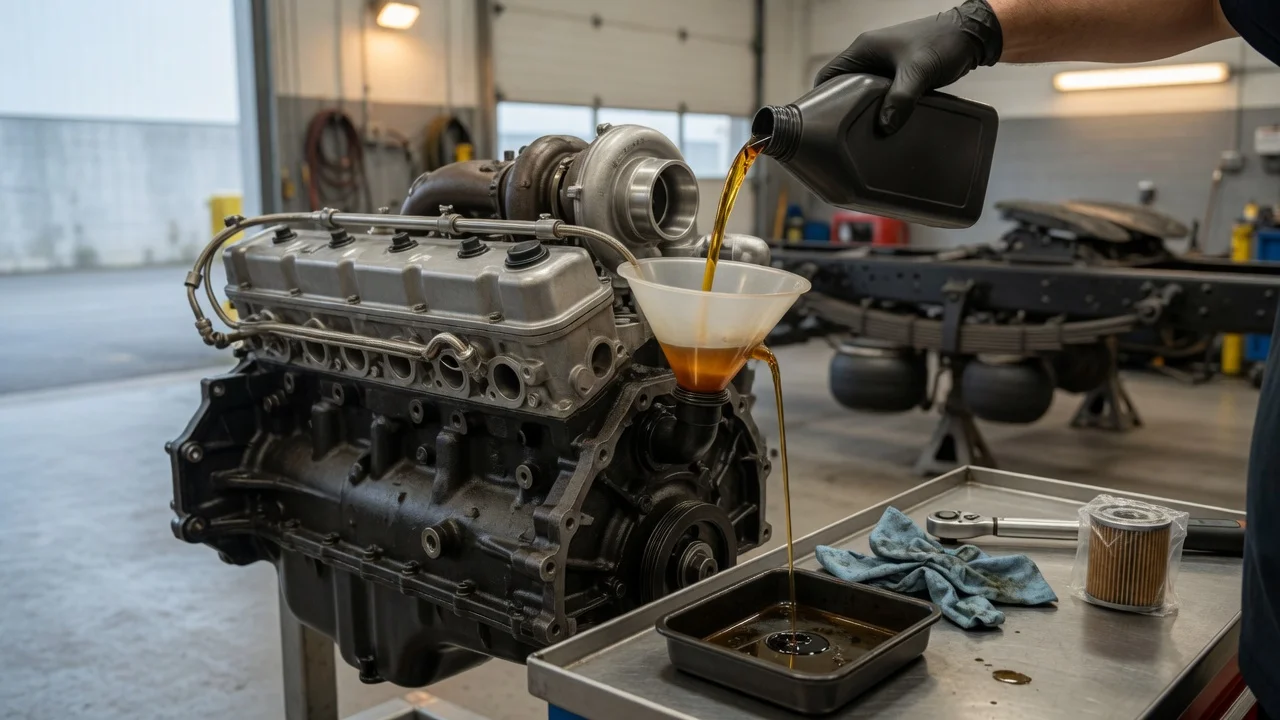
Even with the correct documented capacity, the dipstick is the practical check on oil level. A safe approach is to add slightly less than the listed refill amount, run the engine as the manual directs, shut it down, and then read the dipstick after the waiting period the documentation specifies. Top up gradually toward the full mark rather than pouring in the full quoted volume at once.
The dipstick and its markings must match the oil pan fitted to the engine. If a pan or dipstick has been replaced at some point, a mismatch can give misleading readings. If the dipstick reading and the documented capacity disagree significantly, have the parts checked before relying on either.
Oil specification matters as much as quantity
Capacity is only part of a correct oil service. Detroit specifies approved oil standards for its engines, and the requirement can differ between engine generations. Confirm the required oil specification and viscosity in the same documentation you use for the capacity figure. No oil specification data was supplied for this guide, so it does not name a particular grade.
Summary of what to do next
Record the engine serial number and the truck's VIN. Get the oil capacity and oil specification from Detroit documentation, the truck manufacturer's manual, or an authorized dealer, using those identifiers. Note whether the figure is total system capacity or the refill amount with a filter change. Fill slightly under the stated amount, then use the dipstick to bring the level to the correct mark.