Detroit DD15 Oil Pressure Specs: What the Correct Figure Depends On
The short answer
The Detroit DD15 is a heavy-duty inline-six diesel used mainly in Class 8 trucks. It has no single oil pressure figure that applies to every engine. Detroit's published oil pressure specifications depend on the engine's generation and emissions-certification version, the engine speed and the oil temperature when the reading is taken. Because no verified numeric values were supplied for this article, it does not list specific psi or kPa figures. Treat any single universal number found elsewhere with caution until you have checked it against Detroit's service documentation for your engine.
What changes the specification
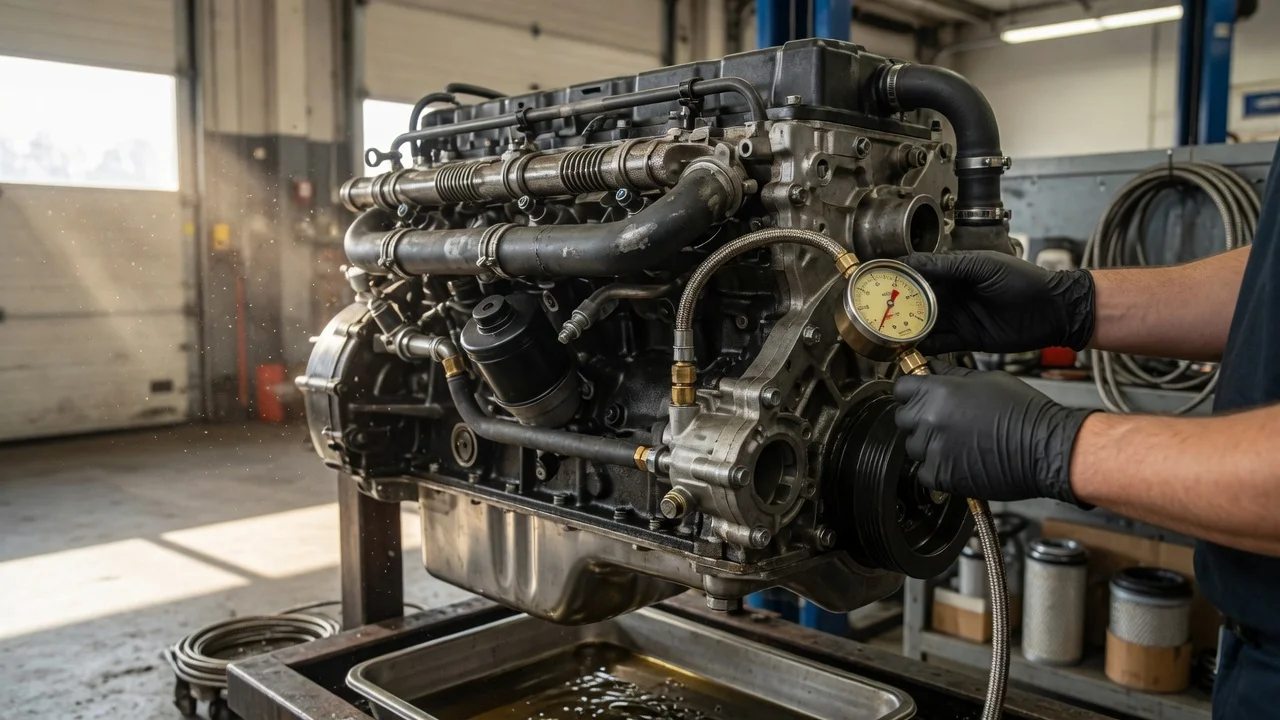
Engine version: the DD15 has been produced in several generations and emissions-certification versions, and the documentation for one version may not apply to another. Engine speed: oil pressure specifications are normally given separately for idle and for higher operating speeds, and pressure rises with rpm. Oil temperature: cold oil is thicker and reads higher, while fully warm oil reads lower. Specifications usually assume the engine is at normal operating temperature. Oil grade and condition: viscosity, fuel dilution and the oil's age all affect the reading. Use the oil specification Detroit lists for your engine version. Measurement method: a dash gauge, the electronic sensor reading in diagnostic software and a mechanical test gauge fitted to a service port can give different readings, so compare like with like.
How to find the correct figure for your engine
Start with the engine serial number and the model year of the engine. Note that the engine's model year can differ from the truck's. With those details, look up the oil pressure values in the Detroit workshop or troubleshooting manual for that engine version, or ask a Detroit-authorized service location. Detroit's diagnostic software can show live oil pressure alongside engine speed and oil temperature, along with any active or stored fault codes. That context is what makes a raw pressure number meaningful.
Reading a low or unusual result
A single low reading on a dash gauge does not confirm a mechanical problem. Sensors and wiring can fail and give false readings. The usual first step is to check the oil level and condition, then confirm the reading with a calibrated mechanical gauge at the specified test point and compare it with the published value for the same rpm and temperature. If the engine raises a low oil pressure warning or derates power, stop running it and diagnose the cause. Continuing to run an engine that has a real loss of oil pressure risks severe internal damage.
What this article could not confirm
Several details were not available from verified sources and are left out rather than estimated: the numeric minimum idle pressure, the numeric operating-speed range, the warning and shutdown thresholds programmed into the engine controller, and how these values differ between DD15 generations. Confirm those figures in Detroit's service documentation for the specific engine serial number before acting on them.