DCC Load Management for Residential EV Charging: What to Check Before You Buy
The short answer
A DCC load management device can let you add Level 2 EV charging to a home or residential unit whose electrical service has little spare capacity, often without upgrading the service. It monitors the total electrical load and pauses or limits charging when other demand is high, then resumes when demand drops. This works when three conditions hold: your local code and inspector accept the device for this purpose, the model suits your service size and charger, and you can accept that charging may slow or stop during periods of heavy household use. If you need full charging power at all times, or your building needs to share capacity among many chargers, a service upgrade or a building-level load management system may be a better fit.
What "DCC" load management means
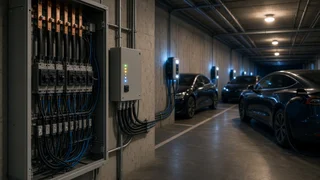
"DCC" is the name of a product line of EV energy management units. They sit between the electrical panel and the EV charger. Current sensors, usually clamp-style current transformers, measure the load on the service conductors. When that load approaches a set limit, the device cuts or reduces power to the charger. Charging resumes automatically once the load falls back below the limit.
The practical effect is that the charger does not have to be counted at full load on top of everything else when sizing the service. This is what can make an upgrade unnecessary.
Model-specific details were not available for this article, including current ratings, supported service sizes, charger compatibility, certifications and pricing. Check each of these against the manufacturer's current documentation for the exact model you are considering.
Why load management matters in shared residential settings
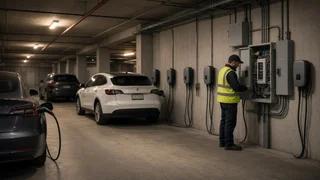
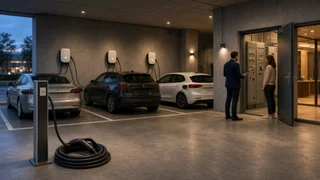
In condominiums, townhouse associations and other multi-unit buildings, the electrical constraint is often tighter than in a detached house. Each unit may have a modest service. The parking area may be far from the unit's panel. The building's common service may also have to support several residents who want to charge.
There are two common setups:
Per-unit load management: the charger is supplied from the resident's own panel and meter. A device such as a DCC unit protects that unit's service. Electricity billing stays with the resident. Shared or building-level load management: several chargers draw from a common supply. A management system divides the available capacity among them. Billing for each user is handled through metering or software.
A DCC-style device fits the first setup. If your association plans charging for many spaces, ask whether a building-wide system would serve residents better than individual devices installed one unit at a time.
What to check before buying
Code acceptance: Recent editions of the US National Electrical Code address automatic load management and energy management systems for EV charging. However, states and municipalities adopt code editions on different schedules. Confirm with your local authority having jurisdiction that the device can be used to avoid a service upgrade. Safety listing: Look for a listing from a nationally recognized testing laboratory that covers the device's intended use. Inspectors commonly require this. Service and panel match: Confirm the model is designed for your service rating, voltage and panel configuration. Also confirm the sensors can be installed on your service conductors. Charger compatibility: Check whether the device switches a separate hardwired charger, supplies a receptacle, or includes its own charging connection. Then confirm it works with the charger or vehicle you plan to use. Charging behavior: Learn how the device reduces power, whether by full interruption or by adjustment, and how quickly it resumes. Some vehicles or chargers react differently to repeated interruptions, so ask the device and charger makers about known issues for your vehicle's model year. Building approval: In a condo or HOA, you will usually need written approval for work in common areas, wiring runs through shared spaces and the location of the parking space. Ask who owns and maintains the equipment if you sell the unit. Installation: Use a licensed electrician who has installed this type of device. Obtain the required permit and inspection.
Trade-offs to weigh
The main advantage is avoiding or postponing a service upgrade. Upgrades can involve the utility, new service equipment and, in multi-unit buildings, changes to shared infrastructure.
The main cost is charging availability. If your household runs heavy loads such as electric heating, cooking or a dryer during the hours you charge, the device may pause charging often. That reduces the energy delivered overnight. Drivers with short daily commutes and off-peak charging habits are generally less affected than those who need a full charge quickly every day.
Pricing, installation costs and any utility or local incentives were not available for this article. Get quotes for both a load management installation and a service upgrade so you can compare total cost and charging performance directly.
Suggested next step
Start with a load assessment by a licensed electrician to find out whether your existing service can support a charger with or without load management. If load management is recommended, confirm local code acceptance and the device's listing before you buy. In a shared building, bring the plan to the association early so approvals, wiring routes and long-term ownership are settled before installation.