AMPECO EV Charging Management Platform: What to Check for Shared Residential Charging
The Short Answer
AMPECO markets itself as an all-in-one EV charging management platform. It is software for running chargers, not a charger itself. For a shared residential site such as an apartment building, condominium or HOA community, it is worth considering if you need one system to control who can charge, how drivers pay or are billed, and how chargers share the building's limited electrical capacity. Your answer depends mainly on two things: whether your chargers, installed or planned, can connect to the platform, and whether its access, billing and reporting tools match how your property splits costs among residents.
No verified details on AMPECO's pricing, feature tiers, contract terms or supported hardware were available for this article. Treat the checks below as questions to put to the vendor and to your installer, not as confirmed product claims.
What a Charging Management Platform Does
A charging management platform, also called charge point management software, sits between the physical chargers and the people who use and pay for them. It typically handles user accounts and access permissions, starting and stopping sessions, pricing and payment, energy reporting, and remote monitoring of charger status. Chargers usually talk to this kind of software over OCPP (Open Charge Point Protocol), an open communication standard. If a charger supports OCPP, you can generally change software providers without replacing the hardware.
Why Shared Residential Sites Have Different Needs
A single-family home charger serves one household on one electricity bill. A shared building raises questions a home setup never faces:
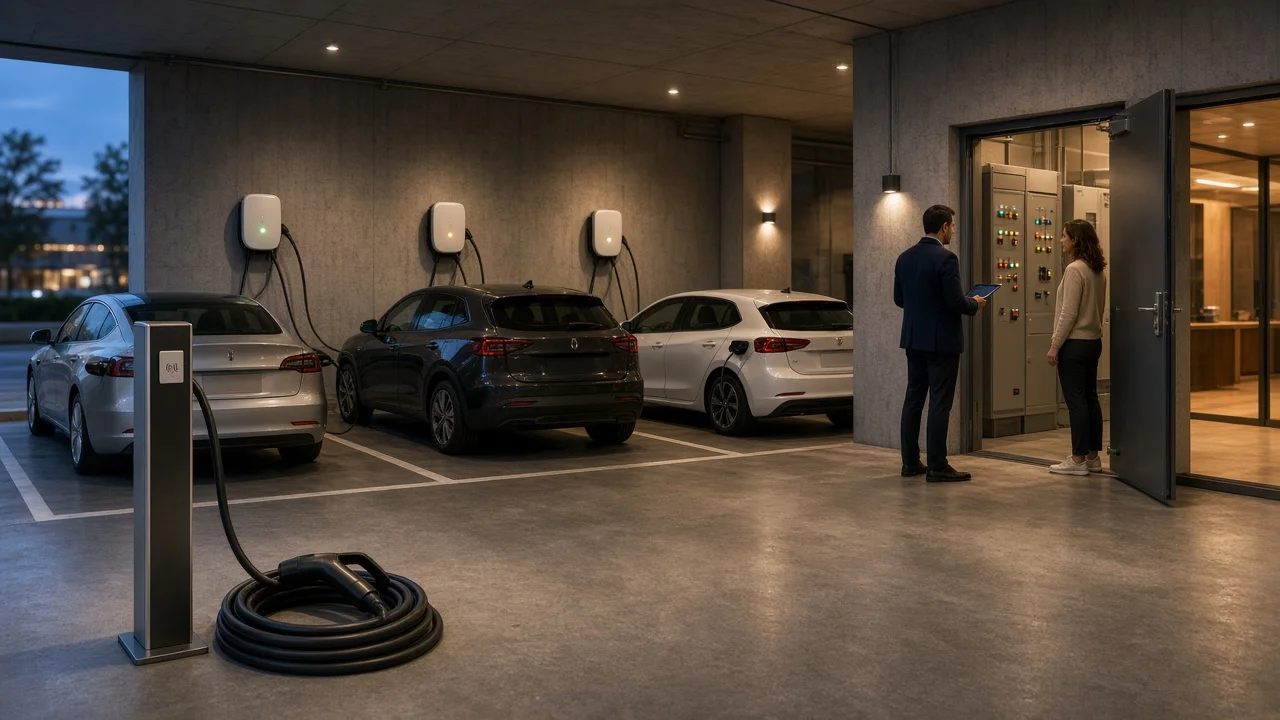
Access: only residents, assigned spaces or approved guests should be able to use the chargers. Cost recovery: the electricity used at shared chargers often runs through a common building meter, so the property needs a fair way to charge each user. Electrical capacity: many buildings cannot power every charger at full output at once, so chargers need to share available power. Governance: a board or property manager needs reports to justify fees, handle disputes and plan expansion.
What to Check Before Choosing
Area | Question to ask | Why it matters; Hardware compatibility | Which charger models and OCPP versions are supported and tested? | Hardware that cannot connect may need replacing. Access control | Can access be limited by resident, unit, parking space or RFID card? | Keeps shared chargers available to the people paying for them. Billing and cost recovery | Can it set per-kWh, per-session or time-based pricing, or bill units periodically instead of per session? | The building's fee structure must be one the software can actually run. Load management | Does it balance power across chargers within a set building limit? | It may reduce or delay costly electrical service upgrades. Driver experience | Is there a resident app, and can it carry the property's or operator's branding? | Affects adoption and support requests. Reporting | Can managers export usage and revenue by user or unit? | Supports board reporting and dispute resolution. Support and responsibility | Who answers residents when a charger fails: the vendor, the installer or the property? | Unclear responsibility leads to long outages. Contract terms | What are the fees, minimum term, and data export rights if you leave? | Sets your total cost and your ability to switch later.
Who the Platform Is Likely Aimed At
Platforms positioned as all-in-one management systems are generally built for charging operators, installers and businesses that run multiple sites, more than for individual buildings managing themselves. A small condo board may reach such software through an installer or operator that runs it on the property's behalf rather than contracting directly. Ask AMPECO, or any installer proposing it, which arrangement applies to you and who holds the customer relationship with residents.
Information Gaps to Resolve
Pricing and fee structure: not confirmed; request a written quote for your charger count. Supported charger models: not confirmed; check your specific hardware against the vendor's compatibility list. US payment and billing setup: not confirmed; ask how payments are processed and how payouts reach the property. Local rules: some US states and localities regulate multifamily charging access or how electricity resale is billed; confirm with your installer or legal adviser.
Suggested Next Step
Before asking for a demo, write down your charger count, your building's available electrical capacity, and how you want residents to pay. Give that list to AMPECO and to at least one competing platform, and compare their answers point by point against the checks above. Make sure any chargers you buy support OCPP, so your software choice stays reversible.