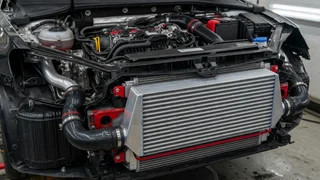
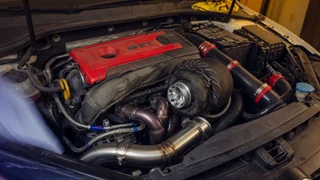
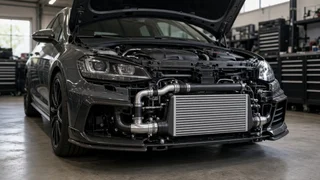
CTS Turbo Intercooler MK7 GTI Review
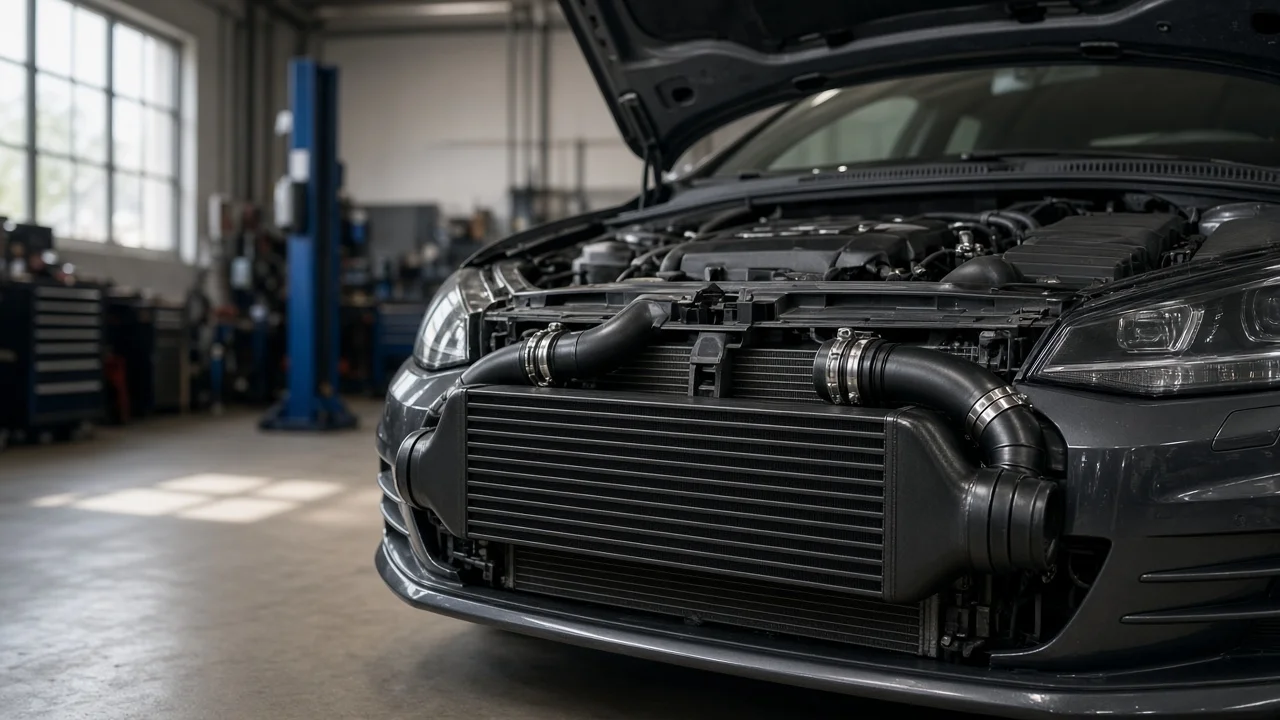
Choosing an upgraded intercooler for a MK7 GTI means balancing charge-air temperature control, pressure loss, and fitment against the way the car is actually driven. A CTS Turbo intercooler receives attention because buyers want more repeatable boost pressure without the heat soak that softens throttle response. Reviewing this part is not only about peak power claims; it is about how core size, end tank shape, and hose connections work with the existing turbo system to keep the compressor outlet air cool and consistent.
The direct answer
The direct answer is that a CTS Turbo intercooler is best understood as a larger heat exchanger intended to lower charge-air temperature and reduce restriction compared with the factory unit. The benefit typically shows up during repeated acceleration or warm weather, when the stock core becomes less effective and boost pressure falls as the engine computer pulls timing. A larger core with appropriate end tank design can support steadier output, though the exact gain depends on the tune, ambient conditions, and the rest of the intake path.
Fitment is the material condition that changes the conclusion. The MK7 GTI has limited space behind the bumper cover, so a taller or thicker core may require trimming or moving nearby components. Buyers should confirm whether the package is sold as a direct replacement or as a front-mount upgrade with different piping. A unit that fits cleanly with the factory hoses and retains proper airflow through the radiator and condenser will deliver more consistent street performance than a larger core that blocks cooling airflow or forces questionable hose routing. Another relevant issue is oil contamination in the intake tract. A small amount of oil mist can coat the inside of the stock intercooler over time, gradually reducing its ability to transfer heat and increasing pressure loss. When upgrading, cleaning or replacing old hoses and checking the pcv system helps the new core perform as intended.