Choosing a Water Filter Housing for a Motorhome
For most motorhome owners, the right water filter housing takes a widely available cartridge size, fits the plumbing connections you already have, is rated for the pressure at its installed position, and can be reached easily for cartridge changes and draining. Two things change that answer the most. The first is where the housing sits: an external housing on the campsite hose and an internal housing after the onboard pump work under different conditions. The second is what you want the filter to do, whether that is catching sediment, improving taste and odor, or reducing specific contaminants. Decide on placement and filtration goal first. The housing choice follows from those.
What a Filter Housing Does in a Motorhome Water System
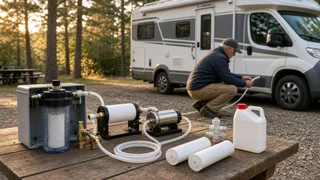
The housing is the pressure vessel that holds a replaceable filter cartridge. It is usually a head with inlet and outlet ports and a bowl, also called a sump, that screws onto the head. The cartridge does the filtering. The housing decides which cartridges you can use, how the unit connects to your plumbing, how much pressure it can safely hold, and how easy it is to service. A good housing with the wrong cartridge, or a good cartridge in a housing that does not suit your installation, will not give you the result you want.
Decide Where the Housing Will Go
A motorhome's water supply usually comes from two sources: a hose connected to a campsite or city water tap, and the onboard fresh water tank fed through a 12-volt pump. Where you put the filter determines which water it treats and what conditions it faces.
External, on the inlet hose: filters water before it enters the vehicle, including water used to fill the fresh tank if you fill through the same line. It is easy to fit and remove, but it is exposed to sun, knocks and freezing, and it only treats water coming from the hose. Internal, before the tank fill: protects the tank from sediment, but does nothing for water already in the tank. Internal, after the pump: treats water drawn from the tank. On many layouts it also treats city water if both supplies meet before the filter. It is protected from weather, but it adds restriction on the pump side and needs space and service access inside the vehicle. Under-sink, at one tap: dedicated drinking water filtration at the galley tap only. It treats less water, so cartridges tend to last longer and finer filtration becomes more practical.
Many owners use two stages. A coarse sediment filter goes on the inlet or ahead of the pump, and a finer drinking water filter goes at the galley tap. This keeps the fine cartridge from clogging quickly and puts the most restrictive filtration only where you need it.
What to Check Before You Buy
Cartridge size and filter specification
Start with the cartridge, not the housing. Standard-diameter 10-inch cartridges are widely sold, so replacements are easy to find in many towns and stores. Proprietary cartridges may perform well but can be harder to source on the road. Check that the housing's stated cartridge dimensions match the cartridges you plan to buy. Then compare cartridges on their filter specification: the micron rating for sediment, the media type, such as carbon block, granular carbon or pleated sediment, and which contaminants the manufacturer claims the cartridge reduces. Where independent certification is offered, look for which NSF/ANSI standard the cartridge is certified against and for which claims. A certification for taste and odor is not the same as a certification for health-related contaminants.
Hose connection and port threads
An external housing needs garden hose threads that match your inlet hose. US motorhome city water inlets generally use standard garden hose fittings. An internal housing needs ports that match your plumbing, so check thread size and type before ordering. Housing ports are commonly offered in sizes such as 3/8 inch and 1/2 inch, and thread standards differ. Adapters can bridge most mismatches, but each extra joint is another possible leak point and another small restriction. Also check whether your system uses PEX, flexible hose or push-fit fittings, and plan the exact parts to go from the pipe to the housing port.
Flow rate and pump compatibility
Every filter restricts flow. The restriction grows with finer cartridges and as cartridges load with debris. On city water this usually just means a gentler shower. On the pump side, too much restriction can reduce flow at the taps and may make some pumps cycle or run rough. Compare the housing's and cartridge's rated flow with your pump's rated output, using the manufacturers' published figures for each. Make sure both figures are stated under comparable conditions. A larger-diameter housing, or a sediment pre-filter that shields a finer cartridge, can help keep flow acceptable.
Pressure rating and regulation
Campsite water pressure varies and can be high. A filter housing on the inlet side must be rated for the pressure it may see. Most owners also fit a pressure regulator at the tap, which protects the housing and the rest of the plumbing. Check the housing's maximum working pressure in its documentation and make sure your regulator keeps you within it. A pressure relief button on the housing head is useful. It releases trapped pressure before you unscrew the bowl, which makes cartridge changes easier and reduces spray.
Materials and drinking water suitability
If the filtered water will be used for drinking or cooking, choose a housing whose materials are described as suitable for potable water. Some manufacturers state certification of components to drinking water standards, which is worth checking for. Opaque bowls block light, which discourages algae growth in a system that may sit unused between trips. Clear bowls let you see how dirty a sediment cartridge is, but they are best kept out of sunlight. For external housings, UV resistance and impact resistance matter more than they do inside the vehicle.
Space, mounting and service access
Measure the mounting location before buying, and allow clearance below the bowl to unscrew it and lift the cartridge out. A mounting bracket that bolts to a solid surface stops the housing hanging off its fittings and stressing joints on rough roads. Place it where a drip during cartridge changes will not damage flooring or electrics. Check whether a bowl wrench is included, because hand-tightened bowls can be hard to remove after months of use.
Freezing and winterizing
Water left in a housing can freeze and crack the bowl or head. Consider how you will drain it. Some housings have a drain valve, while others must be opened and emptied by hand. If you winterize by blowing out lines or pumping antifreeze through the system, plan a bypass so antifreeze does not pass through the cartridge. Bypass valves around an internal housing make this much simpler, and they also let you keep water running if a cartridge fails while you are away from a store.
Comparing Common Housing Options
Option | Best suited to | Main advantages | Main trade-offs; Disposable inline hose filter | Occasional use, simple city water filtering | Easy to fit, no housing to maintain | Whole unit replaced each time, limited filtration options, exposed outdoors; External canister housing on hose | Regular campsite hookups | Takes standard cartridges, easy to swap media | Exposed to weather and freezing, bulkier to store; Internal single canister after pump | Owners who often use tank water | Treats tank water, protected inside the vehicle | Adds restriction on the pump side, needs space and access; Internal dual or multi-stage housing | Owners wanting both sediment and finer filtration | Pre-filter protects finer cartridge, flexible setup | More space, more cartridges to buy, more joints; Under-sink drinking water housing | Drinking and cooking water only | Finer filtration without hurting whole-vehicle flow | Treats only one tap
Running Costs and Ownership
The housing is usually a one-time purchase. Cartridges are the ongoing cost. When comparing options, look at the price and availability of replacement cartridges, how often the manufacturer recommends changing them, and whether one housing size can serve several of your filters, so you carry fewer spare types. Change intervals depend on water quality and use, so treat stated intervals as a guide. Replace a cartridge sooner if flow drops noticeably, or if taste or odor returns. For installation, budget for fittings, a bracket, bypass valves if fitted, a bowl wrench and possibly a pressure regulator. These can add meaningfully to the total cost.
Sanitation and Maintenance
A filter housing is part of your fresh water system, so include it in your sanitation routine. Carbon cartridges also remove chlorine from the water downstream, so plan sanitizing with that in mind. Remove the cartridge before sanitizing the system with a chlorine solution, sanitize the empty housing along with the lines, then rinse and fit a fresh cartridge. Do not leave a used, damp cartridge sitting in a housing during long storage, because stagnant water in the media can encourage bacterial growth. At each change, check the O-ring for nicks or flattening and lubricate it with a food-grade silicone grease if the manufacturer recommends it. A damaged O-ring is the most common cause of a leaking bowl.
Which Setup Fits Your Use
Mostly campsite hookups, short trips: an external canister housing with a sediment or combined sediment and carbon cartridge, plus a pressure regulator, is usually enough. Regular use of tank water or boondocking: an internal housing after the pump treats everything you draw from the tank. Choose one sized to keep flow acceptable for your pump, and fit bypass valves. Drinking water quality is the priority: a sediment pre-filter for the whole vehicle plus a separate under-sink housing with a finer, certified cartridge at the galley tap. Cold-weather or seasonal storage: favor internal placement, easy draining and a bypass, and avoid leaving any housing full of water when temperatures fall below freezing. Limited space: a single compact housing at the point that matters most to you, usually the galley tap, is better than a cramped multi-stage install that is hard to service.
Final Checks Before Ordering
Placement decided: inlet hose, before tank, after pump or at one tap. Cartridge size matches the housing and is easy to buy where you travel. Cartridge filter specification and any certifications match your filtration goal. Port threads and hose connections match your plumbing, with any adapters identified. Housing pressure rating suits its position, with a regulator on city water. Flow restriction is acceptable for your pump and fixtures. Materials are suitable for drinking water if you will drink from it. Mounting space allows bowl removal, and a bracket and wrench are available. You have a drain and bypass plan for winterizing and sanitation.