Choosing a GrimmSpeed Turbo Heat Shield
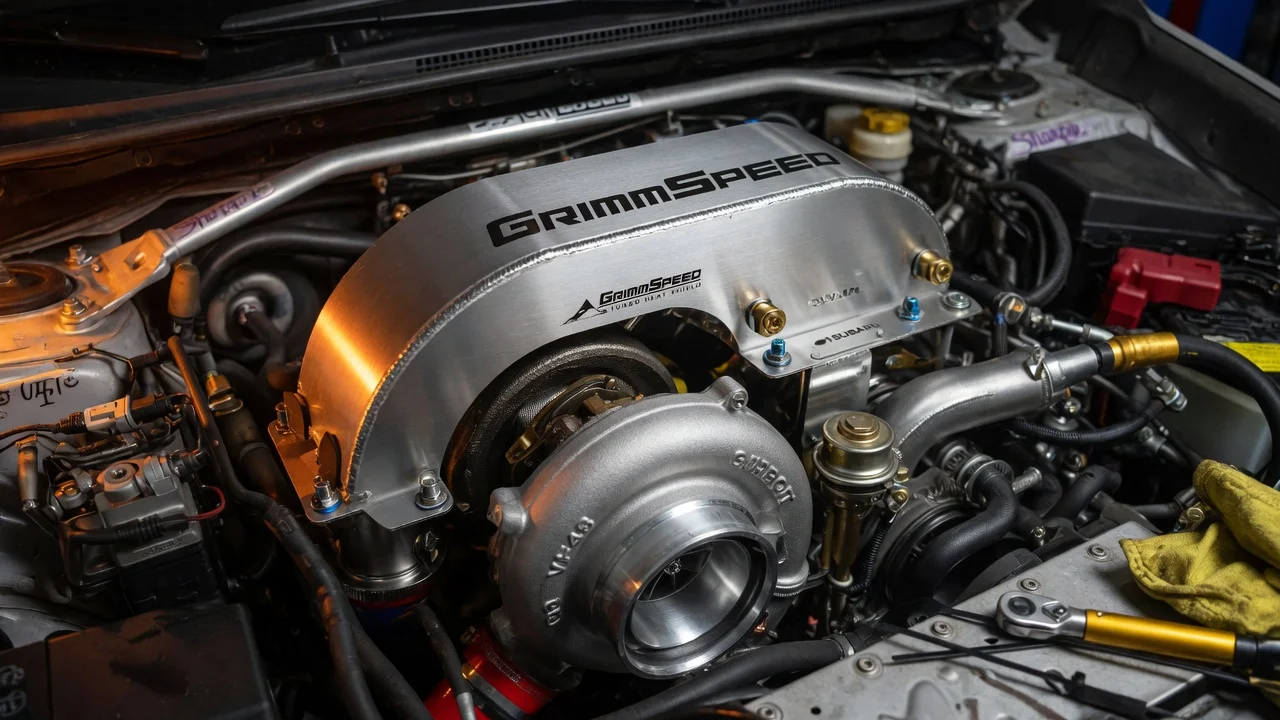
Owners usually buy a GrimmSpeed turbo heat shield for one of two reasons. Either the factory shield has started rattling or broken, or a modified turbo setup needs better heat control. The right choice depends less on the brand than on your exact model year, your engine configuration and what else has been changed under the hood. This guide covers how to match the part to the job, confirm fitment and budget realistically for installation and upkeep.
Define the job the product must do
Start by naming the problem. Owners often blame a loose turbo shield for a metallic buzz that appears at a particular RPM, or right after a cold start and then fades. That is a reasonable suspicion, but it is not a diagnosis. Up-pipe and downpipe shields, catalytic converter internals and exhaust hangers can make a similar sound. Before ordering anything, inspect the area with the engine cold. Look for a cracked mounting tab, a missing or loose bolt, broken spot welds, or a shield that moves by hand. A visibly broken part is a verified failure. A noise you cannot locate is still only a symptom.
Next, define how the car is used. A stock daily driver mainly needs a durable replacement that stops the noise and keeps heat away from nearby hoses and wiring. A tuned car that sees track days or repeated hard pulls also needs protection that holds up under longer heat exposure. Note your practical constraints as well: whether you do your own work, whether you have a lift, and how long the car can be off the road. Write down the symptom conditions, such as cold start, highway cruise or under boost. They help you or a shop confirm that you are replacing the right part.
Check compatibility
GrimmSpeed lists its parts by platform, and turbo placement and the surrounding hardware differ between engine families. On turbocharged Subarus, for example, EJ-series and FA-series engines do not share the same turbo layout. Even within one engine family, a model-year change can move brackets, mounting points or nearby pipework. Match the listing to your exact model, trim, model year and engine variant. Models such as the WRX and STI are often listed separately, so do not assume one fits the other.
Modifications matter as much as the original build. A shield designed around the factory turbo location and housing may not clear any of the following: an upgraded turbo with a larger housing, a relocated turbo, an aftermarket up-pipe or downpipe, or re-routed oil and coolant lines. If your car has any of these, compare the product's stated fitment against your actual parts list and service history, not just the original vehicle spec. Also check what hardware is included and whether the shield uses the factory mounting points. If the listing does not clearly state a detail you need, ask the seller or the manufacturer before buying.
Features that affect the choice
The differences that matter between heat shields are material, thickness, mounting design and coverage. A rigid shield blocks and reflects radiant heat, and it is generally easier to inspect and remove than a wrap. Mounting design often decides whether the rattle comes back. Rattling shields typically fail at their attachment points, so check how the new part is secured, how many fastening points it uses and whether the design includes any vibration isolation. Coverage matters when you need to protect a specific component near the turbo, such as a coolant hose, a wiring harness or an intake piece.
Treat marketing language with caution. Labels like race-proven or maximum heat reduction are not measurements. Useful evidence is concrete: • A stated material and finish. • Clear fitment by engine and model year. • Installation instructions you can read before buying. • Owner reports from cars on the same platform with a similar level of modification. A temperature claim means little unless the test conditions are explained. Also note that a shield does a different job from a turbo blanket. A blanket wraps the turbine housing and keeps more heat inside it. Some owners prefer that approach, while others avoid it because of the higher housing temperatures. Decide which approach suits your engine before comparing individual products.
Limitations and ownership costs
Installation is usually the hardest part of owning a turbo heat shield. Fasteners near the turbo go through many heat cycles and can seize or snap. Plan for penetrating oil, patience and possibly extracting a broken bolt. On some platforms, reaching the shield means removing intake components or working from underneath the car. Torque exhaust and turbo-adjacent fasteners to the manufacturer specifications. Replace any gaskets or crush washers you disturb if the service procedure calls for it. Recheck fastener tightness after the first few heat cycles, since that is when a new installation is most likely to loosen.
Know what the part cannot do. A heat shield will not fix boost leaks or cool intake air. It also will not stop a rattle that actually comes from a downpipe, catalytic converter or exhaust hanger. A loose shield does not usually set diagnostic codes on its own, so new parts will not clear an existing check-engine light. Scan and diagnose any light separately. If you find heat-damaged wiring or hoses during the job, they need their own repair. Budget for the part, any fresh hardware, and either your time or shop labor. Be prepared to take a second look if the noise continues after installation.
Build a practical shortlist
Before comparing prices, write a short checklist and hold every option to it: • The listing names your model, model year and engine variant. • It suits your turbo, up-pipe and downpipe, or it states which aftermarket parts it was designed around. • The material, included hardware and use of factory mounting points are clearly stated. • Installation instructions are available, and you know which parts must be removed to fit it. • Owner reports come from cars that match yours, not just generic praise.
Keep a record of what your inspection found. If a mounting tab is cracked or the shield is visibly loose, a direct-fit replacement is a sensible fix, such as a GrimmSpeed turbo heat shield listed for your platform. If the noise is still unconfirmed, finish the diagnosis first. Replacing a healthy shield is an easy way to spend money without solving anything. Only compare options that pass every item on the checklist. That keeps the decision focused on fitment and build quality rather than brand claims.