Choosing a Turbo Heat Shield for a Polaris RZR
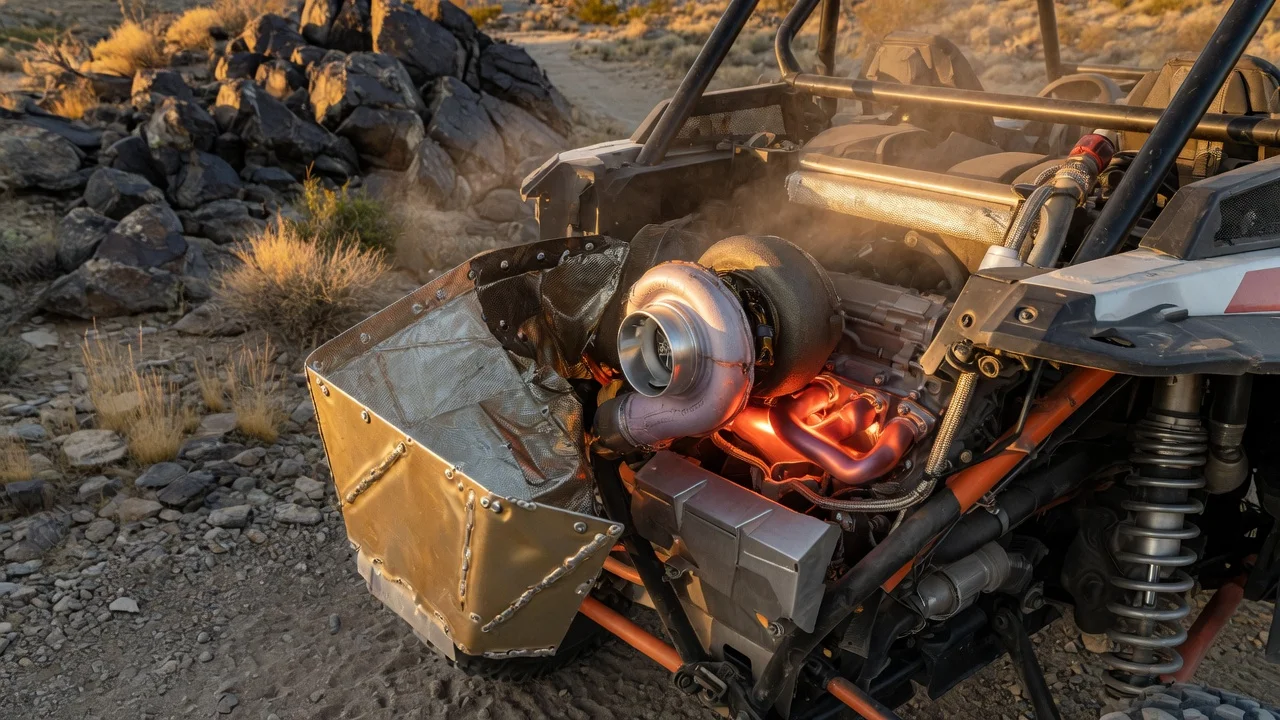
On a turbocharged Polaris RZR, the turbo, exhaust, clutch cover, intake plumbing, wiring and occupants all share a crowded space behind the seats. A turbo heat shield can cut the radiant heat reaching nearby parts, but only if it fits your exact engine configuration and addresses a problem you have actually confirmed. This guide covers how to match a shield or turbo blanket to your machine, which features matter, and what upkeep to expect.
Define the job the product must do
Start with the problem, not the part. Owners commonly describe hot seat backs, a warm cab, a hot-plastic smell, or intake air that seems heat-soaked after a hard run. Those are symptom reports. A verified failure is something you can see or confirm during inspection: a melted connector, scorched wiring loom, warped or discolored body panel, a damaged intake coupler, or a sensor fault confirmed through testing. Write down the symptom conditions as well: ambient temperature, whether you were crawling slowly through technical terrain or running fast in open sand, how long the machine idled, and whether the heat appears mainly during heat soak after shutdown. Slow, low-airflow riding and shut-down heat soak usually stress nearby parts more than steady high-speed running.
Next, account for how the vehicle is set up and used. A tuned engine, a larger turbo or an aftermarket exhaust can raise exhaust temperatures beyond the stock baseline, while a full cab enclosure or doors can trap heat around occupants. Review the service history too, because a previous owner may have removed a factory shield, rerouted a line or left a loose exhaust joint. If the dash is showing diagnostic codes, read them before buying anything. A heat shield is not a repair for a failing sensor, an exhaust leak at the turbo flange, or a cooling system fault, and an exhaust leak in particular can feel exactly like a heat-shielding problem.
Check compatibility
Polaris has offered several turbocharged RZR families, including the XP Turbo, XP Turbo S, Pro XP and Turbo R lines. Turbo placement, manifold shape, exhaust routing and surrounding bodywork are not identical across every generation, so a product listed simply as fitting a RZR turbo is not enough. Confirm the model year, model name and engine variant from your registration or the vehicle identification label, and compare those against the seller's fitment list. If the listing does not name your exact model year and variant, treat fitment as unproven until the maker confirms it.
Then check the physical interfaces. Rigid shields usually depend on factory bolt bosses or band clamps, so confirm those mounting points exist on your machine and have not been altered. A turbo blanket must follow the shape of your specific turbine housing while leaving the wastegate actuator, oil feed and return lines, oxygen sensor and wiring free to move and easy to reach. Look for adequate clearance to the clutch cover and intake tube, and make sure the shield will not block factory cooling airflow. Aftermarket turbos and exhausts change all of these dimensions, so a part designed around the stock system may not fit a modified one. Follow manufacturer specifications for any fasteners the shield shares with the exhaust, and ask your dealer how adding a blanket or shield might interact with your warranty coverage before installing it.
Features that affect the choice
There are three broad approaches. Rigid metal shields, usually stainless steel or aluminum and sometimes layered with insulation or an air gap, stand off from the hot surface and reflect radiant heat. Turbo blankets wrap the turbine housing in insulating fabric and contain heat at its source. Reflective heat barrier applied to body panels protects the receiving side rather than the turbo itself. Many owners combine a shield near the turbo with barrier on the most exposed plastics, but each layer should solve a documented problem.
Each type carries trade-offs. A blanket can sharply reduce heat radiating into the engine bay, but it also keeps the housing hotter, can absorb leaking oil or fuel and become a fire risk, and hides early signs of trouble such as oil weeping or housing cracks. Metal shields are easier to inspect and clean, yet thin or poorly supported designs may crack or rattle under vibration. Panel barriers protect plastics and occupants but do nothing to lower temperatures near wiring or intake parts.
Separate useful evidence from marketing labels. Claims of a specific temperature drop rarely state where it was measured, at what ambient temperature or under what load. More meaningful details are the stated material and thickness, a continuous temperature rating, the fastening method, a fitment list broken down by model year and engine variant, and installation instructions you can read before purchase. If you want your own comparison, take infrared thermometer readings at the same points under similar conditions before and after installation.
Limitations and ownership costs
Installation often means removing seats, rear panels or intake plumbing to reach the turbo. Exhaust-area fasteners that have gone through many heat cycles can seize or snap, so budget for penetrating oil, replacement hardware and possibly a new gasket if you disturb an exhaust joint. Blankets typically rely on springs, clamps or safety wire, and those consumables wear out and need replacing over time. If you are not comfortable working around the turbo and exhaust, add shop labor to the real price.
Plan for ongoing inspection. After the first ride and then at regular intervals, check for loose fasteners, cracks, contact marks, fraying blanket edges and any sign of oil or fuel saturation. Clear mud, dry grass and debris from around the exhaust, because buildup near hot parts is a fire hazard whether or not a shield is fitted. Remember what the product cannot do: it will not fix an exhaust leak, worn turbo seals, a slipping belt, a cooling fault or a poor tune, and a blanket can delay your noticing those problems.
Build a practical shortlist
Run each candidate through the same checklist. Does the fitment list name your exact model year and engine variant? Will it work with your current turbo and exhaust, stock or aftermarket? Does the type, whether rigid shield, blanket or panel barrier, match the problem you confirmed? Are material, thickness and temperature rating stated? Does it mount to existing points without drilling or improvised brackets? Does it keep clearance around oil lines, the wastegate actuator, sensors and wiring? Are instructions available and hardware included? Can you still inspect the turbo and exhaust joints without removing it?
Narrow the field to two or three options and favor the one with the clearest documentation rather than the boldest claims. After installation, recheck fasteners after the first ride and compare the original symptom under similar conditions. If the heat complaint persists or new diagnostic codes appear, go back to inspection rather than adding more insulation, because the underlying cause may not be radiant heat at all.