Choosing an OBD2 Scanner at AutoZone
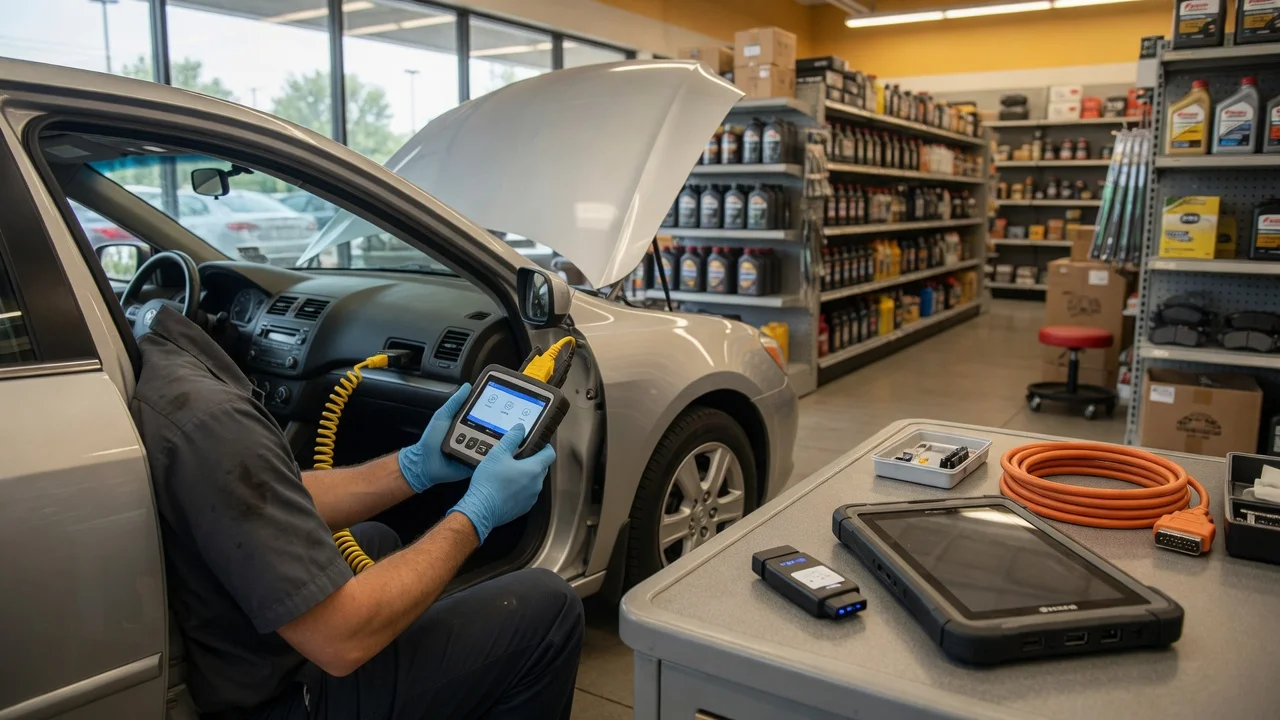
What an OBD2 scanner at AutoZone can do for you
An OBD2 scanner is a diagnostic tool that plugs into the vehicle's onboard diagnostics port, usually under the dashboard on the driver's side. It reads trouble codes from the engine and emissions systems so you can tell whether a check-engine light is pointing to a loose fuel cap, a failing oxygen sensor or something more serious. Many scanners also clear codes and show live sensor data such as engine temperature, fuel trim and vehicle speed. AutoZone carries a range of these tools, from basic code readers to more capable scan tools with screen-driven menus.
Basic code readers versus full scan tools
A basic code reader is the simpler option. It typically retrieves generic powertrain codes, clears them and may display the meaning of common codes on a small screen. This is usually enough if you mainly want to know why the check-engine light came on before deciding whether to visit a mechanic. The tradeoff is limited data: many basic readers do not show live sensor streams or manufacturer-specific codes, and they may not support ABS, airbag or transmission modules.
A full scan tool goes further by displaying live data, graphing signals and reading codes from additional vehicle systems on models that support that coverage. This makes it more useful for diagnosing intermittent problems, watching oxygen sensor behavior or checking whether a replacement part changed the readings. The added coverage often depends on the vehicle year, make and model, so a tool that works broadly on one car may not expose every module on another.
Comparing the options on the shelf
The right choice depends on how you expect to use the scanner. The main decision criteria are diagnostic depth, ease of use and cost.
• Occasional check-engine diagnosis favors a low-cost code reader with a clear screen and simple controls. • Repeated home diagnosis benefits from a handheld scan tool with live data and the ability to view multiple engine parameters at once. • ABS, airbag and other system coverage should be confirmed for your specific model before relying on the purchase. • Bluetooth adapters that work with a smartphone app can be convenient, but the app and vehicle compatibility are part of the same buying decision.
Because AutoZone stores carry different products at different times, treat the shelf selection as the starting point rather than a fixed catalog. The most relevant comparison is not one brand against another in the abstract, but which available tool covers your vehicle's diagnostic modules and fits the depth you actually need.
Vehicle compatibility and common limitations
OBD2 is a standardized system required on light-duty vehicles sold in the United States from 1996 onward, so a generic scanner should communicate with those vehicles for basic engine and emissions codes. The details become less uniform once you move beyond that: advanced bi-directional controls, module coverage and some live-data parameters vary by manufacturer, model year and even trim level. A scanner that reads engine codes on a 2005 sedan will not automatically read every module on a newer hybrid or a truck with diesel-specific systems.
The available product packaging and in-store information should state the covered protocols and systems, but unsupported or unclear module coverage is a material gap worth checking before purchase. If you need a specific function, such as electronic parking brake service or diesel particulate filter data, verify that function with the tool maker's compatibility information for your vehicle.
What to choose first
For most drivers, the practical starting point is a mid-level handheld scan tool that reads and clears engine codes and displays live data. That combination handles the most common ownership need—explaining a check-engine light—without paying for professional-grade coverage you may never use. If the scanner will only be used rarely, a basic code reader is the lower-cost fit. If you already know that you need ABS or airbag access for your vehicle, make that confirmed compatibility the primary filter before comparing price.
Where the product selection does not clearly state coverage for your model, the supported answer should leave that uncertainty explicit. The best purchase is the tool with verified depth for your vehicle and a usable interface, not simply the most expensive or most heavily advertised unit on the shelf.