Choosing an Air-to-Water Intercooler: Fitment, Features and Real Costs
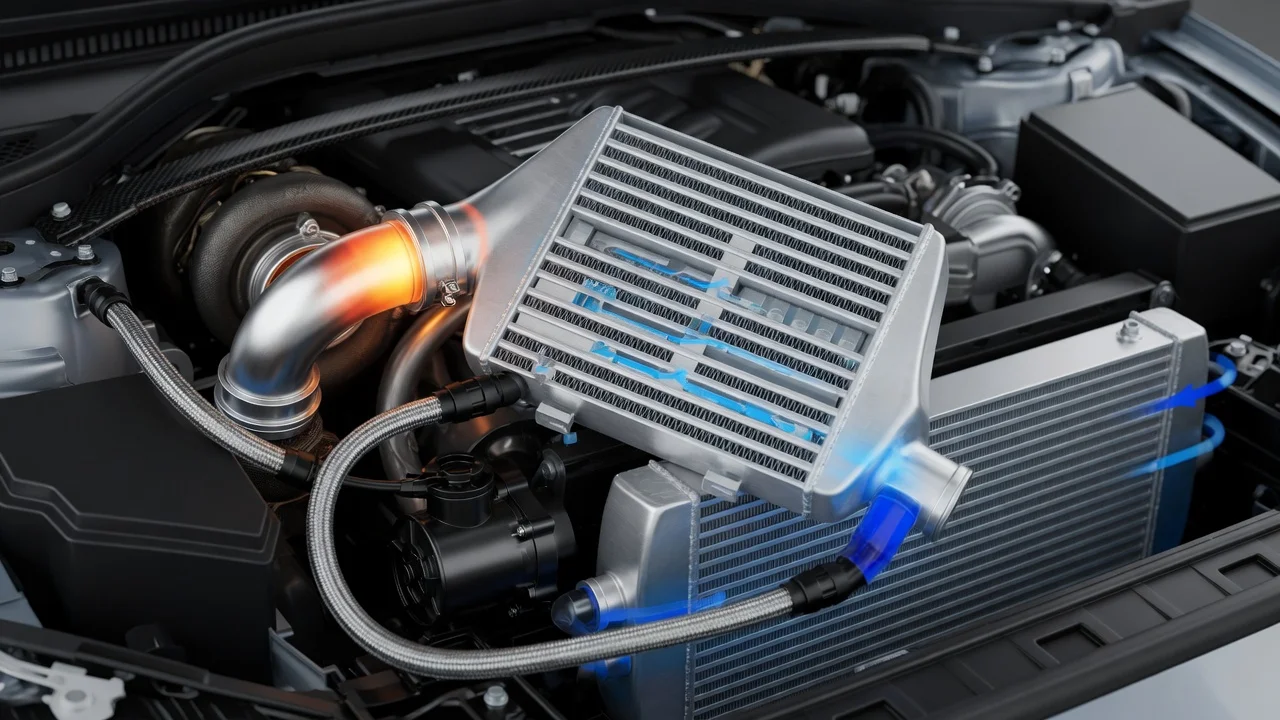
An air-to-water intercooler cools compressed intake air by passing it through a core filled with circulating coolant. That coolant then releases heat at a separate front-mounted heat exchanger. Because the system includes a pump, plumbing and its own coolant circuit, choosing one depends less on core size and more on whether the whole package suits your engine, your driving and the maintenance you are willing to take on. This guide covers the decisions to make before buying.
Define the job the product must do
Start with why you are shopping. Replacing a failed factory unit, upgrading a stock system for more consistent intake temperatures, and converting from an air-to-air layout are three different projects with different budgets and risks. Driving pattern matters just as much. A water-to-air intercooler suits short charge piping and quick throttle response, and the coolant mass absorbs heat well during brief bursts of boost. Under sustained load, such as repeated track laps or long uphill towing, overall performance is limited by how fast the low-temperature circuit can reject heat, not by the core alone. Be honest about whether your car sees street driving, occasional hard pulls or long sessions at high load.
If a suspected failure is the reason for shopping, separate symptom reports from verified failures before buying parts. Power loss, high intake air temperature readings, unexplained coolant loss or a hissing sound under boost can come from a failed pump, air trapped in the circuit, a clogged heat exchanger or a loose coupler, not only from a damaged core. Note the symptom conditions, such as ambient temperature, load and how long the car had been driven, and check stored diagnostic codes. Then confirm with an inspection and pressure tests of both the charge-air side and the coolant side. Also confirm your exact model year and engine variant, because the same nameplate can use different intercooler designs across years and engine options.
Check compatibility
Fitment starts with the engine configuration. Some engines mount the core in front of or beside the engine with charge pipes, some integrate it into the intake plenum, and many supercharged engines place it beneath the blower housing. Single-turbo, twin-turbo and supercharged versions of the same model often use unrelated parts. Use the vehicle identification number, engine code, model year and the part number stamped on the existing unit to narrow the search, and compare candidates against the manufacturer specifications for your vehicle rather than a general model listing.
Next, check every interface. Charge-air inlet and outlet sizes and their orientation must line up with your piping or manifold. Coolant port size and hose routing must match the existing circuit or the kit's own hoses. Sensor bosses for intake air temperature or boost pressure need to be present in the right location, or the engine computer may log faults. Mounting points, clearance to the hood, bumper reinforcement and nearby components, and the gasket or seal design for plenum-mounted units all affect whether a part truly bolts in. If the pump is electrically controlled, confirm the connector and control method match.
Finally, consider the engine management side. A core with a different internal volume or flow can change boost response, and some upgrades are designed alongside a calibration change. Check whether the part is permitted for road use where you live before buying, since rules vary by state and vehicle.
Features that affect the choice
Core construction is the main hardware trade-off. Bar-and-plate cores are generally sturdier and tolerate pressure and vibration well, but they tend to be heavier. Tube-and-fin cores are usually lighter and can flow well, though they may be more vulnerable to damage. Denser fins add surface area for heat transfer but can raise pressure drop, which means the turbo or supercharger works harder to deliver the same boost at the engine. Neither design is automatically better; the right balance depends on your power level and how long the engine stays under load.
Treat marketing labels carefully. Words like drop-in, race-proven or a claimed percentage gain mean little unless the seller explains what was measured. Useful evidence states the vehicle, engine variant and tune used, the intake temperatures before and after the core under defined conditions, and the pressure drop across the core. Dyno results from a different car or calibration do not transfer reliably to yours, and a single favorable test does not establish consistent behavior.
Look at the system as a whole. A larger core paired with a stock pump and small heat exchanger may simply hold heat longer rather than shed it faster. Kits that include a higher-capacity pump, a larger front heat exchanger, or a reservoir with an accessible bleed point often address the actual bottleneck in an air water intercooler setup. Ask which of those components your use case truly needs before paying for all of them.
Limitations and ownership costs
Installation is more involved than swapping an air-to-air core. The coolant circuit must be filled with the specified coolant and bled thoroughly, since trapped air reduces flow and can harm the pump. Follow the documented bleed procedure for your vehicle; on some models the pump is computer-controlled and may need a scan tool to run during bleeding. Budget for consumables such as coolant, hose clamps, O-rings, gaskets and sometimes new couplers, and allow time to recheck the coolant level after several heat cycles.
Ongoing care includes checking the reservoir level, confirming the pump runs, keeping the front heat exchanger clear of debris and inspecting hoses for wear or seepage. Record this work in the service history; it helps with warranty claims, later diagnosis and resale. Know the limits, too. A water air intercooler cannot correct a worn turbocharger, boost leaks elsewhere in the intake, poor fuel quality or a fault in the main engine cooling system, which is usually a separate circuit. Without ice or another chiller, it also cannot bring charge air below ambient temperature.
Build a practical shortlist
Compare each candidate against the same checklist. Is it listed for your exact model year and engine variant? Do the charge-air ports, coolant ports, sensor provisions and mounts match your vehicle? Is the core construction suited to your load pattern, and are any performance claims backed by stated test conditions? Does the package include gaskets, hoses, clamps and clear instructions? Will you also need a pump, heat exchanger or calibration change to get the benefit you expect? What do the warranty and return terms say about fitment problems?
Then compare the total cost, including supporting parts, consumables, labor and any tuning, rather than the price of the core alone. After installation, verify the result instead of assuming it: log intake temperatures under repeatable conditions, check both circuits for leaks and recheck coolant after a few drives. The most suitable choice is the one that fits your car correctly and solves a confirmed problem, not the one with the boldest claims.