Choose GL-5 85W-140 Gear Oil
The short answer
GL-5 85W-140 is a heavy, multigrade gear oil for hypoid differentials and axles that work hard: trucks, towing rigs, heavily loaded vehicles and equipment that runs hot. Choose it when your owner's manual or axle manufacturer calls for an API GL-5 oil in the 85W-140 grade, or lists it as acceptable for your operating conditions. If the manual specifies a different grade or category, follow the manual.
Three conditions change that answer. If your differential is a clutch-type limited-slip unit, you may need an oil with friction modifier already blended in, or a separate additive. If the oil is going into a manual transmission or transfer case rather than an axle, GL-5 may be the wrong category. If you drive in cold weather, a thick 85W-140 may be a poor fit even where it is permitted.
What the label means
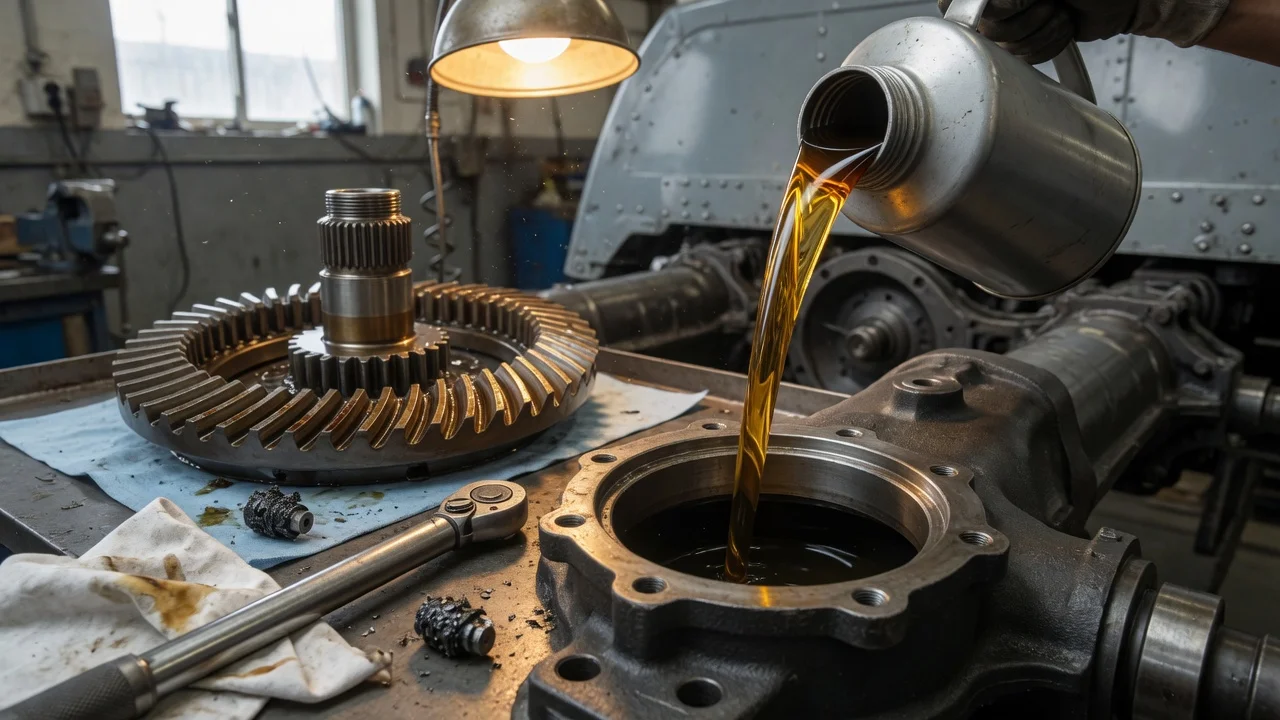
API GL-5 is a service category from the American Petroleum Institute. It covers gear oils for hypoid gears under high-speed, shock-load and high-torque conditions. Hypoid gears are the offset ring-and-pinion sets found in most rear axles. Their teeth slide against each other under heavy pressure, so GL-5 oils carry a high level of extreme-pressure additives, usually sulfur-phosphorus chemistry, to protect them.
85W-140 is the viscosity grade under the SAE J306 standard for gear lubricants. The number before the W describes low-temperature performance. The 140 describes thickness at operating temperature. A 140 grade is thicker when hot than the more common 75W-90 or 80W-90. That extra film thickness is why it is often specified for heavy loads and high temperatures. The 85W rating also means it flows more slowly from a cold start than a 75W oil.
Checks before you buy
Confirm the specification for your exact vehicle
Gear oil requirements can differ between model years, markets, trims and axle options on the same nameplate. A towing package or heavy-duty axle may call for a different fluid than the base axle. Check the owner's manual or service information for your specific vehicle, and identify the axle where possible from its tag or the build code. If the manual gives a manufacturer specification number in addition to an API category, look for an oil that states it meets that number. Matching the viscosity grade alone is not enough. This article cannot confirm compatibility for any particular vehicle, because no vehicle-specific data was supplied.
Check whether you have a limited-slip differential
Clutch-pack limited-slip differentials often need a friction modifier to prevent chatter or shudder in tight turns. Some gear oils are labeled for limited-slip use and already contain it. Others require a separate bottle added at fill time. Some differentials, such as open or certain gear-type units, do not need it. Your service information should say which applies. If the label does not mention limited-slip suitability, do not assume it.
Make sure it is going into an axle, not a gearbox that needs GL-4
Many synchronized manual transmissions specify GL-4. Older units in particular can use brass or bronze synchronizer parts. The additive chemistry in some GL-5 oils is considered harsher on these yellow metals, and GL-5 oils can also have different frictional behavior for synchronizer engagement. Some products are dual-rated GL-4 and GL-5, but use one in a transmission only if the transmission maker allows it. A thick 140 grade is also an unusual choice for a synchronized gearbox. For heavy-duty non-synchronized truck transmissions, the relevant API category is MT-1, which is a separate specification from GL-5.
Match the grade to your climate and use
85W-140 suits sustained heavy loads, frequent towing, hot climates and older axles where the maker specifies it. In cold climates, a thicker oil circulates more slowly at start-up and adds drag until it warms. Where the manual offers a choice of grades by temperature range, pick the one that fits your coldest regular operating conditions. Using 85W-140 in place of a specified lighter grade may also affect fuel economy, though the size of any effect depends on the vehicle and is not quantified here.
Decide between conventional and synthetic
85W-140 is sold in conventional mineral and synthetic or synthetic-blend formulations. Synthetics generally offer better low-temperature flow and resistance to heat breakdown, which can matter in severe service. Conventional oil meeting the required specification is acceptable where the manufacturer does not require synthetic. If your service schedule ties drain intervals to oil type or to severe-duty use, factor that into the choice.
Work out the real cost of a fill
No price data was supplied for this article, so no figures are given. When comparing offers, convert to cost per liter or quart, since bottle sizes vary. Check how much your axle holds, and whether you need a separate friction modifier, a new gasket or cover sealant, or a crush washer for the plugs. A shelf or online price is an advertised price. What you actually pay can differ with shipping, tax, and local availability in your market. If you are paying a shop, ask whether the quote includes fluid, parts and labor, and which oil they will use.
Plan the job before you start
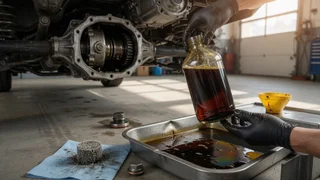
If you are doing the change yourself, loosen the fill plug before removing the drain plug or cover. That way you will not be left with an empty axle you cannot refill. Have a pump or squeeze-bottle applicator ready, because thick 140-grade oil is slow to pour, especially when cold. Fill to the level stated in the service information, usually at or just below the fill hole. Mixing different gear oils is best avoided unless both meet the same specification. A full drain and refill is the cleaner option when changing products.
Quick checklist
Manual or axle maker calls for API GL-5, and 85W-140 is a listed grade for your conditions. Any manufacturer specification number in the manual is stated on the oil label. Limited-slip requirement confirmed, with friction modifier included or bought separately if needed. Oil is going into a differential or axle, not a gearbox that specifies GL-4 or MT-1. Grade suits your coldest regular operating temperature. Conventional or synthetic chosen to suit your service schedule and duty. Enough oil bought for the stated capacity, plus any gasket, sealant or washers.
What this guide cannot settle
No vehicle, axle model, product listing, price or test data was supplied. Fluid capacities, exact viscosity limits, brand comparisons and costs are therefore not stated. Confirm these against your vehicle's service information and the product's technical data sheet before you buy.