Choose BRP 2-stroke oil
The short answer
The right BRP 2-stroke oil is the one named in the operator's guide for your specific engine. BRP sells several 2-stroke oils under its XPS brand, and for Evinrude outboards under the XD name. They are not interchangeable across every engine. The choice mainly depends on three things: the engine family (for example a Rotax E-TEC snowmobile engine versus an older carbureted or injected engine), whether the machine is a snowmobile, personal watercraft or outboard, and the conditions you ride or run in.
Two conditions can change the answer. First, if the machine is under warranty, follow the oil type in the manual exactly, because a lubrication-related failure is the kind of claim where the oil used will be questioned. Second, if you own an Evinrude E-TEC outboard, treat it as a separate case from BRP snowmobiles and watercraft. It uses the XD oil range, not the snowmobile-oriented XPS range.
What "2-stroke oil" means in a BRP engine
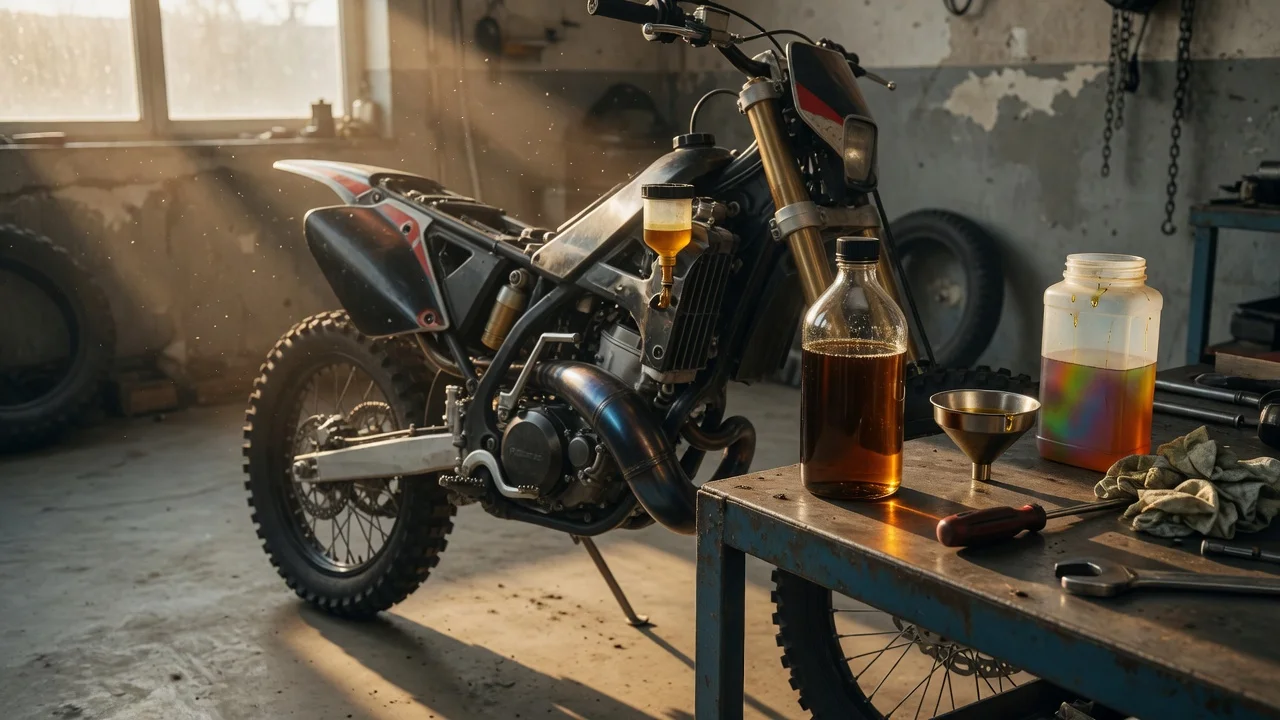
A 2-stroke engine has no separate oil sump for the crankshaft and piston. The oil is burned along with the fuel. In most modern BRP 2-strokes the oil sits in its own tank and an oil pump meters it into the engine, which is called oil injection. You do not premix it in the fuel tank. Because the oil is consumed, it affects lubrication, carbon and deposit build-up, exhaust smoke and smell, and how much you spend on oil per season.
Direct-injection designs such as Rotax E-TEC and Evinrude E-TEC meter oil precisely and can run very lean oil ratios. That makes the oil's formulation matter more. This is the main reason BRP specifies particular oils for these engines instead of any generic 2-stroke oil.
BRP oil options compared
The table below compares the main BRP 2-stroke oil lines on shared decision criteria. It does not rank them on lubrication performance, because no comparable test data under the same conditions was available for this article. Product line-ups and exact names can vary by market and year, so confirm against current packaging and your manual.
Oil line | Base type | Typical application | Main trade-off; XPS 2-Stroke Synthetic Oil | Full synthetic | Higher-output BRP 2-strokes where the manual calls for full synthetic; demanding or cold-weather use | Usually the most expensive XPS option per litre; XPS 2-Stroke Synthetic Blend Oil | Part synthetic, part mineral | Many BRP 2-strokes where the manual allows or specifies a blend | Lower cost than full synthetic, but only appropriate where the manual permits it; XPS 2-Stroke Mineral Oil | Mineral (conventional) | Older or lower-output engines where the manual allows mineral oil | Cheapest, but not suitable where synthetic is required; Evinrude/BRP XD100 | Full synthetic | Evinrude E-TEC outboards, including when run on lean oil settings | Outboard-specific; not a substitute for the snowmobile XPS range unless BRP says so for your engine; Evinrude/BRP XD50 and XD30 | Synthetic blend / outboard 2-stroke oil | Evinrude E-TEC and older Evinrude/Johnson outboards as specified | Some engines need re-programming of the oil setting if you change oil grade
Which option fits your priorities
If your manual names full synthetic: buy full synthetic. Saving money with a blend is not worth the risk of a lubrication problem or a warranty dispute. If your manual allows either synthetic blend or full synthetic: a blend is the value choice for normal use. Full synthetic is the cautious choice for very cold riding, sustained high load, or long storage periods, but the manual and dealer guidance outrank general rules. If you own an older or lower-output engine and the manual permits mineral oil: mineral oil is the lowest-cost option. Moving up to a blend or synthetic is generally acceptable only if the manual lists it. If you run an Evinrude E-TEC outboard: choose the XD grade the manual specifies. If you want to switch grades, check whether a dealer needs to change the engine's oil setting first. If you are tempted by a non-BRP oil: check whether your manual names an acceptable industry specification as an alternative for your engine. If it only names BRP oil, the safe course during warranty is to use BRP oil.
What to check before you buy
Engine and model year: find the exact engine designation (for example a specific Rotax E-TEC or Rotax 2-stroke version) and model year. Oil requirements are set per engine family, not per brand. The oil section of the operator's guide: note whether it says required or recommended, and whether it lists any alternative specification. Market and packaging: product names, container sizes and availability differ between regions. Make sure the label matches the oil the manual names, not just the XPS brand. Warranty status: while covered, keep receipts showing you used the specified oil. This matters if a lubrication-related claim arises. Mixing grades: check whether the manual allows topping up with a different BRP grade. If you are changing grade, consider whether to run the tank low first. Oil-setting programming: on direct-injection outboards in particular, confirm whether a grade change needs a dealer adjustment. Total cost per season: compare price per litre across container sizes, and estimate your use from your own consumption. Larger containers often cost less per litre, but only matter if you will use the oil before it ages.
Comparing prices
No verified prices were available for this article, so none are quoted here. When you compare offers, check four things: the market and currency, whether the price is per litre or per container, whether shipping or tax is included, and whether the listing is a current advertised price or an old one. A cheaper litre of a grade your engine does not accept is not a saving.
Gaps in this guidance
Several points could not be confirmed for this article. These include an engine-by-engine list of which XPS grade each current Ski-Doo, Lynx, Sea-Doo or Rotax 2-stroke requires, lubrication or deposit test results comparing BRP oils with each other or with third-party oils, and current regional pricing. For any of these, the operator's guide for your exact model year and a BRP dealer are the authoritative sources.