Chevy Engine VIN Decoder: How to Read Chevrolet Engine Information from a VIN
On a Chevrolet built for the 1981 model year or later, the original factory engine is identified by the eighth character of the 17-character vehicle identification number. That single letter or digit is not a universal code, though. Chevrolet reuses engine characters across years and vehicle lines, so the eighth character only means something when you read it together with the model year (the tenth character) and the type of vehicle (the first three characters). Any Chevy engine VIN decoder, whether a free online tool or a dealer system, works by combining those positions and looking up the result in a reference table. Keep two qualifications in mind. First, the VIN records the engine the vehicle was built with, not the engine that may be under the hood today. Second, Chevrolets made before 1981 used shorter, non-standardized VINs, so the method below applies only to the modern 17-character format.
Where the engine code sits in a Chevrolet VIN
The 17-character format follows a US federal standard, and GM fills in the manufacturer-defined positions in its own way. The general layout of a modern Chevrolet VIN looks like this:
Position | What it identifies | Notes for engine decoding; 1–3 | World manufacturer identifier (WMI) | Country of manufacture, manufacturer and vehicle type. The first character shows the country of final assembly: 1 for the United States, 2 for Canada, 3 for Mexico, K for South Korea. 4–7 | Vehicle descriptor section | GM's use varies by year and vehicle type. On cars it typically covers car line, series, body style and restraint system. On trucks it may cover weight rating, chassis and cab or body type. 8 | Engine code | The original factory engine. Must be read with the model year and vehicle line. 9 | Check digit | A calculated value used to detect typing or transcription errors. It carries no engine information. 10 | Model year | A letter or digit on a repeating 30-year cycle. 11 | Assembly plant | The GM plant where the vehicle was built. 12–17 | Production sequence number | The individual vehicle's serial number.
How to decode the engine step by step
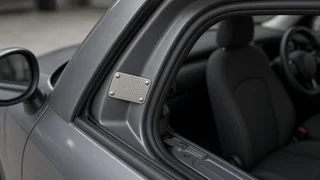
Find the VIN. It appears on the plate at the base of the windshield on the driver's side, on the driver's door jamb label, and on the title, registration and insurance documents. Confirm that all of these match. Count the characters. A modern VIN has exactly 17 characters and never uses the letters I, O or Q, which avoids confusion with 1 and 0. Read the first three characters to confirm the vehicle is a Chevrolet and to see whether it is a car, truck or multipurpose vehicle. Read the tenth character to establish the model year. Read the eighth character. That is the engine code. Look up the engine code for that exact model year and vehicle line in a Chevrolet-specific reference or decoder. The result is usually the displacement, the engine family and often GM's internal engine designation, known as an RPO code. If the result is ambiguous, for example when one character covers more than one engine variant, confirm with the vehicle's RPO label or the engine itself, as described below.
Why the model year changes what the engine code means
GM has a limited set of letters and digits for its eighth-position codes and many engines across many decades. As a result, the same character can point to entirely different engines depending on the model year and vehicle line. A code that meant one V8 in an older pickup may mean a four-cylinder in a newer car. This is why a lookup based on the eighth character alone is unreliable. A trustworthy decoder always reads the model year and vehicle type first.
The model year character runs on a 30-year cycle and skips I, O, Q, U, Z and the digit 0. Because the cycle repeats, an A can mean 1980 or 2010. In practice the body style, the WMI and the vehicle itself resolve the ambiguity. The model year reflects how the vehicle is marketed, not necessarily the calendar date it was built; a vehicle built in late summer is often the following model year.
Character | Model year | Character | Model year; 1 | 2001 | E | 2014; 2 | 2002 | F | 2015; 3 | 2003 | G | 2016; 4 | 2004 | H | 2017; 5 | 2005 | J | 2018; 6 | 2006 | K | 2019; 7 | 2007 | L | 2020; 8 | 2008 | M | 2021; 9 | 2009 | N | 2022; A | 2010 | P | 2023; B | 2011 | R | 2024; C | 2012 | S | 2025; D | 2013 | T | 2026
For the earlier part of the cycle, B is 1981 and the letters continue in the same order through Y for 2000.
What the engine code does and does not tell you
A correctly decoded eighth character usually tells you the engine family, displacement and, for many vehicles, the specific GM engine designation the vehicle left the factory with. That is often enough to order the right filters, spark plugs or gaskets, or to check that a used vehicle's listing matches what was actually built.
The VIN is less helpful for details beyond the basic engine identity:
Transmission, axle ratio and most factory equipment are generally not encoded in the VIN. They are recorded as RPO codes elsewhere. Trim level is not always distinguishable from the VIN, because different trims can share the same descriptor characters. A separate trim code may appear only on the RPO label or build record. Output ratings can differ for the same engine code by model year, tuning or market specification, so the VIN alone may not tell you horsepower or torque. Engine swaps, rebuilt engines and replacement blocks are invisible to the VIN. It only describes the original build. Vehicles built for markets outside the US, or assembled at plants in other countries, may use different WMIs and sometimes different engine coding conventions.
Confirming the engine with RPO codes and the block
GM vehicles typically carry a Service Parts Identification label listing three-character Regular Production Option (RPO) codes for the vehicle's factory equipment, including the engine, transmission and axle. On many models it is inside the glove box, but depending on the vehicle and year it may be on the center console lid, the spare tire cover or a door panel. Engine RPO codes usually begin with L, as in the familiar LS-series and similar designations. Matching the engine RPO code on this label with the result from the VIN is the most reliable paper check.
To verify what is physically installed, look at the engine itself. GM engines generally carry stamped or cast identification on the block, and many also have a partial VIN stamp that ties the engine to the original vehicle. A matching partial VIN suggests the engine is original; a missing or mismatched stamp suggests a replacement, which matters most for collector vehicles and performance models. Location of these markings varies by engine family, so check a reference specific to that engine. A dealer service department can also pull the original build record, which lists the factory equipment.
Chevrolets built before 1981
Older Chevrolets use shorter VINs whose format changed several times. Depending on the era, the engine may be indicated by a character in a different position, by only a broad six-cylinder or V8 distinction, or not at all. Most modern online decoders are built for the 17-character format and give incomplete or wrong results for these vehicles. For classic Chevrolets, the engine is usually identified through the block's casting number, the stamped suffix code on the engine pad and any partial VIN stamp, cross-checked against references for that specific year and model.
Choosing a Chevy VIN decoder for engine information
Several types of tools can decode a Chevy VIN for engine details, and they differ mainly in how deep they go:
The federal government's free VIN decoding service, run by NHTSA, reports manufacturer-submitted data such as model year, assembly plant, body type and engine displacement. It is useful for confirming basics, though engine detail varies by vehicle. General-purpose free decoders on parts and automotive sites usually return engine size and family. They are convenient but can be wrong on years where one code covers several variants. Vehicle history report services decode the VIN alongside title and accident records, which helps when buying used, though their engine data comes from the same underlying sources. A Chevrolet dealer can look up the original build data, including RPO codes, for many vehicles. This is the most complete option when you need full factory equipment details.
Whatever tool you use, check that the model year and model it reports match the vehicle in front of you before trusting the engine result. If the decoder misreads the year or vehicle line, the engine lookup will be wrong too.
The short version
For any 1981-or-newer Chevrolet, the eighth VIN character is the factory engine code, and the tenth character tells you which year's code table to use. Decode both together, confirm against the RPO label for factory equipment, and inspect the engine itself if originality matters or a swap is possible.