Carrying a Motorcycle Passenger: Pillion Positioning and Rules
Carrying a motorcycle passenger, often called a pillion rider, is legal across the US when the motorcycle is equipped for two and the rider meets their state's licensing conditions. The details are set state by state, so the rules that apply to you depend on where you ride. Beyond the law, a good two-up ride depends on three things: a bike set up for the extra weight, a passenger who sits and moves correctly, and a rider who adjusts braking, cornering and low-speed handling for a heavier, differently balanced machine.
What "pillion" means and how two-up riding differs
The pillion is the passenger seat behind the rider, and the pillion rider is the person sitting on it. A passenger adds weight high and toward the rear of the motorcycle. That raises the combined center of gravity, shifts load off the front wheel and onto the rear, compresses the rear suspension and changes how the bike responds to steering, throttle and brakes. Every motorcycle behaves differently with a passenger, but the direction of these changes is consistent: stopping distances tend to grow, acceleration is slower, the bike feels heavier at walking pace, and abrupt inputs from either person are felt more strongly.
Is your motorcycle built to carry a passenger?
Not every motorcycle is designed for two. Some sport, custom and off-road models are sold as solo-only machines, while others offer a passenger seat and footpegs as factory or accessory parts. Model identification matters here: the same model name can come in solo and two-up configurations depending on model year, trim or market, so check the specific bike rather than the model line in general.
A seat section designed and intended for a passenger, not just a rear cowl or luggage rack; Passenger footrests (pegs or floorboards) that the passenger can reach with knees bent comfortably; Something for the passenger to hold: a grab rail, strap or the rider's waist; A load capacity that covers rider, passenger and any luggage together; Rear suspension with enough adjustment range to handle the added weight
Load capacity is the figure most often overlooked. Manufacturers publish a maximum load or gross vehicle weight rating, usually on a label on the frame and in the owner's manual. Add up the rider, the passenger, both sets of riding gear and any luggage. If the total exceeds the rating, the bike is overloaded regardless of how it feels at a standstill.
Motorcycle pillion passenger rules in the US
There is no single national rulebook for carrying a passenger; each state sets its own requirements. The themes below appear in many state codes, but which ones apply, and the exact wording, varies. Check your state's motor vehicle code or rider handbook, and the rules of any state you plan to ride through.
Rule area | What states commonly address | What to check; Passenger equipment | Many states require a seat designed for a passenger and passenger footrests | Whether your bike's seat and pegs meet the definition; Passenger position | Some states require the passenger to sit astride, facing forward, behind the rider | Any restrictions on sidesaddle or alternative seating; License status | Learner permits in many states prohibit carrying passengers | Whether your permit or license class allows a passenger; Passenger age | Some states set a minimum passenger age or require the child to reach the footrests | Age or reach requirements, if any; Helmets | Helmet laws differ widely, and some apply to passengers differently than riders | Whether the passenger must wear a helmet in each state on your route; Eye protection | Some states require eye protection unless the bike has a windscreen | Requirements for both rider and passenger
Insurance is a separate question from legality. Some motorcycle policies treat passenger injury coverage differently from rider coverage, so it is worth confirming what your policy covers before carrying someone regularly.
Setting up the motorcycle for two
The owner's manual usually lists a separate service specification for carrying a passenger or a heavy load. These adjustments are quick and make a noticeable difference to stability and handling.
Tire pressure: many manufacturers specify higher pressures for two-up or fully loaded riding. Set pressures cold, using the figures for your model. Rear suspension preload: increasing preload restores ride height and keeps the rear from sagging, which helps ground clearance, steering and headlight aim. Some bikes have a manual ramp or collar, others a remote knob or electronic setting. Damping: on adjustable suspension, the manual may recommend changes to rebound or compression damping for a heavier load. Headlight aim: a loaded rear end tilts the headlight upward. Some models have a quick adjuster; otherwise preload adjustment helps keep the beam where it belongs. Mirrors: the passenger's head and shoulders can block part of the view, so recheck mirror position once both people are seated. Passenger pegs: fold them down before the passenger mounts, and fold them up after a solo ride resumes.
Equipment compatibility is worth considering if you add accessories. A backrest, top case or larger passenger seat can improve comfort and confidence, but each adds weight to the load total and may change where the passenger sits. Luggage should be secured so it cannot shift or contact the wheel, chain, belt or exhaust.
Pillion positioning: where and how the passenger should sit
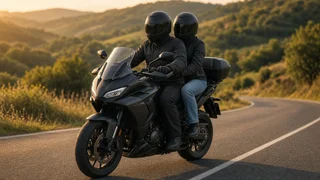
The best motorcycle pillion rider is one the rider barely notices. That comes from sitting close, staying centered and moving with the bike rather than against it.
Sit close enough to the rider that sudden braking does not slide the passenger forward into them; Keep feet on the footpegs at all times, including when stopped, and keep them away from the exhaust, wheel and drive components; Hold the rider's waist or hips, or the grab rails; many riders prefer the waist because it lets the passenger feel acceleration and braking coming; Look over the rider's inside shoulder in turns, turning the head rather than leaning the body independently; Lean with the motorcycle and the rider, staying in line with them; do not lean against the turn or try to hold the bike upright; Grip lightly with the knees under braking to avoid sliding forward; Stay still at low speed and when stopped; shifting weight at walking pace is when a two-up bike is easiest to unbalance
Mounting and dismounting
Getting on and off is a common moment for a tip-over, because the rider is holding the full weight of a stationary bike while the passenger's weight moves high and to one side. A simple routine prevents most problems.
The rider mounts first, starts or prepares the bike, puts both feet down and applies the front brake; The rider tells the passenger when to get on; the passenger does not climb on uninvited; The passenger places a hand on the rider's shoulder for balance, puts a foot on the peg on the side they are mounting from, and swings the other leg over smoothly; Once seated with both feet on the pegs, the passenger signals that they are ready; To dismount, the passenger waits for the rider's go-ahead and gets off while the rider holds the bike steady with the brake applied; The rider dismounts last
Briefing a first-time passenger
A short conversation before setting off covers most of what a new passenger needs. Explain how to mount and dismount, where to put their feet and hands, how to lean, and why they should avoid sudden movement. Agree on simple signals, such as a tap on the leg or shoulder to request a stop, a thumbs-up for all good, or a squeeze to signal discomfort. If you have helmet communication devices, test them before leaving. Remind the passenger that the hot exhaust stays hot after the engine is switched off.
How riding changes with a passenger
With the bike set up and the passenger briefed, most of the remaining responsibility falls on the rider. The aim is smoothness: every input the rider makes is magnified for the passenger, who cannot see the road ahead as clearly and has less warning of what comes next.
Braking: expect longer stopping distances, leave more following distance and brake earlier and more progressively. The rear brake carries more of the work with weight shifted rearward, but both brakes still matter. Acceleration: roll on the throttle gently and avoid abrupt gear changes so the passenger is not thrown backward or into the rider's back. On some bikes, hard acceleration with a rear-heavy load can also lighten the front wheel. Cornering: enter turns at a lower speed, make steady inputs and allow for reduced ground clearance if preload has not been raised enough. Low speed: U-turns, parking-lot maneuvers and stops on slopes or uneven ground take more care because the bike is heavier and the balance point is higher. Stops: choose level, firm ground to put your feet down, and keep the bike upright until the passenger has dismounted. Wind and fatigue: two-up riding can be more tiring for both people, so plan for more frequent breaks on longer trips.
Practicing in a quiet parking lot before the first road ride is a sensible step, especially for riders who have only ridden solo. Starting, stopping, slow turns and a few firm stops will show how the particular motorcycle behaves with the added weight.
Protective gear for the passenger
A passenger faces the same crash risks as the rider and should wear equivalent protection, whether or not local law requires it. That means a properly fitted DOT-compliant helmet, eye protection, a jacket and pants designed for riding, gloves, and sturdy boots that cover the ankles. Loose scarves, untied laces or dangling straps should be secured so they cannot catch on the bike. A helmet borrowed from someone else is only suitable if it fits snugly and has not been damaged.
Carrying children
Where state law allows a child passenger, the practical test is whether the child can reach the footpegs with their feet flat, hold on securely for the whole ride, stay alert and follow instructions. Gear sized for children, especially a properly fitting helmet, is essential. Some riders use passenger belts or handles designed to give a child a better grip, but these do not replace the basic requirements of reach, maturity and appropriate protection. Short rides at moderate speeds are the sensible starting point.
Quick checklist before a two-up ride
Confirm the bike is designed for a passenger and that rider, passenger and luggage are within its load rating; Check that your license and your state's rules allow you to carry a passenger; Set tire pressures and rear preload to the two-up figures for your model; Adjust mirrors and, if applicable, headlight aim; Make sure the passenger has full protective gear and knows the mounting routine, foot position, how to lean and the agreed signals; Ride smoothly, leave extra stopping distance and take breaks on longer rides