Car Tires on Fire: Causes, Warning Signs and What to Do
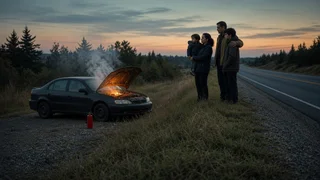
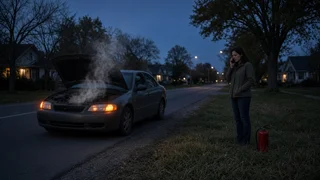
If your car tires are on fire, the priority is people, not the vehicle. Stop in a safe place, switch off the engine, get everyone out and well away, and call emergency services. A burning tire is hard to put out with a portable extinguisher, can reignite after it seems to be out, and can burst or spread flames to the fuel system, wheel well and body. Only consider fighting a very small, just-started fire if you have a suitable extinguisher, a clear escape route and no one is at risk. This guide explains why a car tyre fire happens, how it differs from ordinary tire smoke, what to do in the first minutes, and what to check afterward. It applies to passenger cars, SUVs and light trucks; trailers and heavy trucks with dual wheels share the same causes but carry more risk because a failing inner tire is harder to spot.
Why a tire catches fire
Every fire needs an ignition source, combustible material and oxygen. A tire supplies plenty of combustible material: rubber compounds, oils and textile or steel reinforcement. What usually provides the ignition source is heat from a mechanical fault nearby, building up until the rubber or something around it ignites.
Dragging or seized brakes: a stuck caliper, collapsed brake hose or parking brake left partly applied keeps pads against the rotor, generating heat that passes into the wheel and tire. Failing wheel bearing: a worn or dry bearing can overheat severely before it fails, heating the hub, wheel and tire bead. Underinflation or a flat driven on: a soft tire flexes far more than designed, and the sidewall heats internally. Driving on a flat can shred the tire and the friction can ignite it. Rubbing contact: a damaged fender liner, loose body panel, broken suspension part or wrong-size tire can rub constantly against the tread or sidewall. Nearby fires: leaking fuel, oil or brake fluid reaching hot parts, or an electrical fault near the wheel well, can spread to the tire. Deliberate ignition: vandalism and arson account for some tire fires on parked vehicles. Burnouts and extreme braking: these mostly create heavy smoke, but sustained spinning can overheat a tire enough to ignite it.
Smoke versus fire: how they differ
Not every smoking wheel is burning. A brief puff with a hot, acrid smell after hard braking or a steep downhill run usually means overheated brakes. Smoke that keeps growing, a wheel that is much hotter than the others, visible glow, or flames at the tire, brake or wheel well mean something is actively burning or about to. Treat persistent smoke from a wheel as an emergency until you know otherwise; the gap between overheating and open flame can be short.
Sign | Likely meaning | What to do; Brief smoke and burning smell after hard braking | Overheated brakes | Pull over safely, let them cool, do not touch the wheel; Smoke that keeps increasing from one wheel | Dragging brake, failing bearing or tire overheating | Stop, switch off, get out and keep watching from a distance; Grinding, wobbling or pulling to one side before smoke | Bearing or brake failure | Stop and do not continue driving; Visible flame or glow | Active fire | Evacuate, move away, call emergency services
What to do if your tire catches fire
Signal and pull over as soon as it is safe, away from dry grass, buildings, fuel pumps and other vehicles. Put the vehicle in park, set the parking brake unless that brake is the suspected cause, and switch off the ignition. Get everyone out, including pets. Leave belongings behind. Move well away and upwind, behind a barrier such as a guardrail if possible, and keep others back. Call 911 and give your location, the vehicle type, and whether it is an electric or hybrid model. Warn approaching traffic only if you can do so without returning to the vehicle or standing in a live lane.
Safe evacuation matters more than anything else because tire fires carry particular hazards. Burning rubber produces thick, toxic black smoke. Heat raises the air pressure inside the tire, so it may burst violently, and the wheel or nearby parts can fail. Flames can travel to fuel lines, brake fluid, plastic trim and the cabin.
Should you try to put it out?
Only if the fire is very small and just starting, you have the right extinguisher, you are not alone with passengers who need help, and you can stay at a distance with a clear exit. If flames are spreading, the tire is fully involved, or smoke is heavy, step away and wait for firefighters.
In the US, a fire extinguisher rating shows which fire types it handles. Class A covers ordinary combustibles such as rubber, Class B covers flammable liquids such as fuel and oil, and Class C means it is safe on energized electrical equipment. A multipurpose ABC dry chemical extinguisher is the common choice for vehicles because a car fire can involve all three. The number in front of each letter indicates relative capacity; small vehicle extinguishers have limited discharge time, which is one reason a tire fire can outlast them.
Aim at the base of the flames, not the smoke, using short sweeping bursts. Keep your body to the side of the tire rather than facing the sidewall, in case it bursts. Do not use water on fires involving fuel or oil; it can spread burning liquid. Expect reignition. Tires hold heat deep in the rubber and can flare again after the flames disappear, so keep watching from a distance and let firefighters confirm it is out. Do not open the hood if smoke is also coming from the engine bay; fresh air can feed the fire.
Electric and hybrid vehicles
Switching off the vehicle is the basic form of electrical isolation available to a driver; do not try to disconnect high-voltage components yourself. On electric and hybrid models the tire itself burns much as it would on any car, but if heat or flames reach the high-voltage battery pack, the fire can become far more severe and difficult to extinguish. Evacuate, keep a larger distance, and tell the dispatcher it is an electric or hybrid vehicle so responders can plan accordingly.
After the fire
Do not drive the vehicle, even if damage looks limited. Heat can weaken the wheel, brake components, hoses, wiring, wheel bearing and suspension parts in ways that are not visible. Arrange a tow and have a mechanic inspect the whole corner of the vehicle, and ideally the other brakes and bearings too, since the root cause may affect more than one wheel. Photograph the damage and contact your insurer; whether a fire is covered depends on your policy.
How to reduce the risk
Check tire pressures regularly when tires are cold and inflate to the vehicle maker's recommendation on the door-jamb placard. Stop promptly if a tire goes flat rather than driving on it. Investigate pulling to one side, a burning smell, grinding or one wheel that is noticeably hotter or dirtier with brake dust than the others. Have brakes and wheel bearings inspected at service intervals, especially on older vehicles and trailers. Fully release the parking brake before driving. Use lower gears on long descents to avoid overheating the brakes. Carry a vehicle-rated ABC extinguisher secured where you can reach it, and know how to use it.
The bottom line
Tire fires usually start from heat produced by a mechanical fault such as dragging brakes, a failing bearing or a tire driven underinflated. Persistent smoke from a wheel is an early warning worth stopping for. If flames appear, get everyone out, move away and call for help; an extinguisher is only for a small fire you can tackle safely, and even then the tire may reignite.