Car subwoofer not working: troubleshooting
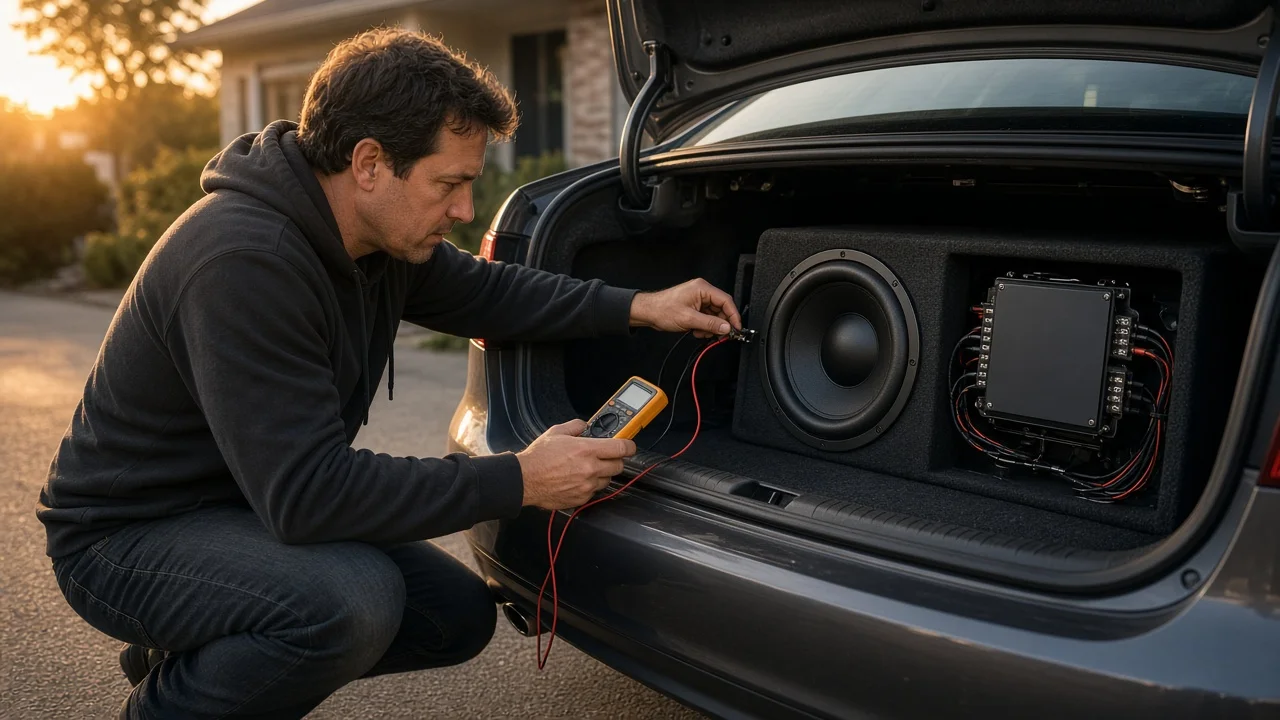
A silent or weak car subwoofer can make an otherwise good audio system sound thin, and the fix is often simpler than it first appears. When a subwoofer in a car is not working, the fault can sit in the audio source, the head unit settings, the amplifier, the speaker wiring, or the subwoofer itself. Troubleshooting a car subwoofer means checking the signal path in a logical order before replacing parts. This guide explains the common causes, how to interpret symptoms, and which checks give useful answers without guesswork.
Direct answer
Start by confirming whether the issue is no sound, weak output, or intermittent bass. If the subwoofer is completely silent, check the head unit subwoofer level or crossover setting first, because a disabled output or zero gain will stop signal before it reaches the amplifier. Then inspect the amplifier power and protection lights, along with the speaker wiring between the amp and subwoofer. A powered subwoofer may also have its own fuse and remote turn-on connection that must be verified.
If the subwoofer works but sounds weak or distorted, the problem may be an audio source with low bass content, a poor signal reception through the antenna feeding the head unit, or a vehicle integration setting such as a factory bass roll-off. Loose or corroded speaker wiring and a poorly grounded amplifier can also reduce output. A fault code in a factory audio system is evidence to interpret, not proof that the subwoofer has failed, because manufacturer-dependent codes require vehicle-specific confirmation before replacing a speaker.