Car Horn Not Working but the Fuse Is Good: Relay and Circuit Diagnosis
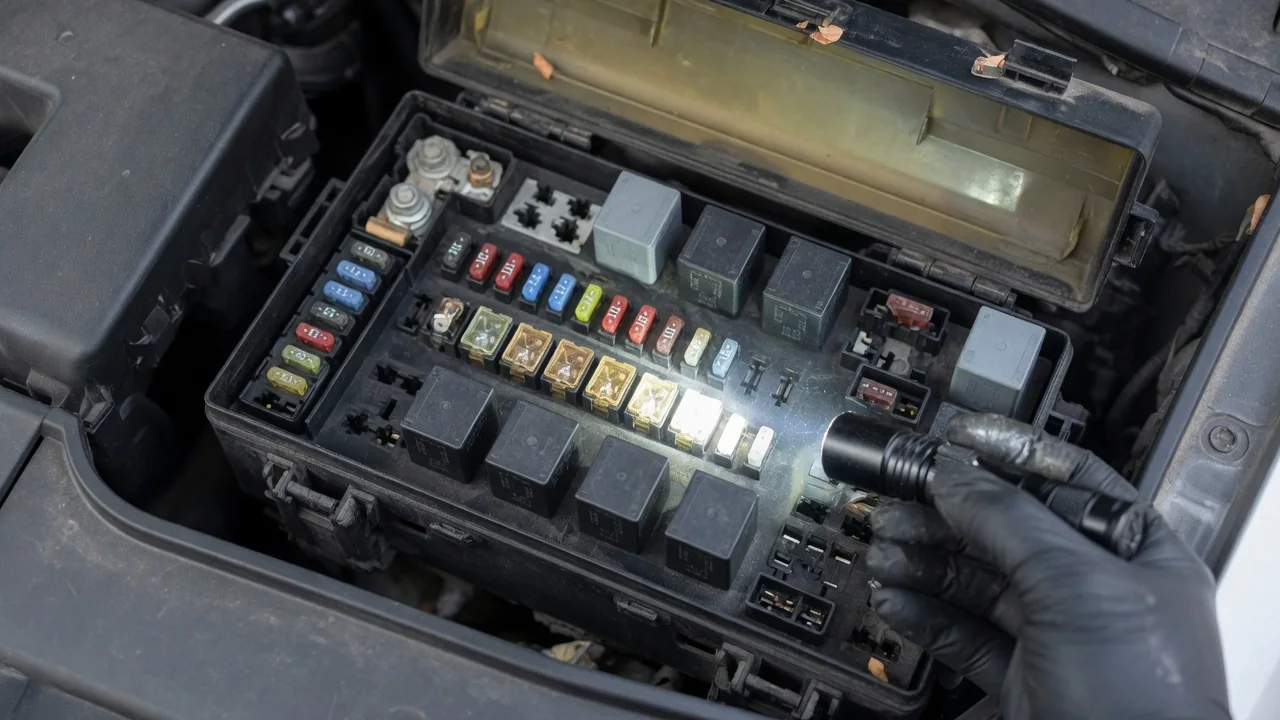
When your car horn is not working but the fuse is good, the problem usually lies further along a circuit that includes a relay, a steering wheel switch, a clockspring, wiring, a ground connection and, on many newer vehicles, a body control module. Knowing what each simple check can and cannot reveal, and where safety limits apply, helps you narrow the fault without guesswork or risk.
Why a Fuse That Looks Good Doesn't Rule Out the Horn Circuit
A fuse that looks fine through its plastic window can still hide a hairline crack in the element, especially one that opens only when warm or under vibration. A continuity test with a multimeter, or checking for voltage on both test points of the fuse with the circuit powered, gives a much firmer answer than a glance. Even then, a good fuse only confirms that one part of the horn circuit is intact, so treat it as a single clue rather than proof that power is reaching the horn.
Many vehicles have more than one fuse box, often one under the hood and another inside the cabin, so confirm the correct horn fuse using the owner's manual or the fuse box diagram on the lid for your exact make, model and year. Some vehicles share the horn fuse with other circuits, and layouts change between model years, so never assume a universal position. Also inspect the slot itself, because corroded or loose fuse terminals can block current even when the fuse is intact.
Listening for the Horn Relay: What a Click Does and Doesn't Tell You
The horn relay is a small electrically operated switch that lets a light signal from the steering wheel control the heavier current the horn needs. A simple two-person check helps here: with the vehicle parked safely, one person presses the horn while the other listens or lightly feels for a click at the relay location shown in the vehicle's documentation. A click shows the relay coil is being commanded, but it does not prove the internal contacts are actually passing current to the horn.
No click points toward the relay, the horn switch side of the circuit or the control electronics, and this check alone can't separate them. Swapping in another relay is only reasonable when the replacement carries identical markings and the vehicle's documentation confirms the two are the same type, since similar-looking relays can have different internal layouts. If a confirmed matching relay restores the horn, the original relay becomes the stronger suspect, though a corroded relay socket could still share some of the blame.
Horn Switch, Clockspring and Airbag Safety in the Steering Wheel
Because the steering wheel turns, the horn signal can't travel through ordinary fixed wires. Instead it passes through the clockspring, also called a spiral cable, a coiled ribbon of conductors that winds and unwinds as you steer. Clues that may point toward this area include a horn that works only at certain wheel positions, steering wheel buttons that stopped working at the same time, or an airbag warning light. These symptoms are useful clues rather than proof, since wiring or switch faults can produce similar behavior.
The horn pad usually contains the driver airbag, so do not remove, pry at or probe it. Airbags store energy and can deploy with dangerous force if handled incorrectly, and work on the airbag system belongs to a qualified technician following the correct procedures. If the airbag light is illuminated, have the vehicle inspected professionally as a separate priority from the horn, because the warning may mean the airbag will not deploy as intended in a crash, which matters far more than a silent horn.
Checking the Horn Unit, Ground and Wiring at the Front of the Car
Horns usually sit behind the grille or bumper, where water, road salt and debris attack connectors and terminals. With the engine off and the vehicle cool, a visual check can reveal unplugged or damaged connectors, green or white horn connector corrosion, chafed wires in the wiring harness and loose mounting brackets. Pay extra attention if the car has had front-end collision repairs, since connectors are sometimes left unplugged or wires pinched during reassembly. Many horns also ground through their mounting bracket, so rust or paint there matters.
A poor ground connection adds resistance, which can leave the horn silent, weak or intermittent. Complete silence often suggests an open circuit, a failed relay or a disconnected connector, while a weak, raspy or on-and-off sound may point toward corrosion, high resistance or a horn unit nearing the end of its life. These are tendencies rather than definite causes. Applying direct power to the horn to isolate it is a common professional test, but it should be left to someone with the right tools and training.
When the Horn Is Controlled Electronically: Body Control Modules and Alarms
On many modern vehicles, pressing the horn pad doesn't send power straight to the relay. Instead, the horn switch signals a body control module, which then triggers the relay, so the circuit can't be traced like an older direct-wired setup. The key fob panic button offers a useful clue: if it sounds the horn, the horn, relay and part of the circuit are probably working, shifting suspicion toward the switch or clockspring side. Some vehicles, however, use a separate alarm siren instead of the horn.
Aftermarket alarms, remote starters and accessory wiring are worth considering too, because installers sometimes splice into the horn circuit, and failed splices or poor workmanship can interrupt it. If a scan tool shows stored diagnostic trouble codes, check them against vehicle-specific service information before interpreting them. Code meanings vary by manufacturer, so no code should be read as a universal horn fault, and even a relevant code is evidence to investigate rather than proof that a particular part has failed.
When to Stop and Get Professional Horn Circuit Testing
A working horn is an important safety device and is legally required in many places, so a silent horn shouldn't be put off. Certain warning signs call for a technician right away: an airbag warning light, a burning smell, repeated blown fuses, a horn that sounds by itself, or melted connectors. These can indicate a short circuit, overheating wiring or a safety system fault, and continuing to replace fuses or drive without investigation can turn a simple electrical problem into a more serious one.
Professional diagnosis usually involves wiring diagrams for the specific vehicle, voltage drop and continuity testing to locate resistance or breaks, and scan tool checks of body control functions to see whether the module recognizes a horn request. You can speed this up by writing down what you've already checked, including fuse condition and test results, whether the relay clicked, the panic button result and any warning lights. Note when the problem started and any recent repairs too, since those details help the shop narrow down the cause.