Horn tweeters for car audio
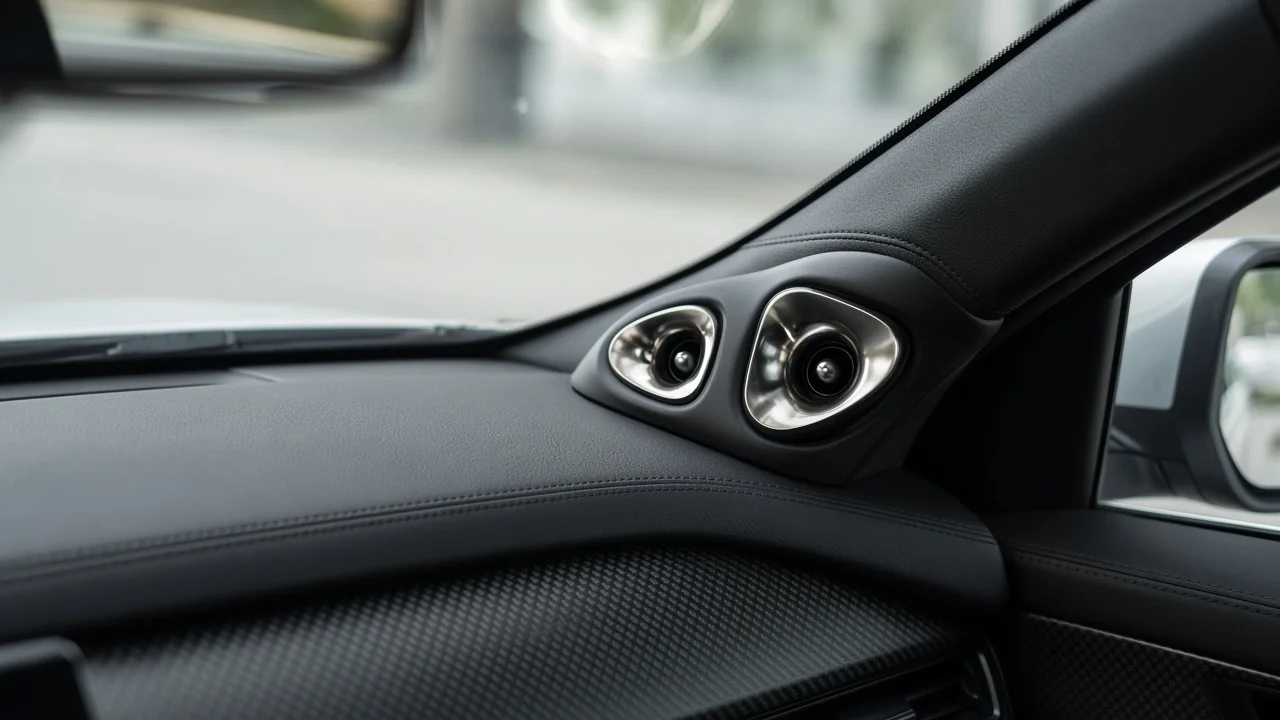
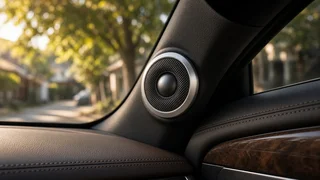
A horn tweeter for car audio takes the high-frequency portion of a music signal and loads it through a flared waveguide rather than a conventional dome. This approach raises sensitivity and directs sound with a narrow, controlled pattern. In a vehicle cabin, where glass, seats, and trim absorb or scatter treble, that focused output can overcome road noise and preserve detail. The tradeoff is a more forward, sometimes aggressive presentation that benefits from careful aiming and crossover tuning.
Essential answer
A horn tweeter is a high-frequency driver mounted to a flared acoustic transformer that couples the vibrating diaphragm to the surrounding air more efficiently. In car audio, this design typically produces higher output per watt than a soft-dome tweeter, so the same head unit or amplifier voltage creates louder treble. The flare shapes the wavefront, concentrating acoustic energy into a defined coverage area instead of spreading it broadly across the windshield and side glass.
The practical meaning for a listener is that horn tweeters can cut through ambient noise with less power, but their placement becomes more critical. Because the sound beam narrows, off-axis response may drop sharply, making the tweeter sound bright on axis and dull to one side. Installations often aim them toward the listener or use them in systems where high sensitivity and projection matter more than a diffuse, airy soundstage.