Car Horn Not Working? Common Causes, Safe Checks, and When to Get Help
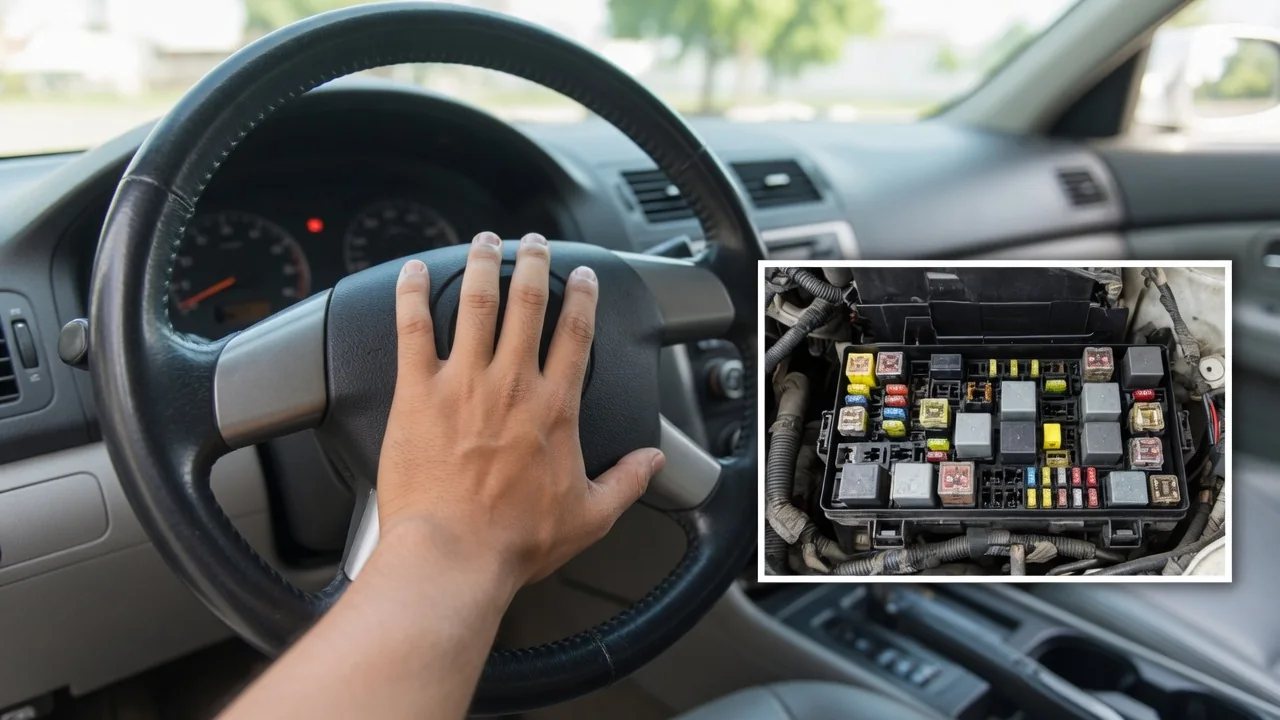
A car horn not working is easy to ignore until the moment you need it. Whether the horn is silent, weak, or only works sometimes, the cause sits somewhere in a fairly simple electrical circuit. This guide explains why a horn stops working, which checks are safe to do yourself, how to fix the simple problems, and when professional diagnostic testing is the better choice.
What It Means When Your Car Horn Makes No Sound or Sounds Wrong
Start by pinning down the symptom, because each one points to a different part of the circuit. Complete silence suggests power never reaches the horn, which could involve the fuse, relay, switch, or wiring. A weak, raspy, or distorted tone means the horn sound is not working properly even though current is arriving, often hinting at the horn unit or a poor ground connection. A single click, or a horn that works only on some presses, tells yet another story.
On most vehicles, pressing the steering wheel horn pad or a stalk button closes the horn switch, which on many cars triggers a relay that sends fused power through the wiring harness to the horn. Layouts vary, so treat that as a general picture. Without tools you can notice whether other electrical items work, whether a click comes from under the hood or the dash, and whether warning lights are on. Sound alone cannot confirm a cause; that takes electrical testing.
Why a Car Horn Stops Working: The Usual Suspects
When drivers ask why their car horn is not working, the answer is usually one of several possibilities to rule out, not a single likely culprit. A blown horn fuse, a failed horn relay, a corroded connector or loose terminal, damaged wiring, a poor ground, worn horn switch contacts, or a failed horn unit can each produce the same silence. Horns are typically mounted near the front of the vehicle, where road spray, dirt, and minor impacts encourage corrosion and physical damage.
A blown fuse deserves extra thought, because a fuse is a protective device and often a symptom, not the root problem. If an electrical short or a failing horn unit is drawing too much current, a new fuse will simply blow again, and replacing it repeatedly fixes nothing. Fuse and relay positions and labels also differ by make, model, and year, so the owner's manual or the fuse box diagram for your specific vehicle is the right reference.
Horn Stopped Suddenly or Only Works Sometimes
A horn that cuts in and out usually signals an intermittent electrical fault: a worn horn switch, a loose terminal, a corroded connector, or a relay that sticks. Weather can expose a marginal connection. Moisture after rain or a car wash can bridge or corrode contacts, and in cold weather a stiff horn diaphragm or a contracted connection may misbehave. If the horn returns once things dry out or warm up, the weakness remains and will probably come back.
A clicking sound with no horn may suggest the relay is switching while power fails to reach the horn, or that the horn unit itself has failed, though only testing can confirm which. Writing down when the failure happens, such as steering wheel position, weather, or after a long drive, gives a technician a real head start. Even when a horn stops suddenly with no obvious trigger, have it checked, because it is a safety warning device.
Horn Not Working After an Accident, Battery Change, or With the Airbag Light On
After an accident, even a light front-end impact can crush the horn, bend its mounting, or pinch its wiring. On many vehicles the horn switch circuit also runs through the steering wheel near the driver airbag, often via a part commonly called a clock spring. A horn not working together with an airbag warning light therefore calls for a professional inspection. Never remove or probe the steering wheel, airbag module, or related connectors yourself; an airbag can deploy and cause serious injury.
If the horn quit after a battery change, a connection may have been disturbed or a fuse may have blown during the work, so those are reasonable first things to check. Some vehicles also have security or electronic settings tied to the horn, and behavior differs between models. If a scan turns up diagnostic trouble codes, remember that a code is evidence to interpret, not proof a part has failed, and its meaning must be confirmed for the specific vehicle.
Safe Checks You Can Do Before Booking a Repair
For anyone wondering how to fix a car horn not working, begin with low-risk checks. Find the horn fuse and relay in the owner's manual, then inspect the fuse visually with the ignition off. Look at the horn unit where it is visible without removing anything, noting damage, looseness, or corrosion. Some owners swap in an identical relay from another circuit, but only when the manual confirms an exact match, never a part with a different rating.
Never bypass a fuse or jump circuits with improvised wires; an unprotected circuit can overheat and start a fire, and anything near airbag components risks injury. Replacing a blown fuse with one of the correct rating is generally manageable for a careful owner, while wiring faults, switch problems, and anything inside the steering wheel belong with a technician. Stop and seek professional testing if the fuse blows again, you smell burning, warning lights are on, or the simple checks find nothing.
Repair Cost Factors and Whether Driving Without a Horn Is Legal
What a car horn repair costs depends mainly on which part failed and how hard it is to reach. A fuse or relay involves little labor, while a horn unit tucked behind a bumper, a worn switch, or damaged wiring takes more time. Diagnostic time matters too, and an intermittent fault can take longer to trace than a straightforward horn replacement. Work involving airbag-area components adds care and labor, so a shop's estimate after testing is the reliable figure.
Is driving with a car horn not working illegal? Motor vehicle rules across the US generally expect a working horn, but exact requirements, inspection standards, and penalties vary by state, so check the rules where your vehicle is registered. Legal questions aside, the horn is a basic warning device for alerting other drivers, cyclists, and pedestrians. Even where enforcement is rare, putting off the repair leaves you without a quick way to prevent a collision.
Horn Problems on Classic Cars and Smart Cars
A classic car horn not working often reflects age as much as any single fault. Older wiring, tired connectors, and weak grounds are plausible contributors, and the horn circuit may differ from modern designs. A wiring diagram for the exact vehicle is the best guide, because guesswork with old circuits can create new problems. Watch for brittle insulation and previous non-original repairs, such as spliced wires or substituted parts, which can hide the real cause.
A smart car horn not working can mean two things: a vehicle from the Smart brand, or any modern car packed with electronics. On newer vehicles, horn control may pass through electronic modules instead of a simple switch and relay, so a fault may not be visible at the fuse box at all. Fuse locations and known issues differ widely, so vehicle-specific service information or a qualified technician with proper diagnostic equipment is the dependable route.