Car Radio Not Working but Fuses Look Good: What to Check Next
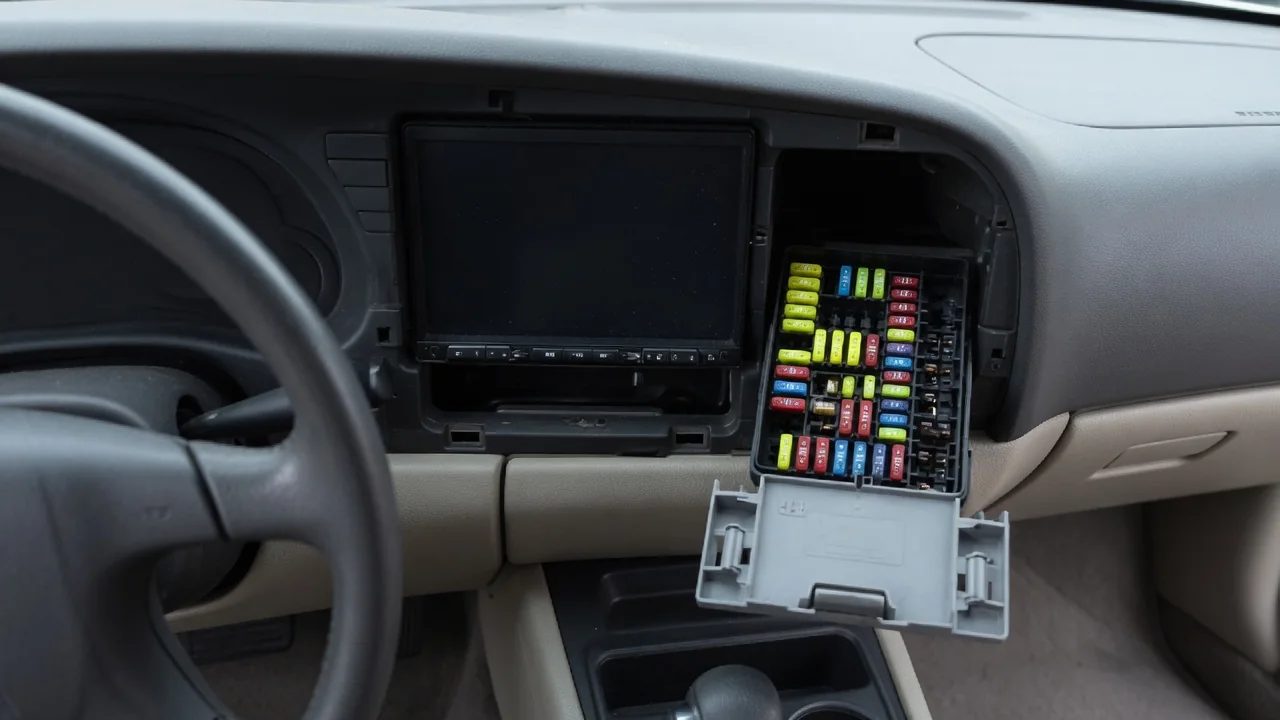
When a car radio is not working and the fuses are good, the fault usually lies somewhere beyond a simple blown fuse. A head unit depends on several power feeds, a solid ground, sound connectors and, in many newer vehicles, communication with other modules. Here is what a radio not working in a car with the fuse OK can mean, and what to check next.
Why a Fuse That Looks Fine Doesn't Rule Out a Power Problem
A fuse can look intact and still fail electrically. A hairline break in the element may be almost invisible, a corroded blade can block current, and a fuse that sits loosely in its slot may make contact only some of the time. Looking at a fuse is therefore not the same as testing it with a test light or multimeter. A radio also tends to rely on more than one circuit: a constant power feed for memory, switched accessory or ignition power, illumination, and sometimes a separate amplifier fuse. Checking only one of them can miss the real fault.
Many vehicles carry fuses in more than one location, commonly an interior panel and an underhood box, and audio-related circuits may be split between them. The owner's manual or the fuse box diagram printed on the cover is the reliable guide, because positions differ between makes, models and years, and guessing wastes time. Any replacement should match the rating listed for that position, since a higher-rated fuse removes the protection the wiring depends on. A fuse that keeps blowing is not a bad fuse; it points to an underlying fault that needs diagnosis.
Read the Symptoms: No Power, No Sound, or Something In Between
Radio faults tend to fall into a few recognizable patterns. The unit may be completely dark, the display may light up with no sound from the speakers, audio may cut in and out, or the radio may work only with the engine running or the key in a certain position. Each pattern suggests a different direction. A radio display that stays blank raises questions about power, ground or a lockout, while a lit display with no audio points away from the main power feed. It does not, however, identify whether the amplifier, speakers, wiring or settings are responsible.
A few safe observations help narrow things down. It is useful to notice whether the clock and station presets are retained after the car is switched off, since lost memory can hint at a problem with the constant power feed. Whether steering-wheel controls or Bluetooth still respond shows how much of the system is alive. It also matters if the trouble began after battery replacement, a jump start or other electrical repairs. These clues narrow the possibilities, but they are only inference. Symptoms cannot replace electrical testing, and two different faults can look identical from the driver's seat.
Anti-Theft Lockout, Settings and Other Simple Explanations
Some radios protect themselves after the battery has been disconnected or has gone flat. Depending on the design, the unit may show a code prompt, display a lock message or simply present a blank screen, any of which can be mistaken for a power failure even though every fuse is healthy. If a radio anti-theft code is required, the owner's manual, the documents supplied with the vehicle or an authorized dealer are the right sources for the code or unlock procedure. Attempting a security bypass is never appropriate and can leave the unit locked for longer.
Simple settings deserve a look before anything is taken apart. Volume may be muted, the audio source may be set to an input with nothing connected, or the fader and balance may be pushed to one corner so that most speakers stay silent. Display brightness turned all the way down can make a working screen look dead, especially in daylight. Some systems also recover from a frozen state after a soft reset, but the method and the way the software behaves vary by system and model, so the manufacturer's documented procedure is safer than generic steps.
Wiring, Connectors, Grounds and the Accessory Signal
Power has to travel past the fuse to reach the radio, and it can be lost along the way. A wiring harness connector that has worked loose behind the unit, a poor ground connection, or a missing accessory or ignition signal can each shut the radio down while every fuse tests good. Certain histories point toward wiring: a recent aftermarket head unit or accessory install, dash work for another repair, water getting into the cabin, or a fault that comes and goes over bumps. Intermittent behavior linked to vibration suggests a connection problem more than a failed component.
Reaching those connections is where caution matters. Removing dash panels can bring hands and tools close to airbag components, and trim clips and connector locks are fragile enough to break under modest force. Anyone without training is better off leaving that work to a technician. Confirming voltage and ground at the radio connector also requires proper test equipment and the wiring diagram for that vehicle, because pin positions and wire functions differ widely. Probing the wrong terminal can damage modules or cause a short, which is why this stage belongs with professional testing.
Integrated Infotainment Systems and Network-Linked Radios
In many newer vehicles the radio is no longer a self-contained box. It is part of an infotainment system that may share a screen, amplifier, control panel and other functions with separate modules, all exchanging information over a data network. Such a system needs more than a fused power feed; it may wait for a wake-up message or a valid signal from another module before it switches on. A module or communication fault can therefore make the radio appear dead even though its fuses, power and ground are all in good order.
Tracing that kind of fault calls for a scan tool capable of reading body or infotainment modules, which goes beyond a basic engine code reader. Any stored diagnostic trouble codes carry manufacturer-specific meanings, so the vehicle-specific definition must be checked before a code is interpreted. Even then, a code is evidence that directs further testing, not proof that a particular part has failed. Where a software update or reprogramming applies, it should follow the manufacturer's or dealer's process, since an interrupted or incorrect update can create new problems.
When to Book Professional Diagnosis and What to Tell the Shop
Some signs mean the vehicle should go to a professional without further home checks. These include a fuse that blows repeatedly, a burning smell, other electrical faults appearing at the same time, evidence of water getting in, and a radio that forms part of an integrated system. A clear symptom summary makes the visit more productive. The technician will want to know when the problem started, whether any battery or electrical work came shortly before it, which functions still work, and exactly what messages, if any, appear on the display.
A shop can carry out electrical diagnosis that a visual fuse check cannot match. Technicians can test circuits under load, check connectors and grounds, measure the power feeds at the unit and scan the relevant modules for stored faults. That evidence matters before any money is spent on parts. A power, wiring or security issue can look exactly like a failed radio, so buying a replacement head unit or module before the fault is confirmed risks leaving the original problem in place, with a new component that behaves the same way.