Can You Jack Up a Car on the Rear Differential
Lifting a vehicle by the rear differential is a common driveway question, but the answer depends on how the axle housing is built and what you intend to do. Many cars and trucks use the differential as a central lifting point, while others risk damage to the cover, mounts, or fluid pan. Understanding the load path, support point, and ground stability helps you decide whether this method is safe for your specific vehicle. The following explanation covers the principle, the limitations, and the practical steps to assess before placing a jack under the center section.
Essential answer
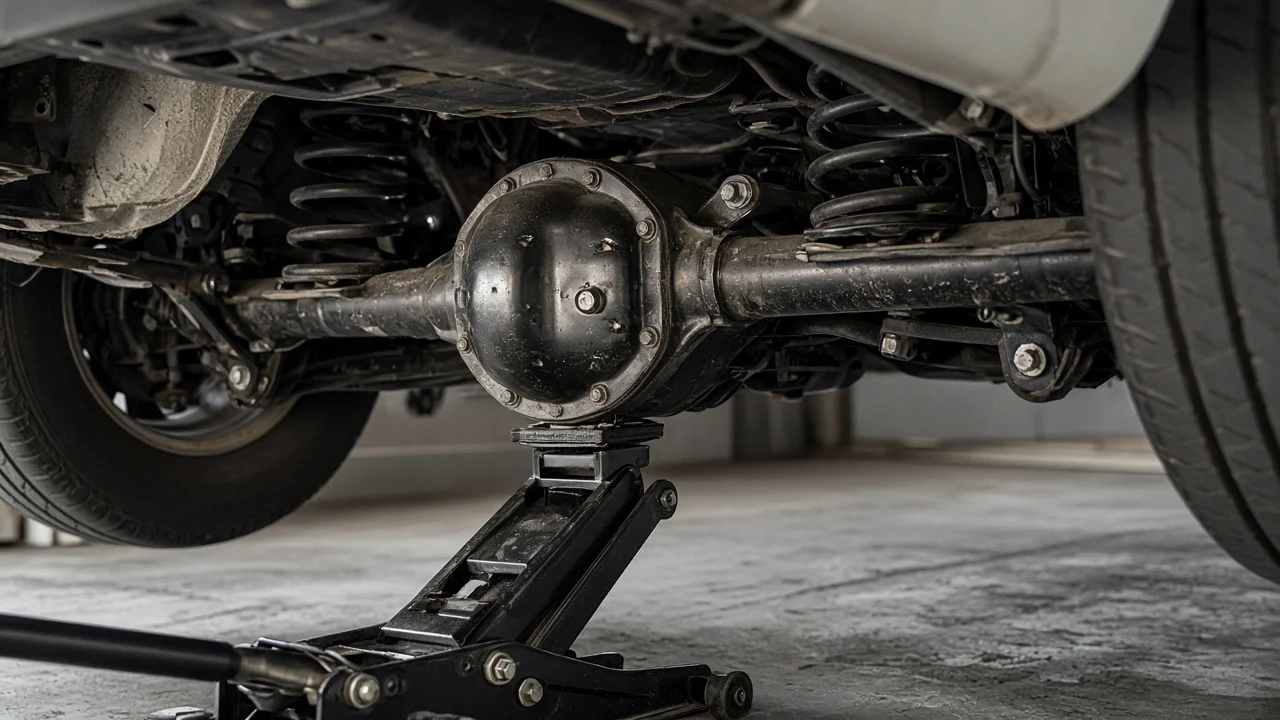
You can often jack up a car from the rear differential when the axle is a solid, driven assembly with a sturdy cast-iron center section. In this layout, the differential housing is designed to carry the weight of the rear of the vehicle through the suspension, so a floor jack placed under the housing can raise both rear wheels evenly. This works well for tire rotations, brake work, or installing jack stands under the axle tubes or frame points. The key is that the housing itself must be the structural load-bearing component, not a thin stamped cover or an independent rear suspension carrier.
The method is not universal. On vehicles with independent rear suspension, the differential is often mounted to a subframe and may hang from rubber bushings. Lifting there can tear a mount, bend a bracket, or crack the aluminum case because the component was never intended to support the vehicle's mass from below. Even on a solid axle, you should never place the jack saddle on the rear cover plate, which is usually thin steel or stamped metal. Instead, position the saddle under the thickest part of the cast center section, avoiding the drain plug, sensor wiring, and any cooling fins. Always confirm the vehicle manufacturer's designated lifting points before applying load.