Can dashcam footage be used as collision evidence?
The short answer
Yes. In the United States, dashcam footage can generally be used as evidence after a collision. Insurance adjusters may review it during a claim, police may consider it when preparing a report, and courts may admit it in civil or criminal proceedings. Use is not automatic, though. Whether a court accepts a recording, and how much weight it carries, depends on the conditions described below.
What "evidence" means here
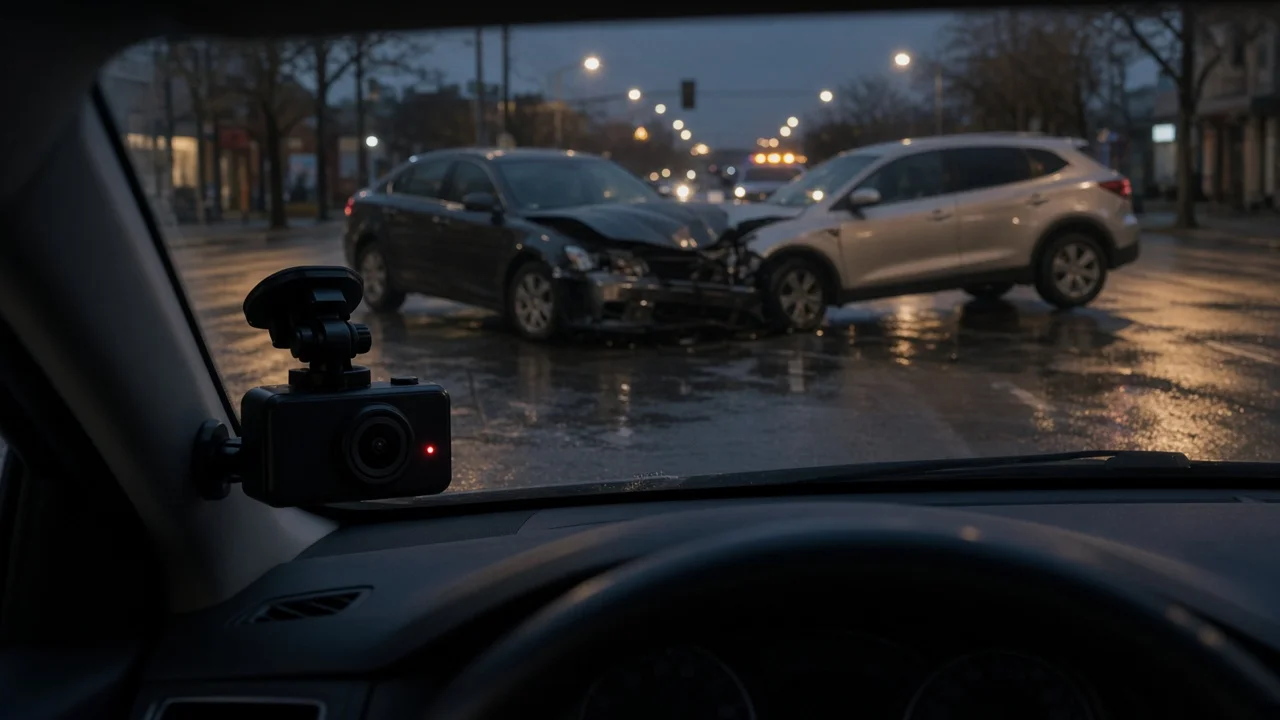
A dashcam is a small camera, usually mounted on the windshield or dashboard, that records continuously while the vehicle is in use. Its footage can show vehicle positions, traffic signals, road conditions and the sequence of events before and during an impact. Insurers and courts use the footage in different settings:
Insurance claims: adjusters can use video informally to help decide fault. Strict courtroom rules of evidence do not apply. Police reports: officers may view footage when recording what happened, though practice varies by agency. Court proceedings: a judge decides whether a recording is admissible under the applicable rules of evidence before a judge or jury considers it.
Qualifications that can change the answer
Authenticity: In court, the party offering the footage must generally show that it is what it claims to be. That means it must be an accurate, unaltered recording of the event. Testimony from the person who owns or installed the camera, together with intact original files, typically supports this. Edited, trimmed or re-encoded clips invite challenges.
Relevance and completeness: The footage must relate to the disputed facts. A clip that starts after the key moment, or a camera angle that misses the point of impact, may have limited value even if it is admitted.
Audio recording laws: Video of a public road is generally not a privacy concern. Audio is different. Some states require consent from everyone in a conversation before it is recorded. If a dashcam captures passengers' or other people's speech without the required consent, the audio portion could be excluded or create legal exposure. Rules differ by state, and the supplied material does not identify which states apply which standard.
Mounting rules: Some states limit objects attached to the windshield. An improperly mounted camera does not necessarily make its footage unusable, but it can raise a separate equipment issue. State-specific mounting rules were not included in the supplied evidence.
It can work against you: Footage records whatever happened, not just the parts that help the camera's owner. If it shows speeding, distraction or a missed signal, the other side may use it. Once litigation is reasonably anticipated, destroying or withholding relevant footage can carry its own legal consequences.
Practical next steps after a collision
Save the original file promptly. Many dashcams loop-record and overwrite older footage. Keep an untouched copy of the original, and work only from duplicates. Note the camera's date and time settings, and whether they were accurate. Tell your insurer that footage exists, and ask how they want to receive it. For injury claims or disputed fault, ask an attorney licensed in your state how to preserve and present the recording.
Gaps in this overview
This guide explains general US principles, not legal advice. It does not cover state-by-state consent rules, specific court decisions, insurer policies or particular dashcam models, because no confirmed evidence on those points was available. Admissibility in a specific case depends on the jurisdiction, the type of proceeding and the condition of the recording.