Buying Auto Body Shop Supplies: What to Check Before You Order
The best place to buy auto body shop supplies is the supplier that reliably stocks a complete, compatible product system for the repairs you actually do, and that can answer technical questions about it. The lowest shelf price matters less than you might expect, because a filler, primer or clear coat that does not suit the panel or the topcoat can cost far more in rework than it saved. Two conditions change this answer. If you only do occasional small repairs, convenience and smaller pack sizes usually matter more than trade pricing. If you need color-matched paint, a supplier with mixing and color-matching capability becomes close to essential. If you are looking for a particular store, such as a local Carlson body shop supply location, contact it directly to confirm which brands and product lines it carries, whether it mixes paint, and whether it offers trade accounts. Stock, services and terms vary by location and change over time, so treat any listing or past experience as a starting point rather than a guarantee.
Where to Buy: Comparing Supplier Types
Most buyers in the US choose between a few kinds of sellers. Each suits a different kind of buyer, and many shops use more than one.
Supplier type | Strengths | Limitations | Best suited to; Local paint and body supply store (often called a jobber) | Paint mixing and color matching, technical advice, same-day pickup, trade accounts | Selection limited to the brands it distributes; retail pricing for walk-in customers may be higher | Shops and serious DIYers doing regular paint work; Online specialty retailer | Wide selection, easy comparison, bulk packs | Shipping restrictions on flammable and aerosol products, no hands-on advice, slower for urgent needs | Planned purchases of abrasives, masking, tools and non-hazardous consumables; General auto parts store | Convenient, open long hours, small pack sizes | Narrower professional range, limited paint system support | Small DIY repairs and emergency top-ups; Regional or national distributor | Volume pricing, delivery, account management | Usually requires an account and minimum orders | Established collision shops
What to Check Before You Buy
Substrate material
The substrate material is the surface you are repairing: bare steel, galvanized steel, aluminum, plastic, fiberglass or existing paint. Many fillers, primers and adhesives are formulated for specific substrates. Aluminum and many plastic bumper covers, for example, often need dedicated primers or adhesion promoters, and some general-purpose fillers are not intended for them. Check the product label and technical data sheet for the substrates it is approved for before buying, and confirm what your panel is made of rather than assuming.
Coating compatibility
Coating compatibility means each layer bonds properly to the one beneath it and tolerates the one above it. Mixing products from unrelated systems, or putting a strong solvent-based product over a sensitive existing finish, can cause lifting, wrinkling, poor adhesion or dieback. The safest approach is to buy primer, sealer, basecoat, clear and their matching reducers, hardeners and activators from one system and follow its recommended sequence. If you must mix brands, ask the supplier which combinations they know to work, and test on a scrap panel or hidden area first.
Surface preparation
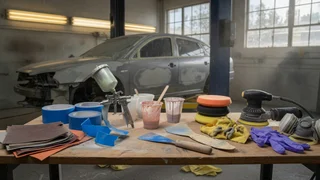
Surface preparation supplies often decide how long a repair lasts. Plan for wax and grease remover, a range of abrasive grits for stripping, shaping filler and final sanding before primer and paint, tack cloths, and scuff pads for areas that are hard to sand. The paint system usually specifies the final sanding grit and cleaning steps for each stage, so buy abrasives to match those instructions rather than guessing.
Corrosion protection
Any time a repair exposes bare metal, it needs corrosion protection before filler and topcoat, or as directed by the product system. Depending on the repair, that can include etch or epoxy primers, weld-through primer for welded seams, seam sealer and cavity wax for enclosed sections. Check whether a product may go under body filler or only over it, because systems differ on that point.
Repair method
Your repair method drives the shopping list. A plastic bumper scuff needs very different materials from a welded quarter-panel section or a bonded panel replacement. Bonded repairs require panel-bonding adhesives approved for the job, and vehicle manufacturers may specify particular repair procedures or materials for certain models and model years. If you are working on structural parts or a newer vehicle, check the repair information for that specific vehicle before buying adhesives, sealers or welding consumables.
Panel alignment
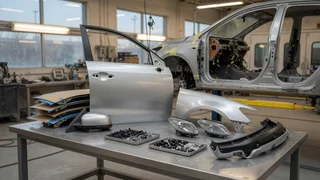
If the job includes replacing or refitting doors, fenders, hoods or bumpers, panel alignment comes before paint. Buy any needed clips, retainers, fasteners and shims before you start, because broken plastic clips are common during disassembly and a missing fastener can hold up the whole job. Confirm part compatibility by model year, trim and body style, since fasteners and brackets can differ between versions of the same model.
A Practical Shopping List by Repair Stage
Teardown and protection: masking tape in more than one width, masking paper or film, trim removal tools, replacement clips and fasteners; Cleaning: wax and grease remover, lint-free wipes, tack cloths; Metal and damage repair: abrasives or discs for stripping, body filler and hardener, glazing or finishing putty, spreaders, mixing boards; Corrosion protection: epoxy or etch primer as specified, seam sealer, cavity wax where needed; Priming: high-build or filler primer, guide coat, sealer if the system calls for it; Painting: basecoat, clear coat, matching reducers and activators, strainers, mixing cups, stir sticks; Finishing: fine-grit sanding discs or paper, compounds and polishes, pads; Personal protection: a respirator suited to the products you spray, nitrile gloves, eye protection, coveralls
Buying Cheap Body Shop Supplies Without Paying for It Later
Saving money on body shop supplies is realistic, but only in some categories. A useful rule is to economize on items that touch the job temporarily and to be careful with anything that stays on the car.
Usually reasonable places to save: masking paper, mixing cups, stir sticks, spreaders, wipes, general-purpose gloves, and abrasives bought in bulk once you know which grits and backing types you use; Be cautious with: masking tape, since cheaper tapes may leave residue or let paint bleed at the edge; Avoid cutting corners on: primers, clear coats, hardeners and activators, seam sealers, structural adhesives and respiratory protection; Watch for expired or old stock: fillers, hardeners and some coatings have limited shelf life, so check manufacturing or expiration dates on discounted items; Compare cost per repair, not per can: a product that covers well, sands easily or needs fewer coats can work out cheaper overall
Other ways to lower costs include opening a trade account if you buy regularly, buying consumables in larger packs once you have settled on what works, and asking a local supplier about package pricing or promotions on the system you use. Leftover activated paint and hardener cannot be stored, so mixing only what you need is itself a saving.
Questions to Ask a Supplier
Which paint and refinish systems do you carry, and do you stock the full system including reducers, hardeners and sealers? Can you mix paint to my vehicle's paint code, and do you offer spray-out cards or color variant checks? Can you supply technical data sheets and safety data sheets for the products I am buying? Which primers and fillers do you recommend for aluminum, plastic or galvanized panels? Do you offer trade accounts, delivery or volume pricing? What is your return policy on unopened products and on mixed paint, which is often non-returnable?
A Note on Safety Equipment
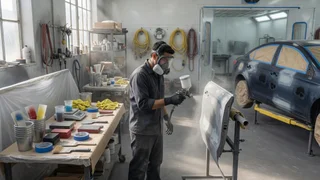
Some refinish products, particularly two-component primers and clear coats that use isocyanate hardeners, require proper respiratory protection and ventilation. Check the safety data sheet for the specific product to see what protection it calls for before you buy it, and budget for the right respirator and cartridges as part of the purchase rather than as an afterthought. Many products also carry handling and storage requirements for flammable materials.
Next Step
Start by writing down the substrate, the repair method and the finish you need to match, including the vehicle's paint code. Take that list to a local paint and body supplier, or use it to compare online retailers, and build your order around one compatible system. Then add consumables where saving money carries little risk.