What Makes 1 Stop Auto Body Supplies Different for Paint and Prep Work
The core answer
For most DIY painters and independent shops, the practical advantage of 1 Stop Auto Body Supplies is not one exotic ingredient. It is that the store tends to carry a broad range of refinishing materials from surface prep through topcoat in one place, with staff who can usually explain which reducer, hardener, primer, or clearcoat works with a given paint system. The condition that changes the value is your specific job: a simple panel repair may be straightforward, while a full respray with a particular brand of basecoat may require matching the exact product line, temperature range, and spray equipment.
What the product mix actually covers
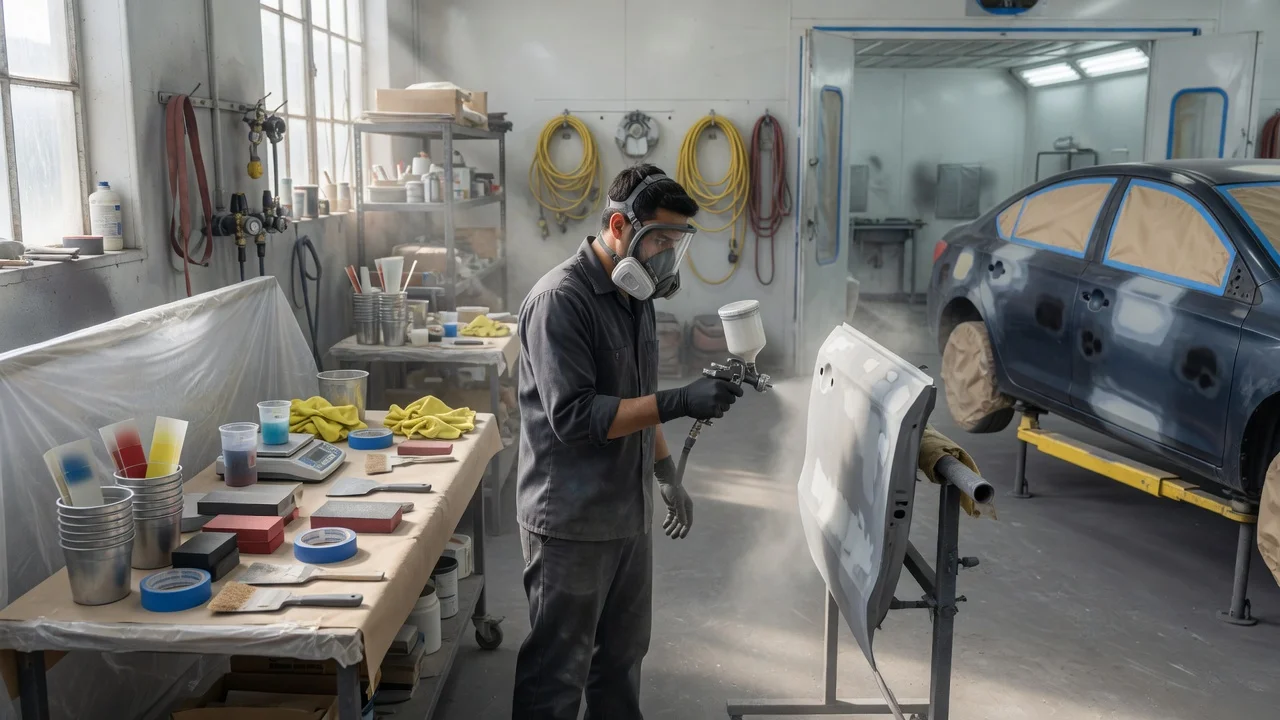
The useful part of the lineup is that it usually spans abrasives, masking paper, tack cloths, body filler, primers, sealers, basecoats, clearcoats, buffing compounds, and safety items such as respirators and gloves. That means fewer stops for supplies and fewer chances of mixing incompatible products from different sources. However, having everything in one catalog does not mean every product works with every other product. Compatibility still depends on the paint chemistry, the substrate, and the ambient conditions during spraying.
Compatibility is the real hidden requirement
A common mistake is assuming that any clearcoat can be applied over any basecoat or that any hardener can be substituted into a mixing ratio. In automotive refinishing, reducers and hardeners are matched to a specific temperature range and product family. Using the wrong activator can cause dieback, solvent pop, poor adhesion, or a finish that stays soft. Before buying, check the technical data sheet for the paint you already have and confirm that the primer, sealer, and clear are from a compatible system or have been verified by the supplier for that application.
Where a local counter helps
For readers who are not professional painters, the practical benefit can be the ability to describe the vehicle, the paint code, and the repair area and get a list of materials in the correct order. That does not replace reading the product instructions, but it reduces the chance of buying a high-build primer when you needed an etch primer for bare metal, or buying a fast reducer for a hot booth when you are spraying in a cold garage.
Trade-offs to weigh
The main trade-off is that a broad supplier may push a house brand or a limited line that is not identical to the original factory finish. That can be fine for many repairs, but it may create a visible color or texture difference on a show-quality job. Another trade-off is cost: buying everything at one place can be convenient, but it is still worth comparing the specific brand and product number rather than assuming the bundled recommendation is the lowest-cost or best-match option.
What you should confirm before buying
Paint code from the vehicle, including the model year and factory variant; Repair area and substrate: bare metal, existing paint, plastic, or filler; Spray environment: temperature and humidity range during application; Gun setup and air pressure available; Whether the basecoat is solvent-borne or waterborne; Clearcoat and activator series that matches the basecoat system
Gaps in the evidence
Specific pricing, stock availability, and exact brand availability at any one 1 Stop Auto Body Supplies location are not confirmed here. The best next step is to call or visit with your paint code and the technical data sheet for the product you already have, then ask whether the recommended primer, sealer, basecoat, activator, and clearcoat are compatible for your spray conditions.