Brougham Cars: What the Name Meant and How It Was Used
Direct answer
A brougham car is not a single fixed vehicle type. In automotive use, the term is a naming convention borrowed from a nineteenth-century horse-drawn carriage. Automakers have used it mainly as a model name or trim designation to signal comfort, enclosed passenger accommodation, formal styling, or added luxury equipment. The exact meaning varies by manufacturer, market, and model year. When you see the word Brougham on a car, it usually identifies a version of an existing model rather than a separate mechanical platform.
Where the name comes from
The word originally described a light, enclosed horse-drawn carriage with an outside seat for a driver and a separate passenger compartment. The carriage design was associated with private urban transport. Early automobile makers adopted the name to suggest enclosed comfort and formal ownership. In automotive history, a brougham body was typically a closed passenger body with an enclosed rear compartment and a front area that could be open or enclosed depending on the design.
How automakers have used the Brougham name
Several manufacturers used Brougham as a model name or trim level. The most widely known examples are later twentieth-century American luxury cars, but the term also appeared on British and Australian models. In most cases, Brougham identified a comfort or appearance package added to a standard sedan, coupe, or wagon.
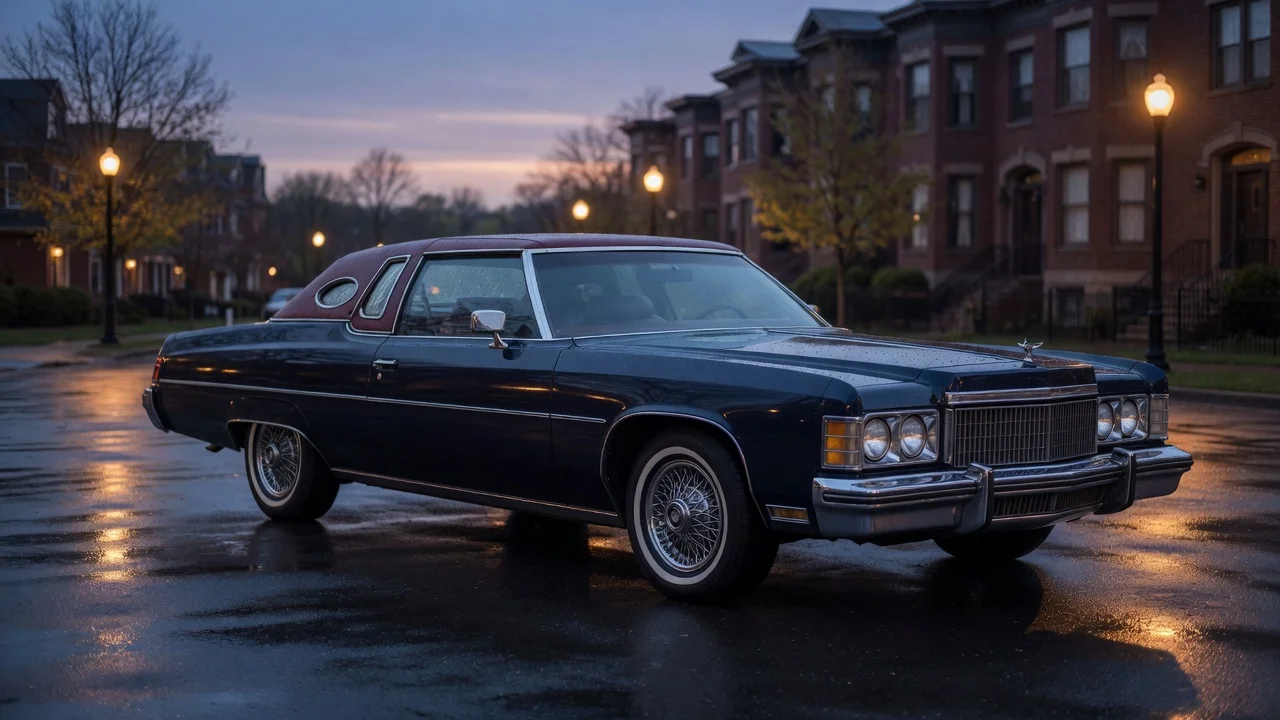
Cadillac Fleetwood Brougham and Cadillac Brougham: a full-size rear-wheel-drive luxury sedan associated with formal styling, padded vinyl roofs, and soft ride tuning. Holden Brougham: a longer prestige variant of an Australian full-size sedan platform, sold as a separate model in some markets. Ford and Mercury Brougham trim: an interior and exterior appearance package applied to larger sedans rather than a standalone model. Checker Marathon Brougham: a trim option that added luxury-oriented upholstery and convenience features to a commercial-style sedan. Other examples exist where the word appears only as a local market badge, so model-specific research is needed.
What Brougham generally indicates on a vehicle
In common use, a Brougham badge does not define engine size, cylinder count, drive layout, or body construction. It is not a technical classification like coupe, hatchback, or convertible. The designation is primarily a marketing and trim signal. On typical American applications, Brougham versions often included upgraded seat fabric or vinyl, extra interior sound insulation, softer suspension calibration, additional bright trim, and sometimes a distinctive roof covering.
Because these changes are not standardized, a Brougham badge on one car may mean only cosmetic differences, while on another it may coincide with a longer wheelbase or different rear bodywork. The mechanical basis is usually shared with the non-Brougham version of the same model generation.
Practical considerations for researching or buying one
When evaluating a vehicle wearing the Brougham name, treat the badge as a starting point rather than a specification. The more useful questions concern the underlying model, platform, powertrain, and market. For example, a Cadillac Brougham from one generation may share most mechanical parts with a same-era Cadillac DeVille, while an Australian Holden Brougham sits on an extended wheelbase.
Parts availability, fuel consumption, ride quality, and repair costs are determined by the base vehicle and its options, not by the word Brougham alone. Confirm the model year, engine, transmission, and market because the same name was reused across different decades and regions with different equipment.
Known limits and gaps
No single specification can describe all brougham cars. Documented details such as wheelbase, engine output, curb weight, and optional equipment vary by manufacturer and model year. Any claim about a specific brougham car should be tied to that exact model, generation, and market instead of being read as a general rule.