How Do Automakers Tune a Sound System for a Cabin?
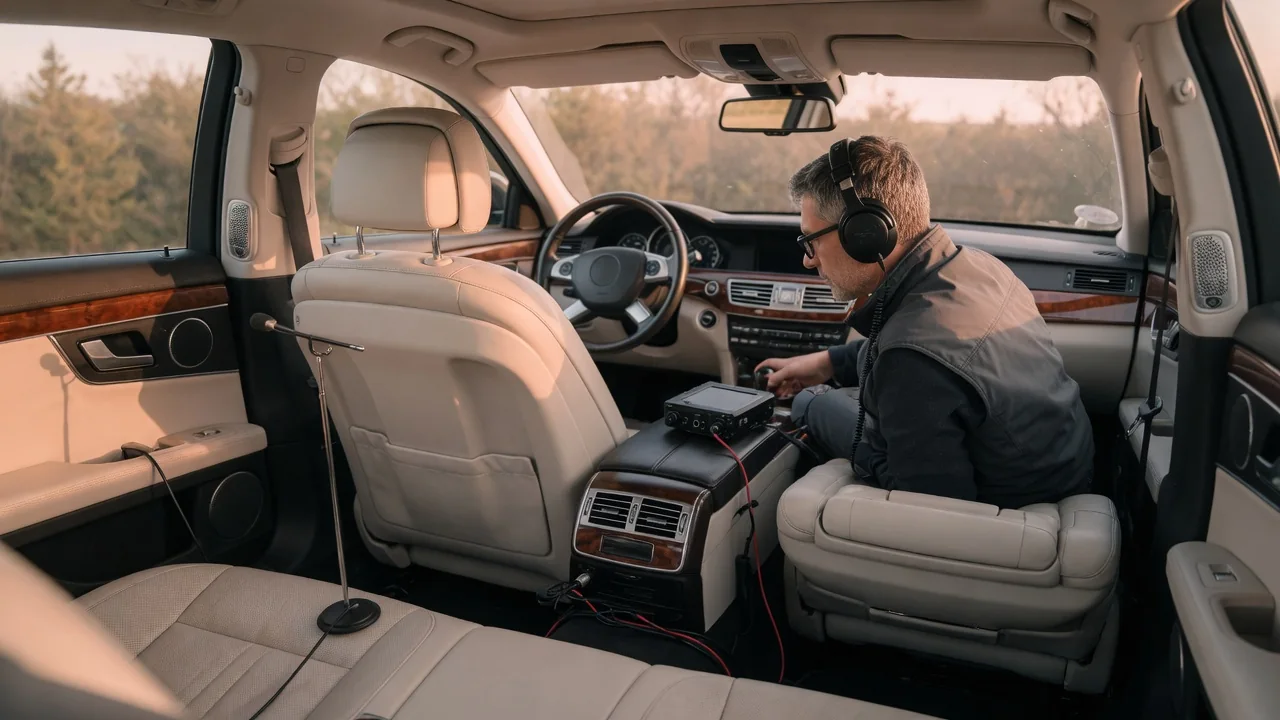
A car cabin is a difficult place to reproduce music accurately. It is small, full of hard and soft surfaces, and every occupant sits off-center. So how do automakers tune a sound system for a cabin? Engineers work with three linked factors: where the speakers can physically go, how sound reflects inside the enclosed space, and how equalization and other signal processing correct what placement and reflections leave behind.
Speaker Positions
Car audio cabin tuning starts long before anyone adjusts an equalizer. Speaker locations compete for space with airbags, window regulators, wiring, crash structures, ventilation ducts and styling. Common locations include the lower doors, the dashboard top, the A-pillars, the kick panels, the headliner, the rear shelf, and the trunk or underseat area for subwoofers. The audio team usually has to work with locations agreed early in vehicle development. As a result, tuning often begins from positions that are practical rather than acoustically ideal.
Position matters because of how people locate sound. A driver sits much closer to the left speakers than the right ones, so sound from the near side arrives first. The ear tends to place the source toward the earliest arrival, which pulls the stereo image to one side. Height matters too. Woofers mounted low in the doors make sound seem to come from around knee level. Placing tweeters or midrange drivers on the dash or in the pillars helps lift the perceived image toward ear level. Larger door drivers typically handle bass and lower midrange, while smaller drivers higher up handle the upper frequencies. Crossovers divide the signal between them.
Because the path lengths from each speaker differ, engineers often use time delay on the closer speakers so that sound from all of them arrives together at a chosen listening position. This is where compromise begins. Aligning the system for the driver can make it less coherent for the front passenger, and the reverse is also true. Tuning teams decide which seat or seats get priority. Some systems let the user pick a focus setting for the driver, the front seats or the whole cabin, but what is available depends on the specific vehicle.
Reflection
In a cabin, much of what a listener hears is reflected sound rather than sound arriving directly from a speaker. The windshield, side glass and hard dashboard plastics reflect sound strongly. Seats, carpet and headliner fabric absorb more of it, especially at higher frequencies. Because the distances are so short, reflections arrive only moments after the direct sound. When the two combine, some frequencies reinforce and others cancel. This effect, called comb filtering, creates a pattern of peaks and dips that shifts as the listener's head moves even slightly.
Low frequencies behave differently. Bass wavelengths are long compared with the dimensions of a passenger compartment, so the sealed cabin tends to reinforce the deepest bass, an effect often called cabin gain. At somewhat higher bass frequencies, sound bouncing between opposite surfaces forms standing waves. These can make bass sound strong in one seat and thin in another. Soft trim does little to absorb these low frequencies, so material choices cannot solve the problem on their own.
Engineers manage reflections more than they eliminate them. They can angle drivers toward the listeners or away from nearby glass. They can choose mounting points that avoid the strongest early reflections, or use reflections on purpose. For example, a dash-mounted driver aimed at the windshield can make the stage feel wider. Interior materials are usually chosen for durability, appearance and cost by other departments, so the audio team mostly treats the cabin's reflective character as a given and compensates for it.
EQ and Signal Processing
Equalization is where measurement and listening come together. Engineers usually place measurement microphones at the listening positions, often at several points around where a head would be. Averaging several points prevents the tune from chasing a dip that exists at only one spot. The measured response is compared with a target curve. The target is generally not perfectly flat. It is a deliberate tonal balance chosen by the tuning team, and it often includes more low-frequency energy than a flat response, which many listeners find natural in a car.
The adjustments run on a digital signal processor, usually built into the amplifier or head unit. Typical tools include parametric equalizers on individual channels, crossover filters, delays, level trims and, in some systems, phase adjustments. A key principle is that broad peaks are easier to correct than deep, narrow dips. Many dips come from cancellation between direct and reflected sound. Boosting those frequencies uses amplifier power and stresses the speaker but leaves the cancellation in place. Skilled tuning therefore cuts problem peaks and leaves stubborn dips alone.
Measurement is followed by extended listening with familiar recordings to judge tonal balance, imaging and clarity, and the settings are refined by ear. Depending on the system, the tune may also include processing that changes with conditions. Examples include loudness compensation that adjusts the tonal balance as volume changes, and speed-dependent adjustment that offsets rising road and wind noise. Because the result depends on the particular cabin, its seats and its trim materials, a tune is tied closely to the interior it was developed for.
Practical Implications and Limits
For owners, a factory tune is a compromise across seats, music styles and listening levels. It will usually sound best at the position it was optimized for. The bass, treble, balance, fader and focus controls in the infotainment menu act on top of that factory tune. Small changes adjust it to taste, but extreme settings can undo the balance the engineers worked toward. Real-world conditions also shift the result. Passengers, cargo, open windows and different seat positions all change the acoustics to some degree.
Modifications carry their own limits. The factory corrections were calculated for the original drivers in their original mounts. A replacement speaker with a different response, or a new location, can sound worse than expected unless the system is retuned. In some vehicles the factory head unit or amplifier sends a signal that has already been equalized, split or delayed, which complicates adding aftermarket equipment. Speaker count and branding say little about tuning quality, and no amount of EQ fully replaces good placement. The owner's manual for the specific vehicle is the reliable guide to which adjustments its audio system actually offers.