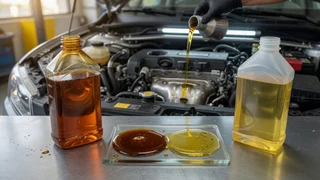
Breaking in an engine with synthetic oil
Breaking in an engine with synthetic oil is a common ownership question because modern vehicles often leave the factory with this lubricant already installed. The concern usually centers on whether the reduced friction of a full synthetic prevents the controlled wear that helps piston rings seat against cylinder walls during the first miles. In practice, the break-in procedure depends more on load, throttle variation, and engine temperature than on the oil base stock alone. Understanding this distinction helps owners follow a sensible early-mile driving routine without overthinking the lubricant specification or chasing unproven rules.
Essential answer
The essential answer is that using synthetic oil during engine break-in is generally acceptable for most modern production engines, especially when the manufacturer filled the crankcase with it at the factory or lists an approved synthetic in the owner's manual. The break-in process is not a contest between conventional and synthetic chemistry. Instead, it is a short period of controlled operation where bearings, piston rings, and cylinder walls develop a compatible wear pattern. A factory-approved synthetic provides stable viscosity and anti-wear protection while still allowing the surfaces to finish their initial mating under normal driving loads.
Confusion arises because very early synthetic formulations were sometimes considered too slippery for freshly honed cylinders, but that broad rule no longer applies to current automotive lubricants and assembly practices. If a fill quantity and lubricant specification are correct, the oil film is designed to separate loaded parts while still permitting the fine gradual smoothing that occurs during break-in. An owner should focus on varying engine speed moderately, avoiding sustained wide-open throttle, and keeping coolant and oil temperatures in the normal range. Those operating conditions influence seating more than whether the base oil is synthetic or conventional.