Brake Master Cylinder Repair: Rebuild Options and Requirements
The Short Answer
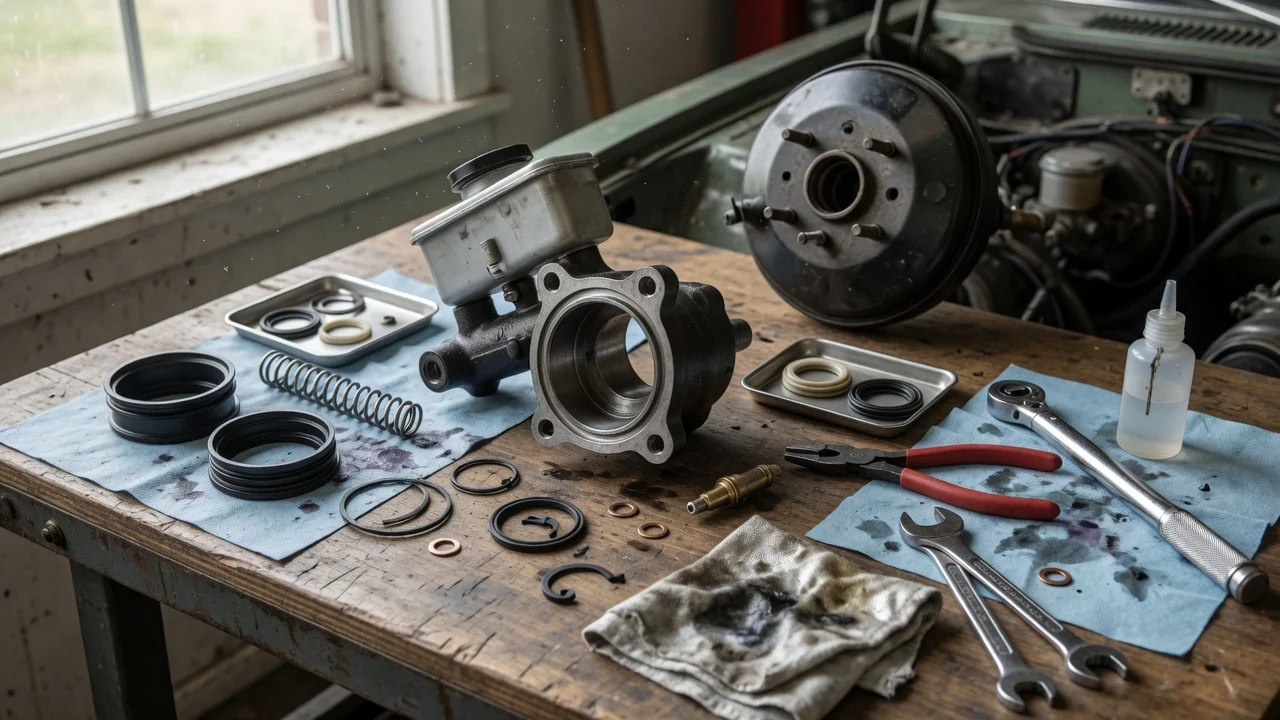
Repairing a brake master cylinder usually means one of two things. You can rebuild the existing unit by replacing its internal seals and piston components with a rebuild kit, or you can replace the whole cylinder with a new or remanufactured unit. A rebuild only makes sense when the cylinder bore is in good condition and a matching kit is available for that exact cylinder. If either condition is not met, replacement is the practical route.
The master cylinder converts brake pedal force into hydraulic pressure for the whole braking system, so any repair is safety-critical. Whichever option you choose, the job is not finished until the system has been bled properly and the pedal feels firm and consistent before the vehicle is driven.
What Determines Whether a Rebuild Is Possible
Whether a rebuild is possible depends on the specific cylinder. That depends on the vehicle's model year, generation and market, and sometimes on the brake system option fitted. Check the following points before committing to a rebuild.
Bore condition: The piston seals ride against the bore, the polished inner wall of the cylinder. Pitting, scoring or corrosion there will let fluid bypass new seals, so a damaged bore generally rules out a rebuild. Body material: Cast-iron cylinders, common on older vehicles, can sometimes be lightly honed to clean up minor marks. Many aluminum cylinders have a hard surface treatment in the bore that honing would remove, so damage to an aluminum bore usually means replacement. Kit availability: Rebuild kits are made for specific cylinders. For many older and classic vehicles they are readily available. For many newer vehicles they may be hard to find or not offered at all. Correct identification: Match the kit to the cylinder by part number, casting marks or bore size, not by vehicle description alone. Different cylinders were sometimes fitted to the same model. Confirmed diagnosis: Make sure the master cylinder is actually the fault before repairing it. Symptoms such as a soft or sinking pedal can also come from other parts of the brake system.
What a Rebuild Involves
The contents of a kit vary. They typically include replacement seals or cups, and sometimes complete piston assemblies, a retaining clip or snap ring, and reservoir grommets. The general sequence is below. The vehicle's service manual governs the specifics, including fastener torque values and any pushrod adjustment.
Disconnect and cap the brake lines, then remove the cylinder from the brake booster or firewall. Drain the fluid, remove the reservoir if it is separate, and take out the retaining clip and pistons, noting their order and orientation. Clean the parts with fresh brake fluid or a cleaner approved for brake components. Petroleum-based solvents can damage the rubber seals. Inspect the bore under good light. Hone only if the body material permits it, and stop if the damage is more than superficial. Lubricate the new components with clean brake fluid or the assembly lubricant supplied with the kit, then reassemble in the original order. Bench bleed the cylinder before installation to purge air from its internal chambers. Reinstall the cylinder, check the pushrod clearance to the booster where the design requires it, connect the lines, and bleed the full system.
Tools, Materials and Other Requirements
A rebuild kit matched to the specific cylinder, or a replacement unit; Flare-nut (line) wrenches, which are less likely to round the brake line fittings than open-end wrenches; Snap ring pliers for the piston retaining clip; A bench bleeding kit, or a suitable substitute for bleeding the cylinder off the vehicle; A brake cylinder hone, only for bores where honing is appropriate; Fresh, sealed brake fluid of the type specified for the vehicle; A service manual or repair information for torque values, bleeding sequence and any pushrod specification; A clean work area, because dirt inside a hydraulic brake component can damage the new seals
Use the brake fluid type specified on the reservoir cap or in the owner's manual. Glycol-based fluids (DOT 3, DOT 4 and DOT 5.1) are different from silicone-based DOT 5, and the two must not be mixed. Brake fluid absorbs moisture over time, so open containers should not be stored for later use. Spilled fluid can also damage painted surfaces.
Vehicles with anti-lock brakes or electronic stability control may need a specific bleeding procedure. On some of these vehicles, a scan tool is required to cycle the hydraulic control unit and remove trapped air. Whether this applies depends on the vehicle and its brake system, so check the service information for the exact model before starting.
Rebuild, New or Remanufactured: Which Fits Your Priorities
The comparison below is general guidance. Specific prices, warranty terms and parts availability vary by vehicle, market, retailer and date, and none of them were available for this guide. Get current quotes for your exact vehicle before deciding.
Criterion | Rebuild existing unit | New replacement | Remanufactured replacement; Parts cost | Usually the lowest, since only a kit is bought | Often the highest | Often between rebuild and new; may involve a core charge; Labor and time | Highest, because of removal, disassembly, inspection and reassembly | Lower, because the unit is installed as supplied | Lower, because the unit is installed as supplied; Outcome certainty | Depends on bore condition and the quality of the work | Generally consistent | Depends on the remanufacturer's process; Availability | Limited to cylinders with kits on the market | Depends on vehicle and market | Depends on vehicle and market; Warranty | Usually covers only the kit parts, if anything | Varies by seller | Varies by seller; Best suited to | Classic or older vehicles, or original-part preservation | Most modern vehicles and owners who want the most predictable result | Cost-conscious replacement where a quality unit is available
Rebuilding is usually preferable for an older or classic vehicle with a clean bore, where kits are available, replacement units are scarce or costly, or keeping the original part matters.
A new unit is usually the better choice when the bore is damaged, no kit exists, or you want the most predictable result with the least labor.
A remanufactured unit can be a reasonable middle option when a reputable supplier offers one for your vehicle. Compare the warranty terms and any core return requirements before buying.
Before Driving, and When to Use a Professional
After any master cylinder repair, check that the pedal is firm and does not sink under steady pressure, that there are no leaks at the fittings or where the cylinder meets the booster, and that the fluid level is correct. Test the brakes at low speed in a safe place before normal driving.
If you are not confident with hydraulic brake work, have a qualified technician do the job or inspect your finished work. Get professional help in particular if the pedal remains soft after bleeding, if an ABS or brake warning light stays on, or if the vehicle needs a scan-tool bleeding procedure you cannot perform. Do not drive the vehicle until the braking problem is resolved.
Information Gaps
This guide does not include model-specific data such as bore sizes, torque values, pushrod settings, part numbers, prices or warranty terms, because none were available for it. Get these from the service manual for your exact vehicle and from current supplier listings.