Brake Caliper Placement: Where Calipers Sit and Why
The short answer
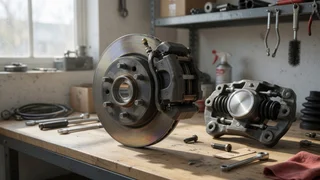
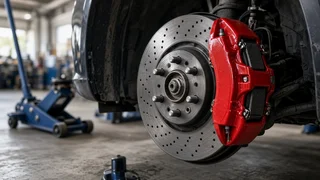
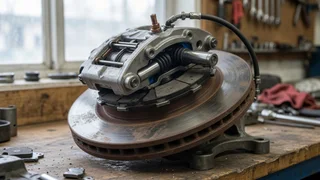
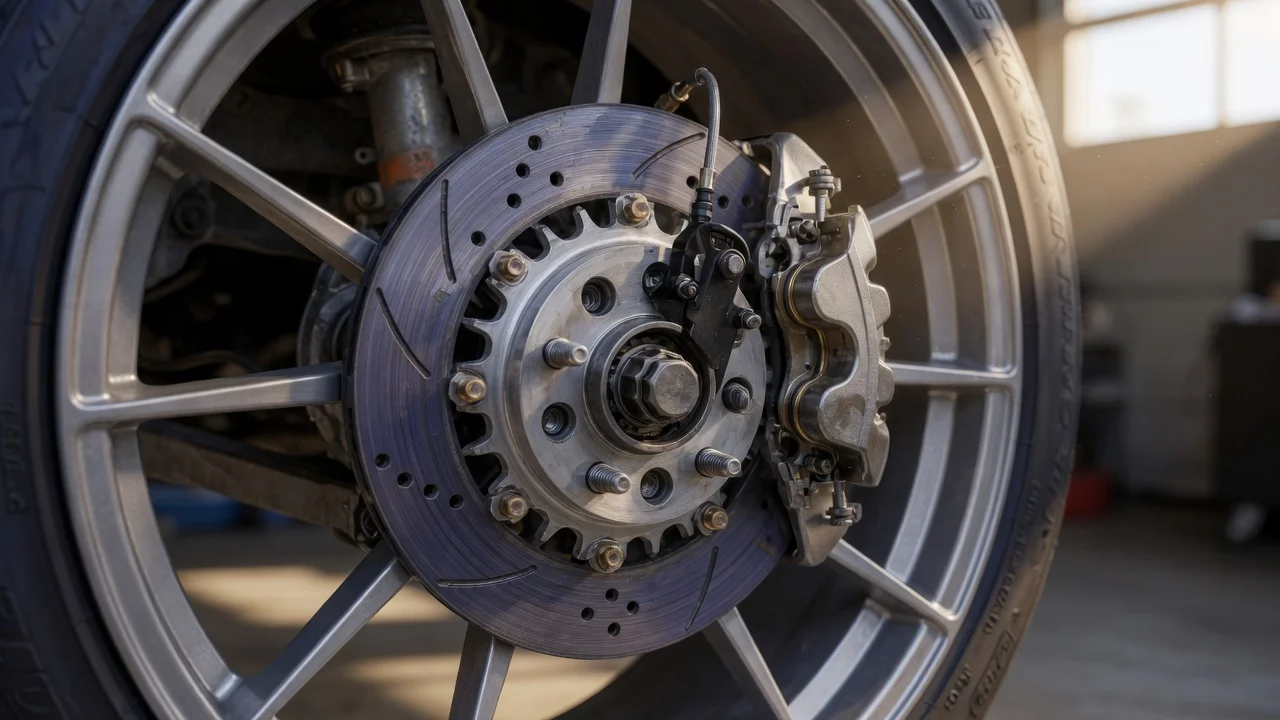
On a vehicle with disc brakes, each caliper sits at the wheel, clamped around the outer edge of the brake rotor (the disc that turns with the wheel). It bolts to a fixed part of the suspension, usually through a caliper bracket, also called an anchor bracket. At the front, that fixed part is the steering knuckle. At the rear, it is the rear knuckle, hub carrier or axle housing, depending on the suspension design. Looking through the wheel spokes, the caliper is the clamp-shaped part wrapped over one section of the rotor.
Some details change this answer. Not every wheel has a caliper. Many vehicles use drum brakes at the rear, and drums have no caliper. The exact position of the caliper around the rotor also differs from one vehicle to the next. For a specific model year, generation or trim, the factory service information is the reliable source. No vehicle-specific data was supplied for this guide.
How the caliper is positioned on the rotor
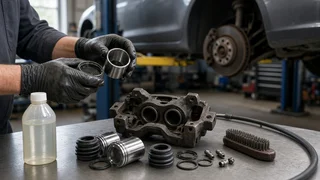
The caliper holds the brake pads, one on each face of the rotor. When you press the brake pedal, hydraulic pressure pushes one or more pistons in the caliper. The pistons squeeze the pads against the rotor, and the friction slows the wheel. For this to work, the caliper must straddle the rotor's friction surface. It covers only a section of the disc, not the full circle.
Two common caliper designs mount differently: • Floating (sliding) caliper: the pistons are on the inboard side only. The caliper body slides on guide pins in its bracket, which pulls the outboard pad into the rotor. This design is common on mainstream passenger cars. • Fixed caliper: the body is bolted solidly in place and has pistons on both sides of the rotor. It is often found on performance-oriented vehicles. Whether a particular trim uses one depends on the manufacturer's specification.
Front of the axle or behind it
Around the rotor's circumference, a caliper may be mounted ahead of the axle centerline or behind it. On some vehicles it sits nearer the top or bottom. Manufacturers choose the position based on packaging. The caliper has to clear steering linkages, suspension arms, the wheel and other components through the full range of steering and suspension travel. Airflow for cooling can also play a role. Because the choice is made at the design stage, you cannot assume a given vehicle uses a particular position. Front and rear calipers on the same vehicle may also be placed differently.
Outboard and inboard mounting
Almost all modern road cars use outboard brakes, meaning the rotor and caliper sit at the wheel hub. Some older designs and some racing applications mounted the brakes inboard, closer to the differential, to reduce unsprung weight (the mass not supported by the springs). If you are working on an unusual or vintage vehicle, check which layout it uses before looking for the caliper at the wheel.
Placement matters when replacing a caliper
Calipers are generally specific to one side of the vehicle. A correctly installed caliper has its bleeder screw (the valve used to purge air from the brake fluid) at or near the top. Air bubbles rise, so the top position lets them escape during bleeding. If you swap the left and right calipers, the bleeder ends up at the bottom. Air can then stay trapped in the caliper and cause a soft or spongy brake pedal. When replacing a caliper, compare it with the old unit and confirm the side marking or part number.
Other placement checks during installation: • The caliper bracket must seat squarely on its mounting points. Its bolts should be tightened to the manufacturer's torque value, which varies by vehicle and is not given here. • On floating calipers, the guide pins should slide freely so the caliper can center itself over the rotor. • The brake hose must be routed so it is not twisted or stretched at full steering lock or full suspension travel. • On rear calipers with an integrated parking brake, the cable or electric actuator connection must line up with the vehicle's specific design.
Gaps to keep in mind
This guide covers general disc brake layout and does not use specifications for any particular vehicle. Several details depend on make, model year, generation, trim and market: the clock position of the caliper on the rotor, whether the rear axle has discs or drums, whether the calipers are fixed or floating, and the bracket torque values. For any repair or parts purchase, confirm those details in the factory service information for your exact vehicle.