Brake Caliper Grease: Choosing Lubricant for Caliper Service
The Short Answer
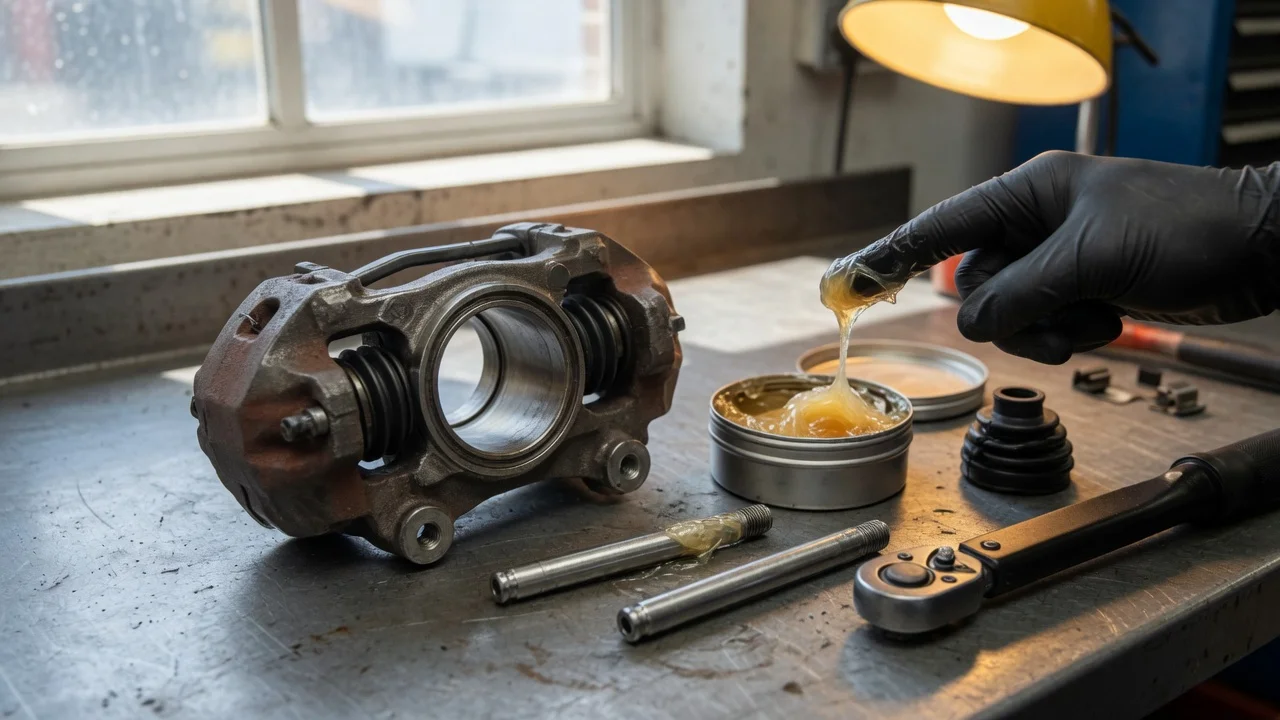
For disc-brake caliper service, use a high-temperature lubricant made for brakes, and choose it for the surface it will touch. Caliper slide pins, also called guide pins, sit inside rubber boots. They need a grease that is compatible with that rubber, usually a silicone-based or synthetic brake lubricant labeled safe for rubber components. Metal-to-metal contact points need a high-temperature brake lubricant meant for those areas. One example is where the pad ears slide on the abutment clips.
The main product to avoid is general-purpose petroleum grease, such as ordinary chassis or wheel-bearing grease. Petroleum-based lubricants can make the rubber used in brake boots and seals swell and break down. Swollen rubber can bind a slide pin, which is the problem the grease was supposed to prevent.
The vehicle manufacturer's service information comes first. Requirements vary with caliper design, pad and shim type, and brake package, so check the procedure for your model year and trim. Some pad shims are meant to be installed dry. Some pad and hardware kits come with a lubricant the maker specifies.
Where Caliper Grease Goes
Slide pins and their bores: apply a thin, even film of rubber-compatible brake grease. Slide-pin boots: apply a light film on the sealing lips only if the service procedure calls for it. Abutment clips and pad-ear contact areas: use a high-temperature brake lubricant on the metal surfaces where the pads slide. Pad backing-plate contact points (caliper fingers and piston face): lubricate only where the pad and shim design allows it. Piston and piston seal during a caliper rebuild: use the assembly lubricant supplied with the rebuild kit, or clean brake fluid of the specified type. Do not use ordinary grease.
Where It Never Goes
Pad friction material. Rotor braking surfaces. Hydraulic passages or brake fluid, apart from any assembly lubricant the rebuild procedure specifies.
Grease on pads or rotors reduces braking performance. Pads that have absorbed grease or oil are generally replaced rather than cleaned. Rotors can usually be cleaned with a brake cleaner.
Comparing the Main Lubricant Types
The useful comparison points are rubber compatibility, heat tolerance, resistance to washing out, and the surfaces each product is designed for. The descriptions below are general product categories. Individual formulations differ, so the product label and data sheet decide what a specific grease can be used on.
Type | Rubber compatibility | Typical intended use | When to choose it; Silicone-based brake grease | Generally compatible with common brake rubber | Slide pins, boots, some contact points | Your main need is pin lubrication inside rubber boots; Synthetic brake lubricant (non-petroleum, sometimes with moly or ceramic solids) | Varies; check the label | Metal contact points; some products are rated for pins too | You need one product for metal hardware, or a dual-purpose product labeled for both; Anti-seize compound (copper, nickel or aluminium based) | Often not rated for rubber | Metal mounting and contact surfaces | Only where the manufacturer specifies it; not as a slide-pin grease; General petroleum grease | Can swell and degrade brake rubber | Not intended for caliper service | Avoid for brake components
Which Option Fits Your Job
Routine pad replacement: a brake lubricant labeled for both rubber and metal contact points can cover the whole job. Otherwise, use a rubber-safe grease on the pins and a separate high-temperature lubricant on the hardware. Sticking or sluggish slide pins: clean the pins and bores, check for corrosion and torn boots, and replace damaged parts. Fresh grease will not fix a corroded pin or a split boot. Caliper rebuild: use the kit's assembly lubricant or the specified brake fluid on the piston and seals, then follow the slide-pin guidance above. Brake noise after a pad change: correctly lubricated contact points and properly fitted shims can reduce some squeal and clunk. Follow the pad and shim maker's instructions, because some shim designs must stay dry.
Application Guidance
Remove old grease, dirt and corrosion from pins, bores and hardware before applying new lubricant. Use a thin film. Excess grease attracts debris and can migrate toward the friction surfaces. Do not mix different lubricant types on the same component. Keep your hands and tools clean when handling pads after greasing other parts. Tighten caliper and bracket fasteners to the manufacturer's torque specification. Check that the caliper slides freely by hand before refitting the wheel.
What This Guide Does Not Cover
No product test results, temperature ratings, prices or vehicle-specific manufacturer specifications were available for this guide. It therefore does not rank brands or quote heat figures. If you compare products by their advertised temperature ratings, check that the makers use comparable test methods. For your specific vehicle, the service manual and the lubricant's data sheet are the sources to confirm.