Brake Caliper Grease: What to Use Where, and What to Buy With It
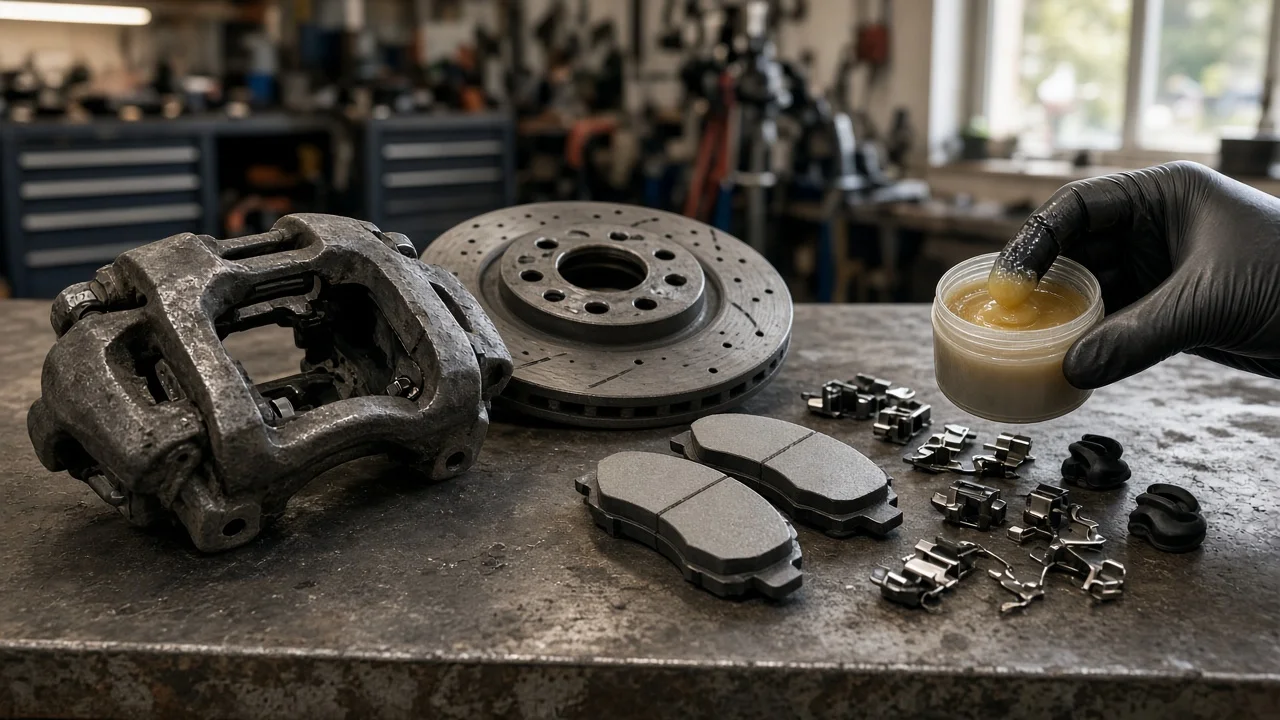
The short answer
Use a high-temperature synthetic brake lubricant made for disc brake components. A silicone-based or other rubber-safe synthetic grease suits the caliper slide pins. A brake-specific lubricant, often silicone, synthetic or ceramic-filled, suits the metal contact points where the pad ears ride in their clips. Do not use general-purpose petroleum or mineral-oil grease on the slide pins, because it can swell and degrade the rubber boots and bushings, which makes the pins stick. Keep every lubricant off the pad friction material and the rotor braking surface.
Two things change this answer. First, if your pads come with pre-applied lubricant, coated shims or instructions that say not to grease certain surfaces, follow those instructions. Second, the service information for your specific vehicle can call for a particular lubricant or forbid one in certain spots. Where that guidance exists, it takes priority over general advice.
Where grease goes on a disc brake, and what kind
A typical floating caliper, the common design on most passenger cars and light trucks, has a few distinct spots that need lubrication. Each has different needs, which is why one jar of the wrong product can cause problems.
Location | Suitable lubricant | Why it matters; Caliper slide pins (guide pins) and their bores | Silicone-based or synthetic brake grease labeled safe for rubber | Pins must slide freely so the caliper centers and both pads wear evenly; the boots and any rubber bushings must not swell; Pad abutment points (pad ears where they sit in the clips or bracket) | High-temperature brake lubricant, often synthetic or ceramic | Lets the pads move without binding and reduces noise from metal-to-metal contact; Back of pad or shim where it meets the piston or caliper fingers | Only if the pad or shim instructions allow it; thin film of brake lubricant | Can help damp vibration on some designs; others use coated shims meant to stay dry; Hub face where the rotor sits | Light film of anti-seize, if your vehicle's service guidance permits it | Helps prevent the rotor from rusting onto the hub; Pad friction surface, rotor braking surface | Nothing | Any lubricant here reduces braking performance
Brake caliper pin grease: what to look for
Slide pin grease has one job beyond lubricating: it must not attack rubber. Look for a product that states it is compatible with rubber and the common boot materials, such as EPDM. Silicone-based brake greases and many synthetic brake greases fit this description. The label should also give an operating temperature range suitable for brakes; compare stated ranges between products rather than assuming any brake lube is equal.
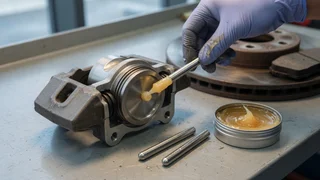
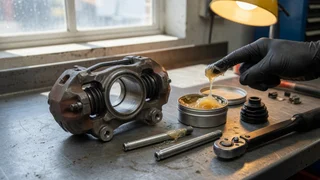
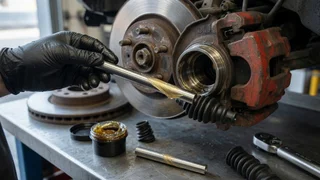
Apply a thin, even coat to the pin and a small amount inside the bore or boot. Packing the bore full can trap air or grease and prevent the pin from seating, so wipe off the excess. If a pin is corroded, pitted or bent, or if the boot is torn, replacing those parts does more than any grease can. Some pins have a rubber sleeve or bushing on one end; that part especially needs a rubber-safe lubricant.
Brake pad grease for contact points
The grease used where the pads slide in the caliper bracket is sometimes sold as brake pad lubricant, disc brake quiet or brake parts lubricant. It is meant for metal-to-metal contact, so it can be a heavier, high-temperature formula. Many products are labeled for both slide pins and contact points, which is convenient if you only want one tube; just confirm the label explicitly says it is safe for rubber before using it on pins.
Clean the bracket first. Rust and old grease under the clips can push the pads tight in the bracket even when everything looks lubricated. A wire brush and brake cleaner on the abutment surfaces, then a thin film of lubricant on the clip where the pad ear rides, is the usual approach.
Anti-seize on brakes: where it fits and where it does not
Anti-seize compound and brake grease are different products. Anti-seize is a paste with metal or ceramic particles, such as copper, nickel or aluminum, intended to keep parts from corroding together. It is not designed as a sliding lubricant.
Reasonable uses, if your vehicle's guidance does not say otherwise: a light film on the hub face to keep the rotor from rusting to it, and sometimes on pad backing contact points where a manufacturer specifically recommends it. Avoid on caliper slide pins: many anti-seize compounds use carriers that are not rubber-safe, and the paste can dry and stiffen in the bore over time. Avoid on threads of caliper bracket bolts unless the service information calls for it: some bolts use threadlocker, and anything on the threads changes how tightening torque translates into clamping force. Avoid on wheel studs and lug nuts in general practice: it alters torque readings and can lead to overtightening. Some vehicle makers address this specifically, so check your owner or service information. If a product is marketed as anti-seize brake grease, read the label for where it is meant to be used rather than assuming it suits every brake location.
Brake pad hardware: clips, shims and kits
Brake pad hardware is the small metal parts that hold the pads in place, guide their movement and reduce noise. Over time these parts corrode, lose spring tension or wear grooves, which can cause noise, uneven pad wear or pads that do not retract. Replacing them at each pad change is common practice, and many pad sets include new hardware in the box.
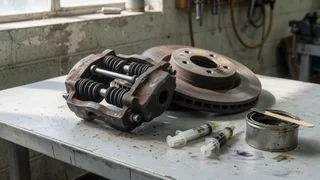
Brake pad clips (abutment clips): stainless or plated spring-steel clips that sit in the caliper bracket. The pad ears slide on them, and they keep the pad from rattling. Anti-rattle springs: wire or flat springs that apply light tension to the pads or caliper to reduce vibration and noise. Brake pad shims: thin layers on the back of the pad, sometimes multilayer with rubber or coating. They damp vibration and help prevent squeal. They may be bonded, clipped or loose. Slide pin boots and bushings: rubber parts that seal the pin bores and keep out water and dirt. Slide pins: included in some hardware kits; worth replacing if the originals are corroded or worn.
A brake hardware kit usually bundles some or all of these for one axle. Kits vary: one may include only clips, another clips plus pin boots and a lubricant packet, another pins as well. Compare the listed contents with what your pads already include so you do not pay twice for the same clips.
What to check before buying hardware and lubricant
Exact fitment: match year, make, model, trim and drivetrain. Brake hardware can differ between trims, between front and rear axles, and between standard and upgraded brake packages on the same model. Caliper and bracket design: some vehicles changed caliper suppliers within a model year or between markets. If listings show different parts for the same car, compare photos with the clips and pins currently on your vehicle, or match by the part number on the old components if one is visible. What comes with your pads: many pad sets include clips, shims or a lubricant packet. Check before buying a separate kit. Pad instructions: some pads ship with coated shims or pre-lubricated surfaces and specify where no extra grease should go. Rear brakes with an electronic or integrated parking brake: the caliper design differs from the front, and hardware is rarely interchangeable. Lubricant label: rubber compatibility for pin grease, a stated high operating temperature range, and the intended locations. Packaging size: single-use packets suit one brake job; a tube or jar makes sense if you service several vehicles or expect to repeat the work.
Common mistakes that cause noise or uneven wear
Reusing corroded clips because they look intact; built-up rust underneath can still bind the pads. Using general chassis grease or wheel bearing grease on slide pins, leading to swollen boots and sticking pins. Applying too much grease, which collects dust and can migrate onto the pads or rotor. Getting lubricant or fingerprints on friction surfaces; clean the rotor with brake cleaner before installation. Installing clips backward or in the wrong positions; take a photo before disassembly. Skipping the bedding procedure for new pads, which is a separate step from lubrication but just as important for quiet, even braking.
Choosing your next step
If you are replacing pads, start by checking what the pad box contains, then buy a hardware kit only for parts it lacks. Pick one rubber-safe, high-temperature brake lubricant that is labeled for both slide pins and contact points, or buy a dedicated pin grease alongside a contact-point lubricant if you prefer separate products. Keep anti-seize for the hub face, if your vehicle allows it, and leave it off pins, bolt threads and lug nuts. If any slide pin is seized, a boot is torn or the caliper piston does not retract smoothly, the problem goes beyond lubrication and calls for replacing the affected parts or the caliper.