Brake Caliper Grease: Lubricating Slide Pins Correctly
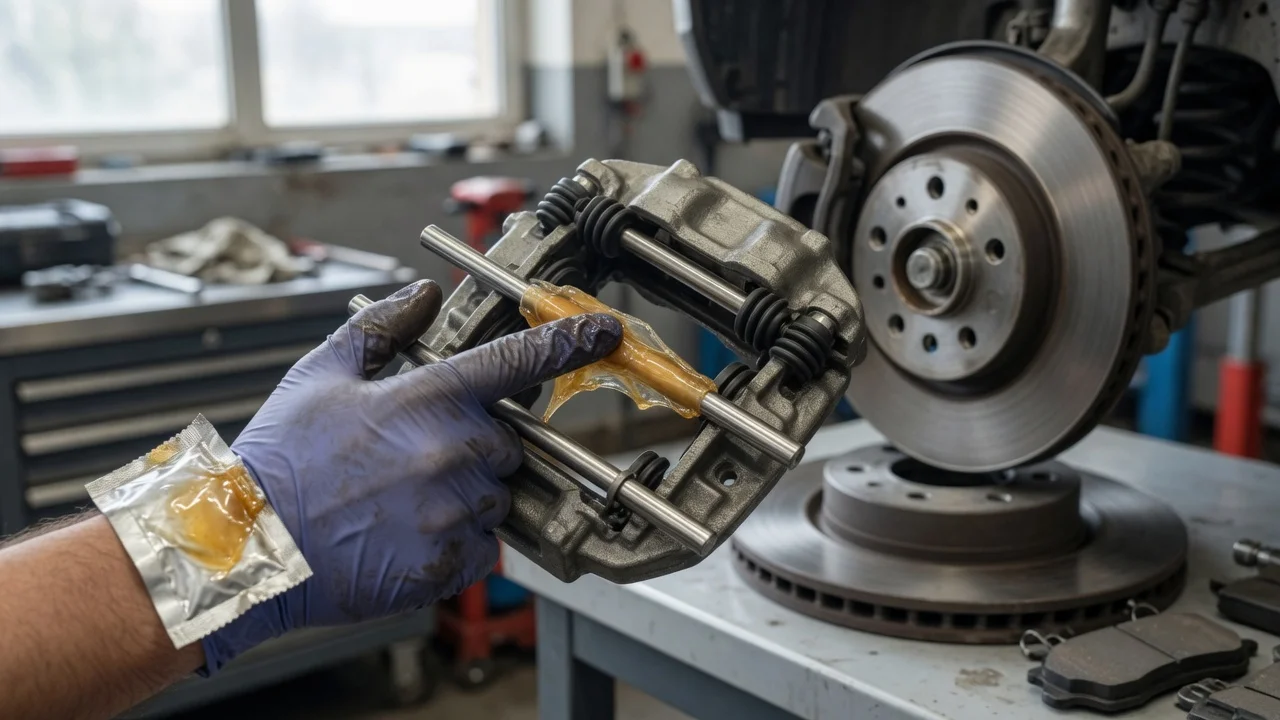
What brake caliper grease does
Brake caliper grease is a high-temperature lubricant used on the moving contact points of a disc brake caliper, especially the slide pins, bushings and pad abutment areas. Its main job is to let the caliper move smoothly as the brake pads wear and as the brakes are applied and released. Without proper lubrication, a slide pin can stick or seize, which may cause uneven pad wear, brake drag, overheating or a pull to one side.
The direct answer
For lubricating caliper slide pins, use a dedicated brake caliper grease or a suitable synthetic brake lubricant that is compatible with the rubber or plastic pin boots and bushings. General-purpose chassis grease can damage rubber parts and is not a reliable substitute. The correct product is usually a silicone-based, polyalkylene glycol or synthetic brake grease that remains stable at brake temperatures, resists water washout and does not attack the caliper seals or guide pin boots.
Where the grease belongs
Brake caliper grease is normally applied in a thin film to the slide pins, their sealing boots and the recesses where the boots seat. A thin layer may also be used on the pad backing plate ears, abutment clips or other pad-to-caliper contact points, depending on the brake design. It should not be applied to the friction surface of the pad or the rotor.
Types of brake caliper grease
Silicone brake grease: often safe for rubber and plastic, with good water resistance and wide temperature range. Polyalkylene glycol brake grease: designed for metal-to-rubber contact and commonly used on slide pins. Synthetic or ceramic brake lubricant: may suit high-temperature use and metal contact points. Copper or anti-seize products: generally not recommended for slide pins because they can affect rubber parts and are not a proper caliper lubricant.
How to lubricate slide pins correctly
Begin with the brake components cool and the vehicle safely supported. Remove the caliper slide pins and clean away old hardened grease, corrosion and brake dust. Inspect the pin boots for tears or swelling, and check the pins for scoring or pitting. Apply a small amount of the correct caliper grease to each pin and spread it into a thin, even film. Reinstall the pins and verify that they move freely through their full range before returning the caliper to service.
Avoid overpacking the slide pin bore. Excess grease can create hydraulic resistance or trap pressure behind the boot, making the pin feel stiff. A clean, light coating is usually enough. If a boot is damaged, replace it rather than relying on extra grease.
Symptoms of incorrectly lubricated slide pins
Uneven brake pad wear between inner and outer pads. A pulling or drifting sensation during braking. A brake that remains warmer than the opposite side after driving. A creaking or clicking sound from the caliper area. A binding caliper that is difficult to retract during service.
Compatibility and material gaps
Brake caliper designs vary. Some slide pins use rubber bushings, while others use metal-to-metal guides or different boot materials. Product compatibility should be checked against the grease manufacturer's information and the vehicle manufacturer's service guidance for the specific model year, brake system and market. This article does not list exact model-specific part numbers because those specifications can differ between caliper generations and regional equipment.
What to avoid
Do not use petroleum-based chassis grease on rubber slide pin boots unless the product is explicitly labeled safe for brake rubbers. Do not grease the rotor or pad friction surface. Do not mix incompatible grease types without cleaning the old lubricant away first. A seized slide pin should be cleaned, inspected and repaired, not simply covered with more grease.