Find BMW 1 Series differential oil capacity
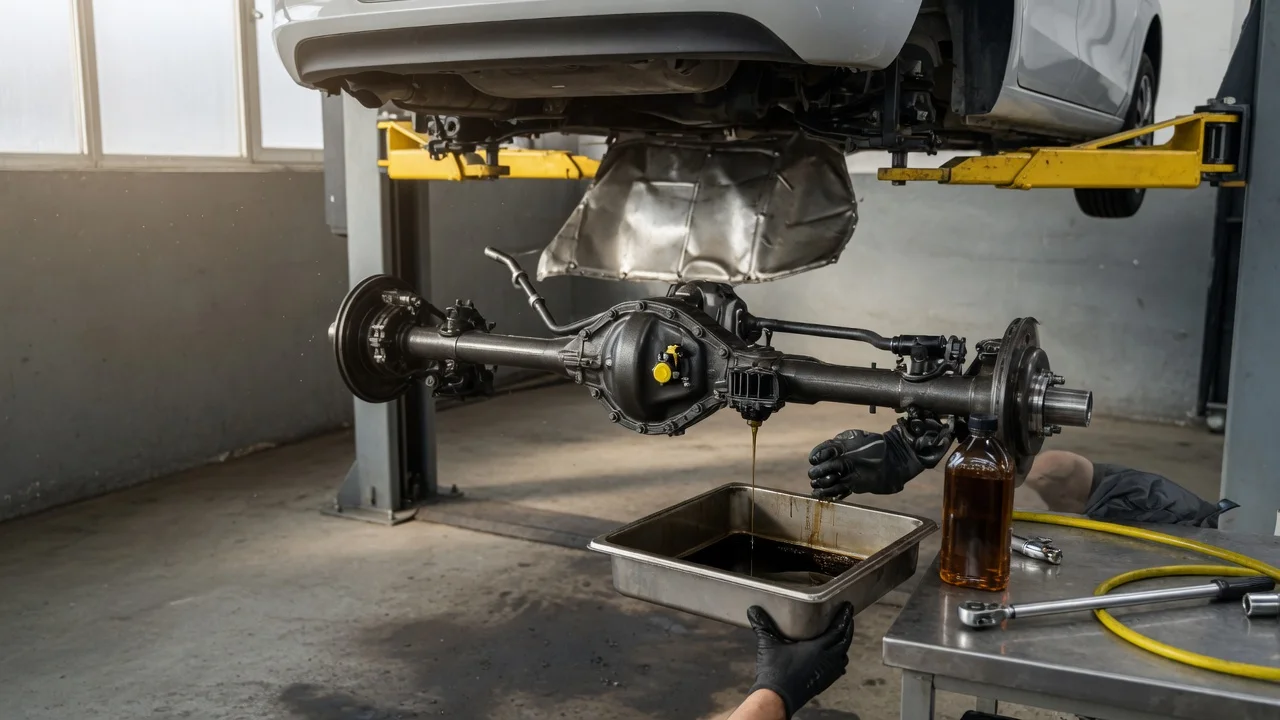
The short answer
There is no single differential oil capacity for the BMW 1 Series. The figure depends on the generation, the drivetrain layout and the specific differential fitted to your car. This guide does not quote fill volumes because no verified capacity data was available for it. Do not rely on any single number you find online until it has been matched to your exact car.
To get the correct figure, look up your car by its VIN (vehicle identification number) in BMW service information, a dealer parts or service system, or a workshop manual for your model. The VIN identifies the exact factory specification, including the differential.
Why the generation matters
The 1 Series has used two different drivetrain layouts. Whether your car even has a separate differential with its own oil depends on which layout it uses.
Generation | Approximate years | Base layout | Differential oil to look for; E81 / E82 / E87 / E88 | 2004–2013 | Rear-wheel drive | Separate rear differential with its own oil; F20 / F21 | 2011–2019 | Rear-wheel drive; some markets and engines offered xDrive all-wheel drive | Rear differential; xDrive cars also have a front differential; F40 | 2019–2024 | Front-wheel drive; xDrive available on some versions | Front differential is part of the transmission assembly; xDrive cars also have a rear final drive; F70 | 2024 onward | Front-wheel drive; xDrive available on some versions | Same principle as F40; confirm by VIN
Production dates overlapped between generations and varied by market and body style, so use the model code from your VIN or registration documents rather than the build year alone.
Rear-wheel-drive cars (E8x and F2x)
On these generations, the rear differential is a separate housing with its own oil, serviced on its own. Several differential types were used across engines and model years, so two cars of the same generation can need different volumes. Check your VIN or the identification on the differential itself before buying oil.
On many BMW rear differentials, the usual practice is to fill through the filler plug until oil reaches the lower edge of the filler hole, with the car level. A quoted capacity then serves as a guide to how much oil to have on hand. Confirm this method in the service procedure for your differential before using it.
Front-wheel-drive-based cars (F40 and F70)
On the front-wheel-drive-based generations, the front differential is part of the transmission assembly rather than a separate unit at the back of the car. Depending on the transmission, it may share oil with the gearbox or have its own oil. The source material for this guide did not confirm which applies to each transmission, so check the service information for your gearbox.
xDrive versions of these cars also have a rear final drive, which is a separate unit with its own oil. Look up its capacity separately from the transmission and the transfer case.
xDrive cars: more than one unit
On all-wheel-drive 1 Series models, oil may be needed in up to three places: the front differential, the rear differential or final drive, and the transfer case that splits power between the axles. Each has its own capacity and may need a different oil specification. Make sure any figure you use is for the unit you are working on.
How to find and identify the differential
Rear differential (rear-wheel-drive and xDrive cars): under the car, centred between the rear wheels, where the propshaft from the front meets the rear axle. Driveshafts run from each side to the rear wheels. Filler and drain plugs: on most rear differentials, the filler plug is on the side or rear cover, roughly halfway up, and the drain plug is lower down. Layout varies by differential type, so check the service diagram for your car. Identification: rear differentials often carry a tag, stamp or label showing a part number and the axle ratio. Note these details when you look up the specification. Front differential on F40 and F70: part of the transmission assembly at the front of the car, not a separate housing at the rear axle. Not to be confused with: the transfer case on xDrive cars, which sits behind the transmission where the front and rear drive split, and the transmission itself. Neither shares a capacity with the rear differential.
Before draining anything, check that you can remove the filler plug. If the filler plug is seized after the oil is drained, the car cannot be driven until it is freed.
Oil specification
The correct oil type matters as much as the volume. BMW specifies particular lubricants for different differentials, and some units, such as those with limited-slip mechanisms, may need specific oils or additives. The source material did not include oil specifications by model, so confirm the approved oil for your differential by VIN, alongside the capacity.
Next step
Have your VIN ready and ask a BMW dealer's parts or service department for the differential oil capacity and approved oil for each unit on your car, or look it up in a workshop manual for your exact model. If you use a capacity figure from elsewhere, check that it matches your generation, drivetrain and differential type, and still fill to the level the service procedure specifies.