Biodiesel Compared With Petrodiesel: Benefits, Drawbacks and When Each Makes Sense
The Short Answer
Compared with petroleum diesel (petrodiesel), biodiesel is renewable, biodegradable, and generally lowers tailpipe soot, carbon monoxide and unburned hydrocarbons. It also lubricates fuel-system parts better. However, it holds slightly less energy per gallon, gels sooner in cold weather, degrades faster in storage, and attracts more water. At high concentrations it can conflict with some engine materials and with some manufacturer warranties.
The main qualification is the blend. Most drivers never use pure biodiesel. They use blends such as B5 (up to 5 percent biodiesel) or B20 (20 percent biodiesel). Low blends behave much like ordinary diesel in most modern engines, while pure biodiesel (B100) makes both the benefits and the drawbacks much more pronounced. Whether biodiesel is better for you depends on your vehicle's approved blend level, your climate and how quickly you use your fuel.
What Biodiesel Is and How It Differs From Petrodiesel
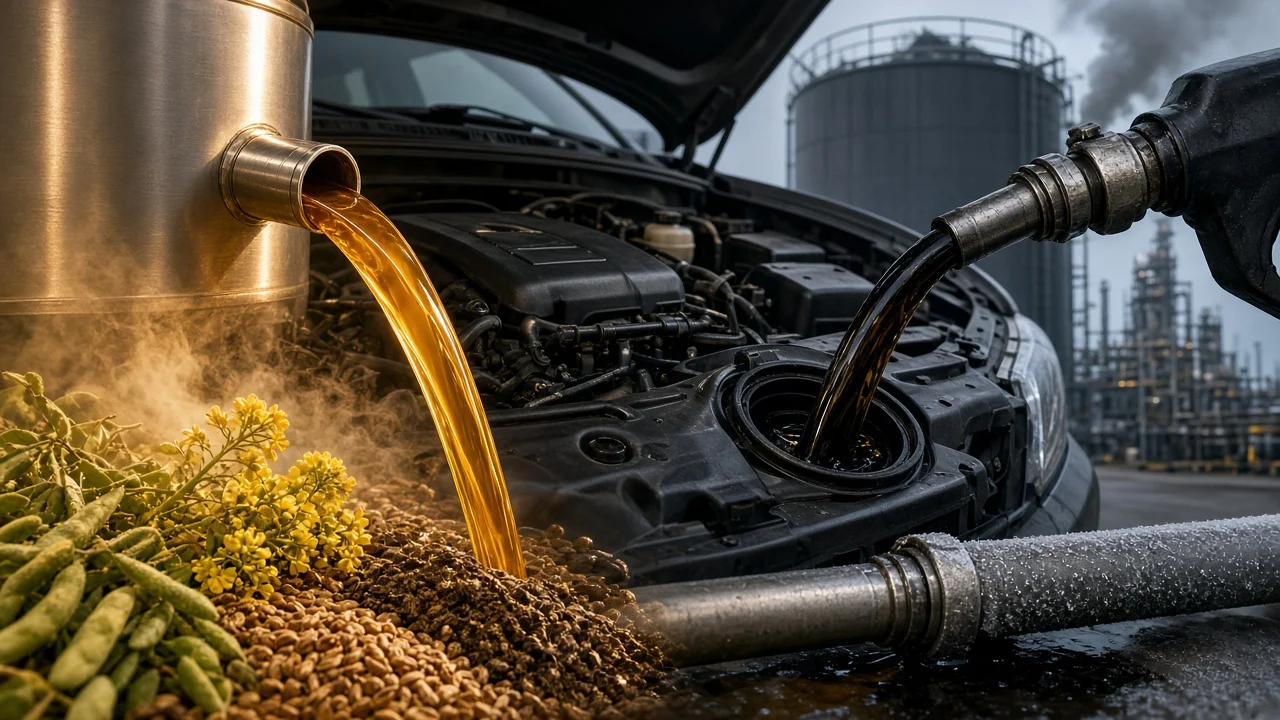
Petrodiesel is refined from crude oil. Biodiesel is made from vegetable oils, animal fats or used cooking oil through a chemical process called transesterification. That process converts the fats into fatty acid methyl esters, often shortened to FAME. Because biodiesel is chemically different from petrodiesel, it burns and ages differently, even though both fuels work in compression-ignition (diesel) engines.
In the US, fuel quality is defined by ASTM standards. Pure biodiesel intended for blending must meet ASTM D6751. Ordinary diesel under ASTM D975 may contain up to 5 percent biodiesel, often without a separate label. Blends from B6 to B20 are covered by ASTM D7467. Buying fuel that meets these standards matters more than the label alone, because off-spec or homemade biodiesel is a common source of problems.
Biodiesel is also different from renewable diesel, which is sometimes called hydrotreated vegetable oil (HVO). Renewable diesel is made from similar feedstocks but processed into a fuel that is chemically very close to petrodiesel. It can meet the standard diesel specification, so most of the biodiesel-specific drawbacks described below do not apply to it in the same way.
Advantages of Biodiesel
• Lower tailpipe pollutants: Biodiesel generally reduces particulate matter (soot), carbon monoxide and unburned hydrocarbons compared with petrodiesel, especially at higher blend levels. • Lower lifecycle carbon emissions: Because it comes from plants or waste fats, biodiesel typically has lower lifecycle greenhouse gas emissions. The size of the reduction depends heavily on the feedstock and how it was produced. • Better lubricity: Ultra-low sulfur diesel has less natural lubricity than older diesel. Even small amounts of biodiesel improve lubrication of fuel pumps and injectors. • Higher cetane: Biodiesel usually has a higher cetane number, which measures how readily fuel ignites under compression. This can make combustion smoother. • Safer handling: Biodiesel has a higher flash point than petrodiesel, so it is less likely to ignite during storage and handling. • Biodegradable and less toxic: Spills break down more readily than petroleum diesel spills. • Domestic and renewable supply: It can be produced from regionally available crops and waste oils rather than crude oil.
Drawbacks of Biodiesel
• Slightly lower energy content: Biodiesel contains somewhat less energy per gallon. This can reduce fuel economy slightly. The effect is minor with low blends and more noticeable with B100. • Cold-weather gelling: Biodiesel starts to cloud and thicken at higher temperatures than petrodiesel. The temperature at which this happens depends on the feedstock. In cold climates, high blends can clog filters unless they are treated or blended down. • Shorter storage life: Biodiesel oxidizes more readily than petrodiesel. Fuel that sits for long periods, such as in seasonal equipment or rarely driven vehicles, can form gums and sediment. • Water and microbial growth: Biodiesel absorbs more water than petrodiesel. Water in the fuel supports microbial growth in tanks and can lead to corrosion and filter blockage. • Solvent effect: Biodiesel can loosen deposits that petrodiesel has left in tanks and fuel lines. Those deposits may clog the fuel filter soon after a switch, so a filter change is often needed early on. • Material compatibility: Some older vehicles use rubber seals and hoses that can degrade with high blends. Copper, brass and zinc components can also speed up fuel oxidation. • Possible NOx increase: Depending on the engine and blend, biodiesel may produce similar or slightly higher nitrogen oxide (NOx) emissions. Modern exhaust aftertreatment systems reduce the practical significance of this. • Engine oil dilution: On some modern diesels, the particulate filter cleans itself by injecting extra fuel. With high blends, part of that fuel can end up in the engine oil and evaporate less readily than petrodiesel, which may require closer attention to oil change intervals.
Side-by-Side Comparison
Factor | Biodiesel (especially high blends) | Petrodiesel; Source | Vegetable oils, animal fats, used cooking oil | Crude oil; Tailpipe soot, CO and hydrocarbons | Generally lower | Baseline; NOx | Similar or slightly higher, depending on engine | Baseline; Lifecycle carbon emissions | Generally lower, depending on feedstock | Higher; Energy per gallon | Slightly lower | Baseline; Lubricity | Higher | Lower in ultra-low sulfur form; Cold-weather performance | Gels at higher temperatures | Better, especially with winter blends; Storage stability | Shorter | Longer; Water attraction | Higher | Lower; Flash point | Higher | Lower; Biodegradability | High | Lower
These are general tendencies. The actual differences depend on blend level, feedstock, fuel quality, the engine and its emissions equipment. No specific test figures were available for this article, so measured differences for a particular vehicle or fuel supplier cannot be stated here.
How to Choose for Your Situation
• Check your vehicle first: The owner's manual, and sometimes a label near the fuel filler, states the maximum biodiesel blend the manufacturer approves. Approvals vary by maker, model year and engine. Some allow only up to B5, while others approve B20. Using a higher blend than approved may affect warranty coverage. • Modern daily driver or truck: If your vehicle is approved for B20, a quality-certified B20 is generally a reasonable choice. You get some emissions and lubricity benefits with modest trade-offs. • Cold climate: Use lower blends in winter, or buy fuel that the supplier has adjusted for cold weather. Ask whether additives or seasonal blending are already in place. • Infrequently used vehicles or equipment: Favor petrodiesel or low blends, and avoid storing high biodiesel blends for long periods. • Older diesels: Vehicles with original rubber fuel lines and seals may need updated components before running high blends. • Switching to a higher blend: Expect to replace the fuel filter early, because loosened deposits may collect there. • Want lower emissions without biodiesel's drawbacks: Consider renewable diesel where it is available, after confirming it meets your vehicle's fuel specification.
What This Article Cannot Confirm
No verified pricing, local availability, model-specific blend approvals or measured emissions data were provided for this comparison. Fuel prices and the price gap between biodiesel blends and petrodiesel vary by region, season and incentives. For a firm decision, confirm the approved blend for your exact vehicle with the manufacturer or a dealer, and ask your fuel supplier whether the product meets the relevant ASTM standard.