Best Oil for the Jeep 4.0 Engine: A Practical Shortlist
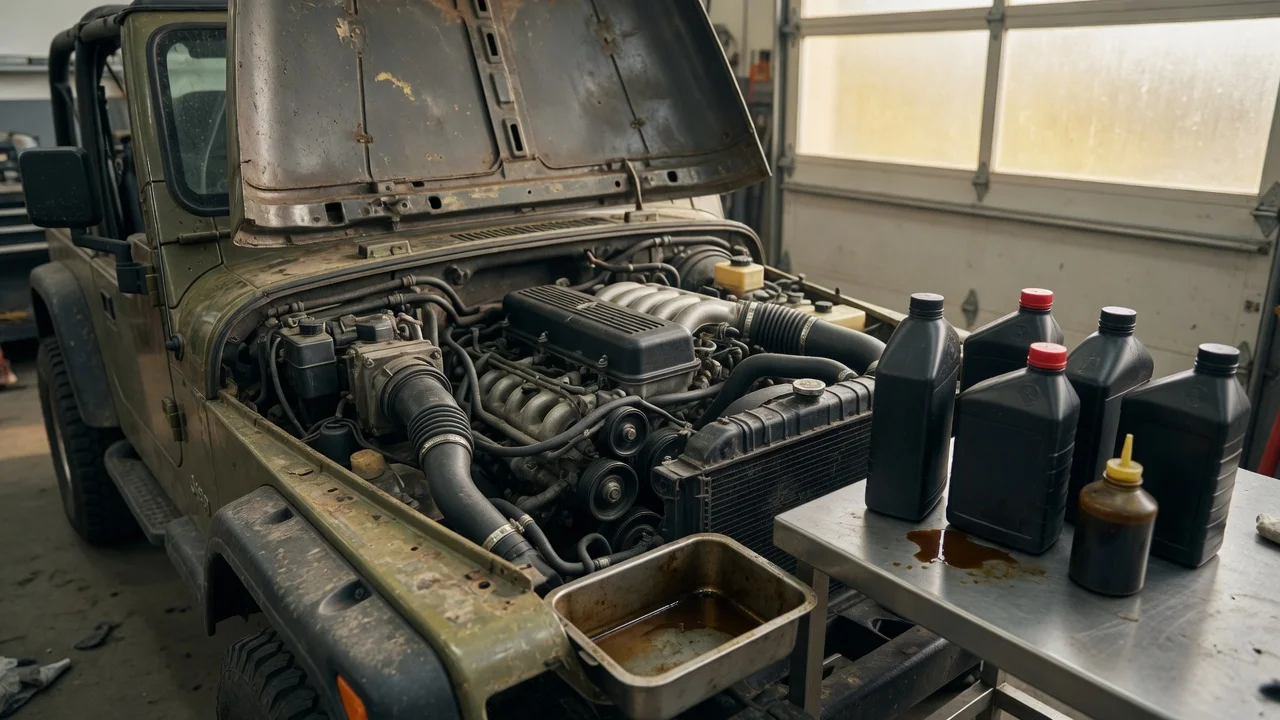
The Jeep 4.0-liter inline-six has a reputation for durability, and choosing the right oil is one of the simplest ways to keep it that way. This guide does not crown a single brand. It lists the oil types that suit this engine, explains where each one makes sense, and flags where owner opinion goes beyond documented guidance.
Which engine this guide covers
The engine is the inline six-cylinder that American Motors designed and Chrysler kept building after it bought AMC. Owners call it the 4.0, the 242 (after its displacement in cubic inches), the 4.0 HO (the higher-output version introduced for the 1991 model year), or the Power Tech six (a later Chrysler marketing name). All of these names refer to the same engine family. It is a different engine from the V6 units that replaced it in later Jeeps.
Model | Generation | 4.0 availability (model years); Cherokee | XJ | 1987–2001; Comanche | MJ | 1987–1992; Wrangler | YJ | 1991–1995; Wrangler | TJ | 1997–2006; Grand Cherokee | ZJ | 1993–1998; Grand Cherokee | WJ | 1999–2004
In some of these models the 4.0 was one of several engine options, so confirm what your vehicle actually has before you buy oil. The engine code on the VIN or the label under the hood will tell you.
How the list is built and ordered
This is a selection, not a complete inventory of every oil that will work. Each entry is an oil type defined by viscosity grade and formulation, not by brand. The entries run from the safest default for a typical engine to more specialized choices for particular conditions. No comparative test data for specific brands in the 4.0 was available for this article, so the list does not rank brands against each other. Any oil that meets the viscosity and service category in your owner's manual is a valid starting point.
Two terms you will see on every bottle
Viscosity grade: A label such as 10W-30 describes how the oil flows. The number before the W, which stands for winter, indicates cold-temperature performance, and a lower number means the oil flows more easily at a cold start. The second number indicates thickness at normal operating temperature.
Service category: The API donut symbol on the bottle shows which performance standard the oil meets. API SP is the current gasoline-engine category. It is backward-compatible, so it meets or exceeds the older categories that were current when these Jeeps were new.
The shortlist
1) The viscosity your owner's manual specifies, in a current API-certified oil
For a healthy engine in normal use, this is the default answer. Jeep owner's manuals for 4.0-equipped vehicles generally call for 10W-30 or 5W-30, depending on model year and the outdoor temperature range. The recommendation varies across the production run, so check the manual or the oil filler cap for your specific vehicle instead of assuming one grade covers every year. A conventional oil in the correct grade that carries a current API category meets the factory requirement.
2) Full synthetic in the same specified grade
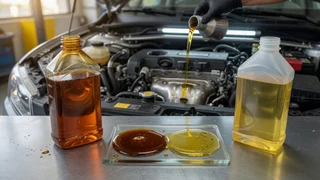
Full synthetic oil uses more highly refined or chemically engineered base stocks than conventional oil. It generally resists breakdown better at high temperatures and flows better in the cold. It suits Jeeps that tow, work hard off-road, see temperature extremes, or run longer between changes. Use the same viscosity grade your manual specifies. Switching to synthetic is not a reason to change grades. Synthetic is optional for this engine, not required.
3) Synthetic blend
A synthetic blend mixes conventional and synthetic base oils. It sits between the first two entries on both cost and performance. It is a reasonable choice if you want some of synthetic's protection margin without paying full synthetic prices. Choose it in the grade your manual specifies.
4) High-mileage formulation
Most surviving 4.0 engines have high odometer readings. High-mileage oils include seal conditioners that are meant to help soften aged gaskets and seals, which can reduce minor seepage and oil consumption. Oil leaks are a common complaint among owners of older 4.0 engines, so this type is relevant to many of them. It will not fix a failed seal or a mechanical fault. Choose it in your specified viscosity grade.
5) A heavier grade such as 10W-40: an owner practice, not a factory recommendation
Some owners of worn engines or Jeeps in hot climates move to a thicker grade. They hope to hold oil pressure or cut consumption. This practice comes from owner experience, not from the factory specification, and no supporting test data was available for this article. A thicker oil can hide symptoms of wear rather than address them. Treat this option as a judgment call and do not use it as a default. If you see low oil pressure, diagnose the cause before you change grades.
6) Break-in or higher-zinc oil for rebuilt engines
Zinc dialkyldithiophosphate (ZDDP) is an anti-wear additive. Modern passenger-car oils contain less of it than older oils did, partly to protect catalytic converters. Engine rebuilders often recommend a dedicated break-in oil with higher zinc content when a new camshaft and lifters are installed, because those parts are most vulnerable during their first run. Follow the camshaft or engine builder's instructions in that case. Whether a stock, unmodified 4.0 benefits from high-zinc oil in everyday use is debated among owners, and this article could not resolve that question.
Quick selection guide
Situation | Suggested oil type; Stock engine, normal driving | Manual-specified grade, conventional or synthetic, current API category; Towing, heavy off-road use, temperature extremes | Full synthetic in the manual-specified grade; Budget-conscious middle ground | Synthetic blend in the manual-specified grade; High mileage with minor seepage | High-mileage formulation in the manual-specified grade; Freshly rebuilt engine with new camshaft | Break-in oil as directed by the engine or cam builder; Worn engine, hot climate | Heavier grade only after diagnosis (owner practice, not factory guidance)
What this guide could not confirm
The exact viscosity recommendation for each model year: check your owner's manual. Oil capacity and change intervals: these vary by model and year, and no verified figures were available for this article. Comparative performance of specific oil brands in the 4.0: no test data was available, so no brand ranking is given. Whether extra zinc benefits a stock engine in daily use: this remains an unresolved owner debate.