Battery fumes

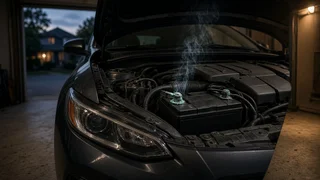
Battery fumes are the gases and fine mists released when a vehicle battery is stressed, overcharged, or damaged. Drivers often notice a sharp sulfur smell, visible vapor near the battery terminals, or irritation after repeated exposure. These odors usually indicate a charging or battery condition that deserves prompt attention. The exact meaning depends on battery type, system voltage, and charging output, so the same smell can range from mild venting to a serious electrical fault. Understanding the likely source helps an owner decide whether to inspect, ventilate, and seek service.
Essential answer
Battery fumes in an automotive context are most commonly associated with a lead-acid battery producing hydrogen and oxygen during charging, or releasing sulfur-bearing gas when a cell is failing. A rotten-egg odor near the battery terminals suggests the electrolyte is overheating or the battery is being pushed beyond its normal charge acceptance. In some cases, a faint acidic mist may accompany the vapor, especially if the case is cracked or a vent is blocked. The fumes should not be treated as a routine byproduct of healthy operation; they signal an abnormal condition in the battery, the charging system, or the connection points.
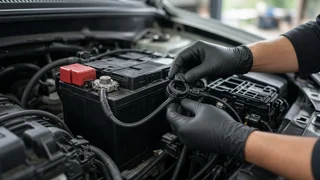
A practical first step is to shut off the vehicle in a well-ventilated area and let the area clear before inspecting. A voltage drop test across clean battery terminals and a check of charging output can help distinguish an overcharging alternator from an internal battery fault. Fuse rating and wiring diagram information may be relevant if an accessory circuit is drawing current incorrectly or a parasitic draw is keeping the battery active after shutdown. Because exact voltages and charging specifications vary by vehicle, the observed fumes should be used as evidence for targeted testing rather than as proof that one component has failed.