Tell bad brake drums from bad shoes
The short answer
Symptoms alone rarely prove whether the drums or the shoes are at fault, because the two parts work as a pair and wear each other. As a general pattern, problems with the friction material, such as squealing, grinding, a weak parking brake or a long pedal, point first to the shoes. Problems with the braking surface, such as pulsation, vibration or a visibly scored, cracked or bluish drum, point to the drum. A firm answer needs the drum removed so the lining and the inside of the drum can be inspected and measured. In many cases both need attention, especially when shoes have worn down to metal.
This guide covers drum brakes in general, which are most often found on the rear axle of cars and light trucks. Wear limits, adjustment procedures and component designs vary by make, model, model year and axle, so the vehicle's service information is the authority for any specific measurement. No vehicle-specific specifications or test data were supplied for this article, so none are given here.
Signs that usually point to the shoes
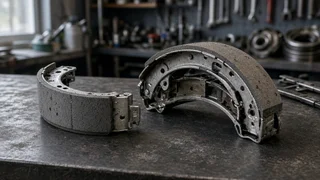
Brake shoes are the curved steel pieces with a friction lining that press outward against the inside of the drum. Most shoe faults involve that lining wearing thin, hardening or becoming contaminated.
Squealing or squeaking when braking, which can come from glazed (hardened, shiny) lining or dry contact points on the backing plate. Grinding or metal-on-metal scraping, which typically means the lining is gone and the steel shoe is contacting the drum. At this stage the drum is often damaged too. A parking brake that holds poorly or needs more lever or pedal travel than before, often linked to worn shoes or a self-adjuster that is not working. A low or long brake pedal, which can result from worn or out-of-adjustment rear shoes, though hydraulic faults cause this as well. Pulling, grabbing or uneven braking, which can happen when the lining is soaked with brake fluid or axle oil. Contaminated lining generally cannot be cleaned reliably and is replaced.
Signs that usually point to the drums
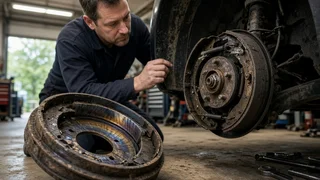
The drum is the rotating cast part the shoes press against. Drum faults involve the shape, size or surface condition of that braking surface.
A pulsing pedal or vibration under braking that seems to come from the rear, which can indicate a drum that is out of round. Warped front rotors cause similar sensations, so the source should be confirmed. Deep grooves or scoring on the inner surface, often left behind by shoes worn to metal or by trapped debris. Hard spots, heat cracks or blue discoloration, which are signs of overheating. An inside diameter at or beyond the maximum limit. Most drums have this limit cast or stamped on them, and a drum at that size should not be machined further. A visible crack anywhere on the drum, which calls for replacement rather than resurfacing.
Faults that mimic bad drums or shoes
Several other drum-brake parts produce the same complaints and are worth ruling out during the same inspection.
A leaking wheel cylinder, which can contaminate the lining and cause grabbing or pulling. A leaking axle seal, which can also soak the shoes, typically with gear oil instead of brake fluid. A seized or worn self-adjuster, which leaves the shoes too far from the drum and produces a low pedal or weak parking brake even when the lining is still thick. Broken, weak or missing return and hold-down springs, which can cause dragging, noise or uneven wear. A sticking parking brake cable, which can keep the shoes dragging, leading to heat and accelerated wear on both the drum and the shoes.
What an inspection should confirm
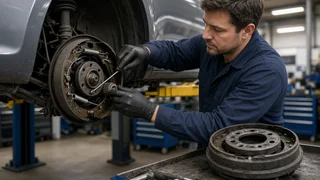
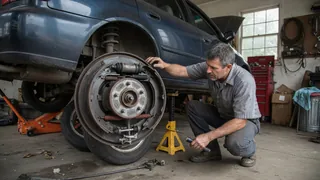
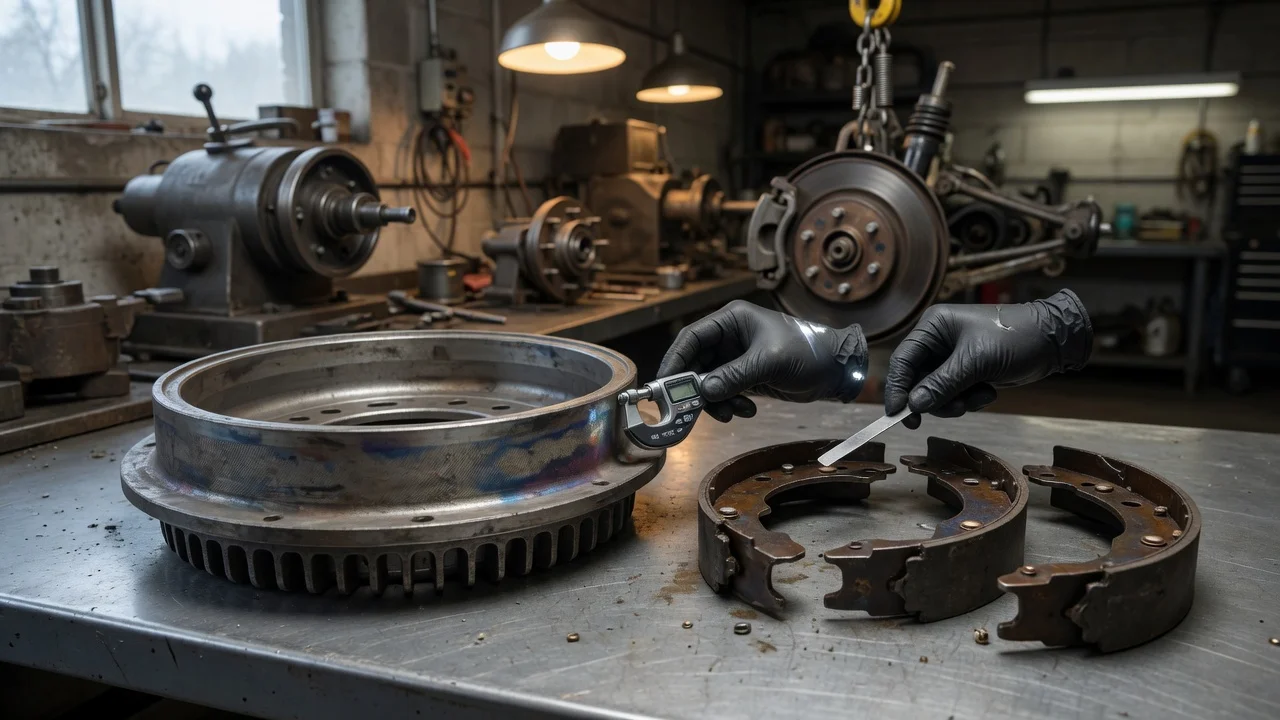
Once the drum is off, the decision is usually straightforward. The lining is checked for thickness against the manufacturer's minimum, for even wear between the two shoes and from end to end, and for glazing or contamination. The drum is checked visually for scoring, cracks and heat damage, then measured with a drum gauge or micrometer and compared with the maximum diameter marked on it. A drum that is within its limit and only lightly marked may be machined. One that is cracked, at or beyond its limit, or would exceed the limit after machining is replaced.
Shoes are normally replaced in axle sets so both sides brake evenly, and drums are commonly resurfaced or replaced at the same time so the new lining beds against a true surface. Because brakes are a safety-critical system, anyone without the tools or experience to measure and reassemble drum brakes correctly should have a qualified technician perform the inspection, especially if grinding, pulling or a sinking pedal is present.