Autogas Near You: How to Find and Use Propane Fueling Stations

To find autogas nearby, use a dedicated alternative-fuel station locator or a map app that filters by propane, then confirm the station before you go. Call ahead or check recent station details to verify it is open, sells fuel to the public, and has a dispenser that can fill a vehicle tank. In the US, autogas usually means propane (also called LPG, or liquefied petroleum gas) sold as motor fuel. Autogas stations are far less common than gasoline stations, so a listing that looks close on a map may not be usable for your vehicle. If you searched for "auto gas" and simply meant a regular gas station for gasoline, any standard map or navigation app will find one instantly. The rest of this guide is for drivers of propane-powered or bi-fuel vehicles, which run on either propane or gasoline.
What Counts as Autogas
Autogas is propane stored as a liquid under moderate pressure in a vehicle's fuel tank. It powers dedicated propane vehicles, which run only on propane, and bi-fuel conversions, which carry both a propane tank and a gasoline tank. In the US, it is used most often by fleets such as school buses, delivery vans, shuttles and municipal vehicles, though some private owners use it too.
Autogas is not the same as CNG (compressed natural gas). CNG is methane stored as a high-pressure gas. It uses different stations, different dispensers and different vehicle tanks. A propane vehicle cannot use a CNG pump, and a CNG vehicle cannot use a propane pump. Make sure you search for the fuel your vehicle actually uses.
Ways to Find Autogas Stations Nearby
Method | What it is good for | Main limitation; Alternative-fuel station locators, such as the US Department of Energy's Alternative Fuels Station Locator | Filtering by fuel type (propane or CNG), access type, and sometimes connector details | Listings can lag behind real-world changes in hours or availability; Map and navigation apps with fuel filters | Quick distance and route planning | Often mix cylinder-refill sites with vehicle fueling sites; Local propane suppliers and distributors | Confirming whether they fill vehicle tanks, and their hours and pricing | You need to contact them directly; Fleet and conversion-shop contacts | Local knowledge of which sites actually work for vehicles | Some recommended sites may be private fleet stations; Phone call to the station | The most reliable way to confirm current status | Takes time, and only works during business hours
What to Check Before You Drive There
Vehicle fueling, not just cylinder refilling: many propane retailers fill grill and forklift cylinders but have no dispenser for vehicle tanks. Public access: some autogas stations belong to fleets and serve only contracted customers or cardholders. Hours and staffing: some sites require an attendant or trained staff to dispense propane, so they may only serve vehicles during staffed hours. Payment: confirm whether the station accepts standard cards or requires a fleet card or account. Connector compatibility: your vehicle's fill valve must match the dispenser nozzle. US propane dispensers have traditionally used a threaded ACME-style connector, and some sites use newer low-emission connectors. Imported or converted vehicles may have a different fitting that needs an approved adapter. Vehicle size and access: buses, trucks and vans need enough room to reach the dispenser.
Step by Step: Getting a Successful Fill
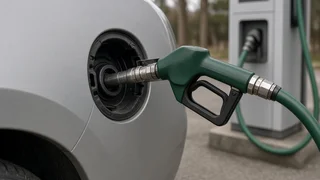
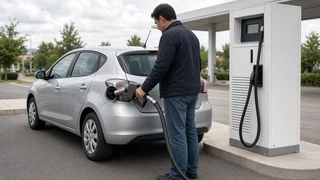
1) Check your vehicle's fuel type, fill connector, and any instructions in the owner's or conversion documentation. 2) Search a station locator with the propane filter on, and note two or three options in case the first is unavailable. 3) Call or check recent details to confirm public vehicle fueling, hours, payment and connector type. 4) Plan your route with your remaining range in mind. A bi-fuel vehicle can switch to gasoline if needed, but a dedicated propane vehicle cannot. 5) At the station, follow posted procedures or the attendant's instructions. Some locations require customer training before self-service. 6) Connect the nozzle securely, dispense, and let the fill stop on its own. 7) Disconnect, then confirm the fill valve is closed and the cap is replaced.
How to Verify the Result
A propane vehicle tank is designed to stop filling at roughly 80 percent of its total volume. An overfill protection device enforces this limit and leaves room for the liquid to expand as temperature changes. A gauge that reads "full" at this point is normal. It does not mean the tank was short-filled.
The fuel gauge rises as expected for the amount dispensed. The receipt shows propane or autogas as the fuel type. There is no persistent propane odor around the fill area after disconnecting. A brief release at disconnection can be normal with some connectors. A lasting smell is not, and should be reported to the attendant. On a bi-fuel vehicle, the system switches to or stays on propane as intended once the engine is running.
If There Is No Autogas Station Close By
Coverage varies widely by region, and some areas have no public autogas at all. In that case, contact local propane distributors directly. Some can arrange vehicle fueling or know of sites that are missing from online listings. Fleet operators sometimes allow outside vehicles at private stations by agreement. For regular long trips, plan routes around confirmed stations ahead of time rather than searching on the road. A bi-fuel setup also gives you gasoline as a backup in areas with sparse coverage.