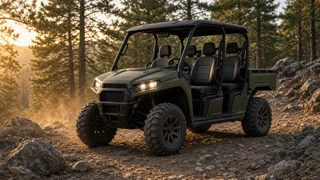
ATVs for Bounty Hole Mud Riding: What to Look For

The Short Answer
A bounty hole is a deliberately deep, punishing mud pit, typically found at mud parks and mud events. A prize is offered to anyone who can get through it. The best ATV for this is not a particular brand. It is a machine that keeps breathing, keeps its drive engaged and keeps moving when it is partly submerged in thick mud. In practice, that means a four-wheel-drive ATV with raised air intakes (snorkels), a radiator protected from mud, a front differential that can lock, aggressive mud tires and enough ground clearance to avoid bellying out on the frame.
One qualification changes the answer. Most stock ATVs are not built for bounty holes. Riders who attempt them usually run either a factory mud-focused trim or a heavily modified machine. Without at least intake and radiator protection, a stock ATV risks drawing water or mud into the engine or drive belt. That can cause expensive damage.
Scope and Evidence Limits
No confirmed, model-specific evidence was available for this guide. It contains no verified specifications, prices, model-year details or test results for particular ATVs, so it does not recommend specific models or rank them. The guidance below rests on general, widely understood principles of how ATVs behave in deep mud and water. Check any model you are considering against the manufacturer’s current specifications for that exact model year and trim.
Features That Matter Most in a Bounty Hole
Snorkels: Raised intakes for the engine air box and the CVT (continuously variable transmission) belt housing. They keep the intakes above the waterline. This is the most important protection, because water drawn into the engine can cause hydrolock, and water in the belt housing makes the belt slip or fail. Relocated radiator: On liquid-cooled ATVs, a radiator mounted high, often on the front rack, stays clear of mud. Mud packed into a radiator in the stock low position quickly causes overheating. Locking front differential: A diff lock forces both front wheels to turn together, so traction isn’t lost when one wheel spins freely in the slop. A rear locker or a solid rear axle helps for the same reason. Mud tires: Tall, deep, widely spaced lugs that bite into mud and clear it out as they turn. Taller tires also add ground clearance, but they change effective gearing and put more load on the belt and axles. Ground clearance and lift: Bounty holes often have uneven, rutted bottoms. Clearance helps keep the frame from resting on the mud and lifting the tires off the ground. Sealed electrics and vented components: Water-resistant connectors and differential and gearbox vent lines extended upward reduce water intrusion. Winch: A front winch is often essential for self-recovery, or for recovering others, when a run stalls in the pit.
Factory Mud Trims vs. Modified Machines
Some ATV manufacturers have offered mud-oriented trims that come with features such as snorkels, relocated radiators and mud tires from the factory. Availability, features and warranty terms vary by brand, model year and market, and no confirmed details for current US models were available here. A factory mud trim can simplify buying, because the components are designed to work together. Modifying a standard ATV can cost less up front or offer more customization. But aftermarket changes to the intake, cooling, tires or lift may affect warranty coverage and reliability. Confirm warranty terms with the dealer before modifying.
Ownership Considerations
Maintenance load: Deep mud riding speeds up wear on CV joints, axle boots, wheel bearings, the drive belt and the brakes. After mud runs, expect to clean the machine often and check the fluids for water contamination. Drivetrain stress: Larger tires and locked differentials increase strain on axles and the CVT belt. Modified machines often need stronger axles and recalibrated clutching to cope. Event rules: Mud parks and events often set their own rules, safety requirements and competition classes for bounty holes. Check those rules before choosing or modifying a machine, because a build may be placed in a different class or be ineligible. Safety: Deep pits hide obstacles, and riders can be thrown or pinned. Protective gear, a working kill switch and an organized recovery plan are basic precautions.
What to Verify Before Buying
For any ATV you are considering for bounty holes, confirm the following for the specific model year and trim: whether snorkels and a relocated radiator are included or available; the type of front differential locking and how it engages; the factory tire size and the largest size the machine can run without major changes; ground clearance; whether the machine is liquid- or air-cooled; and how the warranty treats mud use and modifications. These details were not available in the supplied evidence and must come from manufacturer specifications or a dealer.